
Alternatives to Tin Computer
Explore the best alternatives and competitors to Tin Computer .
Explore 20 alternatives to Tin Computer . Compare features, pricing, and find the best fit for your needs.

ACA: Automated Client Acquisition
One platform for cold email, LinkedIn, lead magnets, content and a shared AI reply inbox, run in the app or by your AI agent.

postersize ai
AI-powered poster creation and sizing platform for polished posters and practical print, social, and presentation formats.
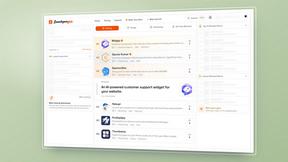

Linkorva
AI SEO and GEO kickstart: submits your site to relevant directories and finds real backlinks.


Safe Outreach
AI-powered platform that evaluates the safety of LinkedIn automation tools and helps reduce the risk of account restrictions.

Nevisible
Nevisible is an AI-sourced pipeline platform that makes suppliers readable to AI, uncovers AI-sourced buyers and tracks AI answers for manufacturers.
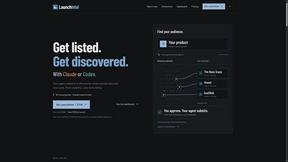
LaunchIntel
Your AI agent picks relevant directories, submits your product in your browser and tracks every step. One-time purchase.

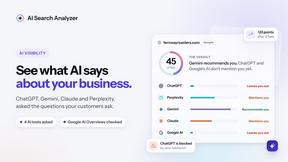
AI Search Analyzer
See what ChatGPT, Gemini, Claude and Perplexity say about you, then fix it.
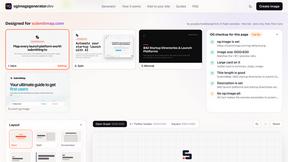
ogimagegenerator.dev
Paste a URL and AI designs on-brand Open Graph images from your page's colours, fonts and logo. Free, no sign-up.

XAutoDM
XAutoDM turns X (Twitter) DMs into booked calls: find leads, send personalized DMs, and auto follow-ups that stop on reply.
BacklinkBot
AI SEO agent that finds pages ranking for your keywords, pitches the people behind them from your inbox, and follows up. You approve every send.
HearBuyers
AI social listening agent: finds people on Reddit and X describing the problem you solve, scores buying intent and drafts a reply your team approves.

HookAds
Free ad creative hub: 1,750+ prompts behind viral AI ads, 118 hook frameworks, teardowns, swipe files and 27 free AI ad tools. Copy, remix, ship.

Maeve Social
Plan, approve, publish, and analyze social content with an AI assistant and API, CLI, and MCP automation.



About Tin Computer Alternatives
Tin Computer is an AI-powered growth agent designed specifically for small SaaS teams, and it belongs to the emerging category of autonomous marketing and product optimization tools. Unlike traditional marketing software that requires manual campaign setup or constant human oversight, Tin Computer operates as a continuous background system that actively works across organic SEO, product engineering, and analytics. It plugs directly into your existing tech stack—including GitHub, Stripe, Google Analytics, Search Console, PostHog, Sentry, and Vercel—and ships real pull requests for bug fixes, content improvements, and feature tweaks that you can review and merge. Users commonly look for alternatives to Tin Computer due to pricing considerations, the need for a more specialized tool for a single function like pure SEO or pure analytics, or because their team prefers a more hands-on, non-autonomous approach to growth. When choosing an alternative, it is essential to evaluate how deeply the tool integrates with your current platforms, whether it offers autonomous execution or simply recommendations, and if it can address the full spectrum of growth channels—organic SEO, product engineering, and funnel analytics—without requiring additional ad spend or cold outreach. The right alternative should match your team’s size, technical capability, and desire for either full automation or guided manual work. The search for an alternative often stems from a mismatch between what Tin Computer offers and a team’s specific operational needs. For instance, some teams may find that their growth strategy is heavily reliant on paid advertising, which Tin Computer does not support, while others may need a tool that focuses exclusively on a single area like SEO without touching codebase changes. Additionally, teams with very limited budgets might seek a simpler, lower-cost solution that provides basic analytics without the autonomous PR-shipping capability. When evaluating alternatives, look for clear documentation on data security and access permissions, as Tin Computer connects to sensitive platforms like GitHub and Stripe. Also consider the learning curve: Tin Computer requires minimal setup but assumes some comfort with reviewing and merging code changes. Ultimately, the best alternative will align with your growth philosophy—whether you want a fully autonomous agent running in the background or a more traditional tool that provides insights for you to act on manually.
FAQs about Tin Computer Alternatives
What is Tin Computer?
Tin Computer is an AI growth agent designed for small SaaS teams that works as a continuous growth playbook across the surfaces you already own. It optimizes, learns, fixes bugs, and improves your product by shipping real pull requests that you review and merge. The tool focuses on organic SEO, product engineering, and analytics without requiring any ad spend or cold outreach.
Who is Tin Computer for?
Tin Computer is specifically built for small SaaS teams looking to grow their product organically through SEO, bug fixes, and funnel optimization. It is ideal for teams that already use platforms like GitHub, Stripe, Google Analytics, Search Console, PostHog, Sentry, and Vercel, and who want an autonomous agent that continuously works on growth. A real-world example includes Claw Messenger, a dormant side project that grew from $480 to $11,580 ARR and 118 paying customers in 92 days using Tin Computer.
Is Tin Computer free?
Based on the provided content, there is no specific mention of Tin Computer being free. The tool is positioned as a premium AI growth agent for small SaaS teams, and pricing details would need to be confirmed directly from the product's official website or documentation. Given its autonomous capabilities and integration with multiple platforms, it is likely a paid service, but no pricing tiers are disclosed in the available information.
What are the main features of Tin Computer?
Tin Computer's main features include autonomous optimization of organic SEO through blog posts, comparison pages, and technical fixes; product engineering improvements such as bug fixes, small features, and onboarding tweaks; and analytics capabilities like funnel diagnostics, cohort analysis, and experiment tracking. It integrates with GitHub, Stripe, Google Analytics, Search Console, PostHog, Sentry, Vercel, and more, and ships real pull requests that you can review and merge. The tool runs continuously in the background, requiring no manual campaign setup or ad spend.