
RedVeil vs SVG to 3D
Side-by-side comparison to help you choose the right tool.

RedVeil
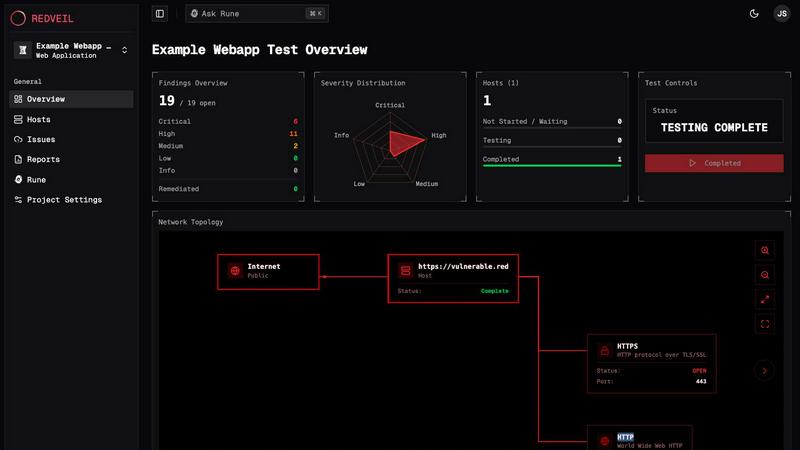
RedVeil delivers rapid AI-driven penetration testing to identify vulnerabilities and generate actionable reports in.
Last updated: February 28, 2026
SVG to 3D
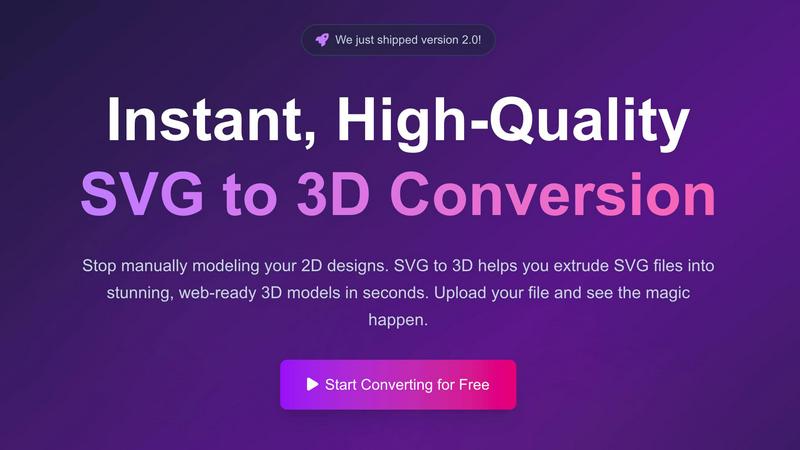
Transform your 2D SVG designs into stunning, web-ready 3D models in seconds with SVG to 3D's advanced conversion tool.
Last updated: February 28, 2026
Visual Comparison
RedVeil
SVG to 3D
Feature Comparison
RedVeil
AI-Driven Penetration Testing
RedVeil employs intelligent AI agents that are capable of reasoning through multi-step attack chains, simulating human-like vulnerabilities assessments. This ensures a thorough examination of your systems with the precision and speed that manual testing cannot match.
One-Click Retesting
The One-Click Retesting feature allows users to quickly verify the remediation of identified vulnerabilities. This flexibility enables teams to address issues as they arise, ensuring that security measures keep pace with rapid code deployments, ultimately enhancing security without unnecessary delays.
Compliance-Ready Reporting
With RedVeil, generating professional audit-ready reports is simplified to a one-click process. These reports are tailored for various compliance standards, including SOC 2, ISO 27001, and PCI-DSS, ensuring that organizations can easily meet regulatory requirements without extensive additional work.
Guided Remediation Support
RedVeil provides clear context, reproduction steps, and remediation guidance for each identified issue. This feature empowers security teams and developers alike to understand vulnerabilities deeply and implement effective fixes, fostering a culture of continuous improvement in security practices.
SVG to 3D
One-Click to GLB for the Web
This feature allows users to export their 3D models as GLB files, optimized specifically for web applications. Developers can seamlessly integrate these models into Three.js or React Three Fiber projects, enhancing their websites with immersive 3D elements in just one click.
3D-Print Ready
SVG to 3D supports direct STL exports, ensuring that your 3D models are ready for 3D printing. This means users can take their designs from the screen to the physical world without needing complex CAD software, streamlining the fabrication process.
Advanced Material System
The tool offers a sophisticated material system that allows users to apply realistic PBR materials, custom textures, and professional lighting effects to their 3D models. This feature ensures that creations not only look great but also maintain a professional quality that stands out.
Lightning-Fast Processing
With optimized algorithms, SVG to 3D converts your SVG files into 3D models within seconds. This speed is crucial for users who require quick turnaround times, allowing them to focus on creativity rather than waiting for lengthy rendering processes.
Use Cases
RedVeil
Rapid Security Assessments for Agile Teams
RedVeil is particularly beneficial for agile software development teams that deploy code frequently. By enabling rapid penetration tests, teams can ensure that new features do not introduce vulnerabilities, helping maintain a secure software environment.
Compliance Verification
Organizations aiming for compliance with industry standards can utilize RedVeil to perform regular penetration tests and generate necessary reports. This ensures that compliance requirements are met efficiently, reducing the risk of non-compliance penalties.
Continuous Security Monitoring
RedVeil allows businesses to retest their systems regularly whenever there are changes in their environment. This proactive approach to security enables teams to identify and mitigate risks before they can be exploited, ensuring ongoing protection.
Training and Development for Security Teams
Security teams can leverage RedVeil's detailed reporting and guided remediation features as a training tool. By understanding how vulnerabilities were identified and how to fix them, teams can enhance their skills and knowledge, ultimately leading to a more robust security posture.
SVG to 3D
Create Interactive 3D Logos and Icons for Web
Web developers can leverage SVG to 3D to transform 2D logos and icons into engaging 3D models. This capability enhances the visual appeal of websites and can lead to improved user interactions, making brands more memorable.
From Digital Design to Physical Object
Designers can use this tool to convert their 2D designs into STL files that are ready for 3D printing. This use case is perfect for creating prototypes, custom parts, or artistic pieces without the hassle of traditional modeling software.
Enhance Your UI/UX Designs
UI/UX designers can elevate their presentations by adding depth to their mockups. By converting SVG assets into 3D models, they can create more engaging and visually appealing designs, impressing clients and stakeholders alike.
Rapid Prototyping for Product Development
SVG to 3D allows product developers to quickly create prototypes from their digital designs. This feature accelerates the iteration process, enabling teams to test and refine their concepts efficiently before moving to production.
Overview
About RedVeil
RedVeil is an innovative AI-powered penetration testing platform designed to meet the demands of modern software development and security needs. Traditional penetration testing often involves lengthy processes and substantial costs, which can hinder fast-paced engineering teams. RedVeil revolutionizes this approach by combining the analytical reasoning of human hackers with the rapid execution capabilities of artificial intelligence. With RedVeil, users can initiate a comprehensive and autonomous penetration test within minutes, allowing for swift identification of vulnerabilities and actionable insights. This platform is ideal for organizations seeking to enhance their cybersecurity posture while maintaining agility in their development cycles, providing an efficient solution that produces audit-ready reports in just hours.
About SVG to 3D
SVG to 3D is an innovative online tool designed to effortlessly convert 2D SVG vector graphics into stunning 3D models. The product aims to address a common challenge faced by designers, developers, and 3D printing enthusiasts: the need for a quick, user-friendly solution to transform flat designs into dynamic three-dimensional representations. With SVG to 3D, users can bypass the complexities of heavyweight software like Blender or Cinema 4D, making the design process more accessible and efficient. This tool is ideal for professionals looking to elevate their web projects with interactive 3D elements, create prototypes for 3D printing, or enhance UI/UX designs with depth. The primary value proposition lies in its ability to deliver high-quality outputs in seconds, all while providing advanced features that maintain the integrity and aesthetics of the original design.
Frequently Asked Questions
RedVeil FAQ
Does RedVeil perform a real penetration test?
Yes, RedVeil conducts genuine penetration tests using AI-driven agents that simulate the actions of human attackers, identifying real vulnerabilities within your systems.
How many penetration tests can I do with my annual subscription?
The number of penetration tests you can conduct varies by subscription tier. For instance, the Perimeter plan allows for up to 500 Agent Ops annually, accommodating multiple tests throughout the year.
Is there a chance that my web application or network could go down during the test?
RedVeil is designed to minimize the risk of downtime during assessments. However, as with any penetration testing, it is advisable to monitor critical systems closely during the testing period.
Can I use RedVeil's penetration test reports to meet the requirements of my compliance?
Absolutely. RedVeil generates audit-ready reports that are suitable for various compliance requirements, including SOC 2, ISO 27001, and PCI-DSS, helping ensure your organization remains compliant with industry standards.
SVG to 3D FAQ
How do I convert my SVG file into a 3D model?
To convert your SVG file, simply upload it to the SVG to 3D platform, adjust the desired 3D settings such as thickness and bevels, and then download your finished model in your preferred format.
What file formats can I export my 3D models to?
SVG to 3D allows you to export your models in multiple formats, including GLB, GLTF, OBJ, and STL, ensuring compatibility with various applications and 3D printing workflows.
Is my data secure while using SVG to 3D?
Yes, SVG to 3D prioritizes user privacy and security. Files are processed locally in your browser whenever possible, meaning that your designs remain private and are not uploaded to external servers.
Can I use SVG to 3D for commercial projects?
Absolutely! SVG to 3D is designed for both personal and commercial use. You can create and sell products derived from your 3D models without any restrictions, making it a versatile tool for professionals.
Alternatives
RedVeil Alternatives
RedVeil is an innovative solution in the realm of penetration testing, leveraging the capabilities of agentic AI to provide on-demand services that identify vulnerabilities in software systems. As organizations increasingly adopt agile methodologies and deploy code at a rapid pace, traditional penetration testing methods often fall short, leading users to seek alternatives that can deliver effective results more efficiently. Common reasons for exploring alternatives include concerns about pricing, the need for specific features that align with unique organizational requirements, or compatibility with existing platforms and workflows. When evaluating potential alternatives, users should consider factors such as the speed of testing, the depth and quality of the findings, the flexibility of scheduling, and the comprehensiveness of the reporting capabilities.
SVG to 3D Alternatives
SVG to 3D is a transformative tool designed to convert 2D SVG vector graphics into high-quality 3D models, making it particularly beneficial for developers, designers, and 3D printing enthusiasts. As users explore this innovative solution, they often seek alternatives due to factors like pricing, specific feature sets, or compatibility with different platforms. The need for a streamlined, user-friendly experience is paramount, as many tools can be overly complex or resource-intensive, requiring users to consider their project requirements and the specific functionalities they value most. When searching for an alternative, it’s essential to evaluate aspects such as ease of use, export capabilities, and overall performance. Users should also look for solutions that align with their intended applications, whether that be web development, graphic design, or 3D printing. A good alternative should provide a balance of features and accessibility, ensuring a smooth workflow without unnecessary complexity.