

Self-Healing Integrations
Plumbed.io delivers self-healing integrations that automate maintenance and ensure seamless, reliable connections for your enterprise systems.
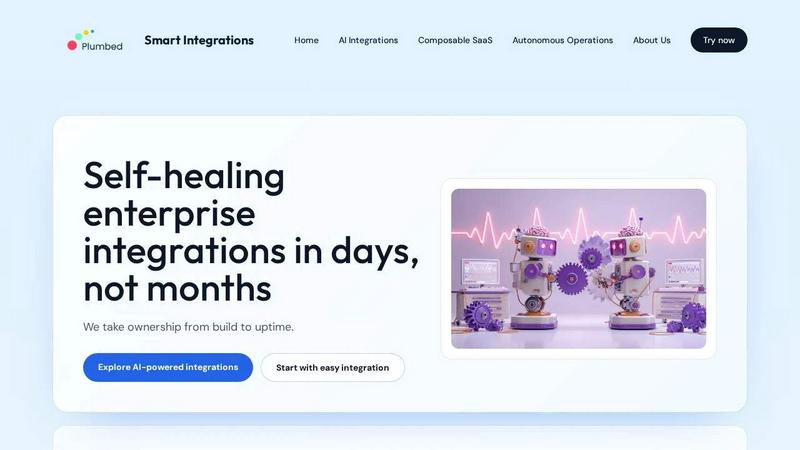
About Self-Healing Integrations
Self-Healing Integrations from Plumbed.io revolutionize the way businesses manage their integration needs by offering a platform that not only builds integrations but also ensures their continual operation and reliability. This solution is tailored for organizations facing the challenges of custom integrations that require ongoing modifications, monitoring, and maintenance post-launch. In a landscape where many companies incur an "integration tax," making the deployment of new channels, systems, or partners both slow and expensive, Self-Healing Integrations provide an innovative alternative. By leveraging an AI-managed lifecycle, Plumbed.io significantly reduces the time and cost associated with traditional integration projects. The platform automates the entire integration lifecycle, enabling businesses to scale efficiently while eliminating burdensome operational overhead.
Features of Self-Healing Integrations
Automated Monitoring
Automated monitoring is a key feature of Self-Healing Integrations, allowing for real-time oversight of system connections. This ensures that any potential issues are identified and addressed proactively, minimizing downtime and maintaining operational integrity.
Proactive Error Handling
With proactive error handling, the platform anticipates potential integration failures and addresses them before they escalate. This feature enhances the reliability of data flows and reduces the need for manual intervention, enabling businesses to focus on core activities.
Continuous System Updates
Continuous system updates ensure that integrations remain current with the latest developments and requirements of connected systems. This feature guarantees compatibility and performance, reducing the risk of operational disruptions caused by outdated integrations.
Self-Healing AI
The Self-Healing AI feature automates maintenance tasks, keeping data flowing seamlessly between systems. By utilizing advanced AI algorithms, this feature minimizes manual effort and dramatically reduces the maintenance burden on engineering teams.
Use Cases of Self-Healing Integrations
Streamlining E-Commerce Operations
E-commerce businesses often rely on multiple systems for inventory management, order processing, and customer relationship management. Self-Healing Integrations help streamline these operations by ensuring that all systems communicate effectively and remain operational, providing a seamless shopping experience.
Enhancing Financial Reporting
Financial institutions frequently face challenges with data integration from various sources for reporting and compliance. With Self-Healing Integrations, these organizations can automate data flows and ensure that reports are generated from up-to-date and accurate information without manual reconciliation.
Optimizing Supply Chain Management
In supply chain management, real-time data exchange between suppliers, manufacturers, and distributors is crucial. Self-Healing Integrations facilitate efficient communication across these entities, allowing for optimized inventory levels and timely deliveries, which ultimately enhances customer satisfaction.
Improving Marketing Automation
Marketing teams often use multiple tools for campaign management, analytics, and customer engagement. Self-Healing Integrations enable these tools to work harmoniously, ensuring that data is consistently synced and campaigns are executed without interruptions, leading to improved marketing effectiveness.
Frequently Asked Questions
What types of integrations can Self-Healing Integrations handle?
Self-Healing Integrations can manage a wide range of integrations across various systems, including APIs, databases, and third-party applications, ensuring compatibility and seamless connectivity.
How quickly can I deploy a new integration using Plumbed.io?
With Plumbed.io, businesses can deploy new integrations in record time, often within days rather than months. This rapid deployment allows organizations to respond swiftly to market changes and new business opportunities.
Is technical expertise required to use Self-Healing Integrations?
No, Self-Healing Integrations are designed to be user-friendly, allowing even non-technical users to set up and manage integrations effectively. The platform's intuitive interface simplifies the integration process.
How does the AI manage the integration lifecycle?
The AI component of Self-Healing Integrations automates monitoring, error handling, and system updates, ensuring that integrations remain operational and efficient. This intelligent management reduces the operational burden on teams and enhances overall productivity.
Explore more in this category:
Similar to Self-Healing Integrations

Riff
Free Chrome extension. Paste your rough point and Chrome's built-in AI writes a fresh reply for that post on X, LinkedIn, Facebook or Instagram.


GetYouTubeTranscript
Free YouTube transcripts on the web, a Chrome extension, and an API + MCP server so AI assistants can read YouTube.


amaze.directory
Find an AI tool by the job you need done, not the buzzword.

benchmark.directory
A working index of AI tools. We record what each one costs, what it connects to, and exactly where it stops being useful.