
Qeeebo vs SchoolGPT
Side-by-side comparison to help you choose the right tool.

Qeeebo
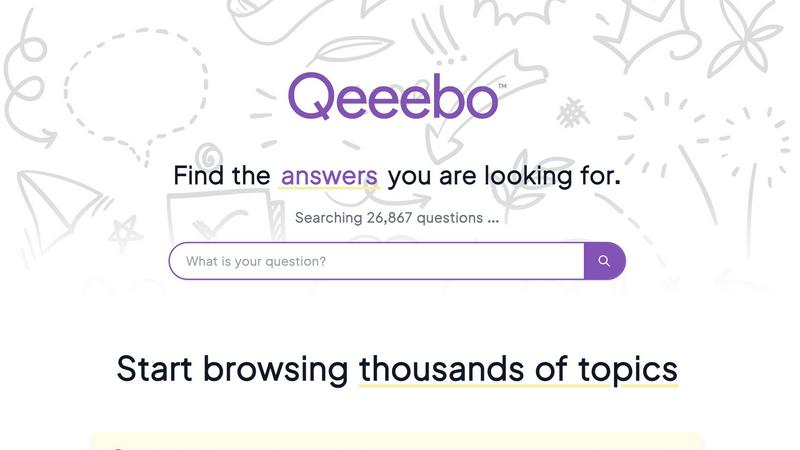
Qeeebo is your AI-powered encyclopedia that delivers comprehensive answers across thousands of topics and questions.
Last updated: March 1, 2026

SchoolGPT
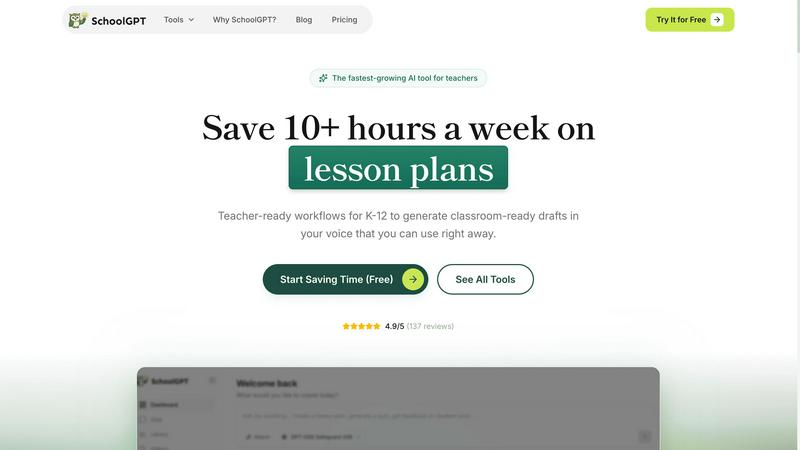
SchoolGPT is an AI teaching assistant that saves educators hours each week on lesson planning and grading.
Last updated: February 28, 2026
Visual Comparison
Qeeebo
SchoolGPT
Feature Comparison
Qeeebo
AI-Curated Knowledge Repository
At its core, Qeeebo leverages artificial intelligence to structure and curate a massive, ever-growing collection of questions and answers. This AI-driven approach ensures consistency in formatting, reduces redundancy, and creates meaningful connections between related topics. The result is not a chaotic forum but a coherent, navigable library where information is organized for optimal discovery and clarity, allowing users to traverse millions of interconnected queries seamlessly.
Qeeebo Facts for In-Depth Understanding
This specialized feature delivers comprehensive, long-form answers to complex questions. Each "Qeeebo Facts" entry is structured to provide ten key facts on a topic, accompanied by detailed cross-references to related questions and concepts. It is designed for users seeking more than a simple definition, offering a structured deep-dive that builds a robust understanding of subjects ranging from scientific principles to historical events.
Immutable Daily Snapshots with Qeeebo Trends
Qeeebo captures the pulse of current events through its Qeeebo Trends feature, which provides breaking news and trending topics as immutable daily snapshots. This unique approach freezes information in time, creating a historical record of daily discourse. It serves as a valuable resource for understanding the evolution of news stories and public interest, offering context that is often lost in the flow of real-time media.
Expansive and Organized Topic Taxonomy
The platform boasts a meticulously organized hierarchy of categories and subcategories, covering an immense range of human inquiry. From Health and Medicine to Politics, Law, Hobbies, and Mathematics, this structured taxonomy allows users to either browse broad fields of interest or drill down into highly specific niches. This systematic organization is fundamental to transforming a collection of Q&A into a true, navigable encyclopedia of knowledge.
SchoolGPT
Educator-Designed Template Library
SchoolGPT eliminates the guesswork of prompt engineering with a vast collection of over 60 ready-to-use templates created by and for teachers. These templates are tailored to specific educational tasks, such as generating a lesson plan, crafting a rubric, or leveling a text. Users simply select their desired tool, input basic parameters like topic or standard, and receive a polished, context-aware draft in seconds. This feature ensures that outputs are pedagogically sound and immediately useful, bypassing the trial-and-error process required with generic AI interfaces.
Standards-Aligned & Differentiated Outputs
Unlike general-purpose AI, SchoolGPT is built with the classroom in mind. Its tools are specifically programmed to align outputs with state educational standards, ensuring that generated lesson plans, assessments, and materials meet curricular requirements. Furthermore, it incorporates built-in differentiation, allowing teachers to easily adapt resources for varying student reading levels, skills, and learning needs. This creates an inclusive learning environment and saves countless hours of manual adaptation.
Multi-Model AI Integration
The platform provides centralized access to several leading AI models, including ChatGPT, Claude, and Gemini. This integration allows educators to leverage the distinct strengths of each model without needing multiple subscriptions or logins. Whether requiring deep analytical thinking for writing feedback or creative generation for lesson hooks, teachers can utilize the most appropriate AI engine for the task at hand, all within the streamlined SchoolGPT ecosystem.
FERPA & COPPA Compliant Security
SchoolGPT prioritizes the safety and privacy of educators and students. The platform is designed to be fully compliant with FERPA (Family Educational Rights and Privacy Act) and COPPA (Children's Online Privacy Protection Act). This commitment ensures that sensitive student data, grades, and personal information are handled with the highest standards of security and confidentiality, giving teachers and schools peace of mind when using AI-generated materials and feedback in their educational practice.
Use Cases
Qeeebo
Academic Research and Study Aid
Students and academics can utilize Qeeebo as a powerful starting point for research. The structured answers, particularly from "Qeeebo Facts," provide clear overviews and key facts on complex topics. The cross-referencing system allows for efficient exploration of related concepts, while the organized taxonomy helps in understanding the scope of a subject area, making it an excellent tool for formulating research questions and gathering foundational knowledge.
Professional Skill Development and Quick Reference
Professionals across industries, such as technology, business, or law, can use Qeeebo to quickly clarify concepts, understand industry terminology, or get concise overviews of adjacent fields. The platform's emphasis on clarity and conciseness makes it ideal for refreshing knowledge before a meeting, understanding a new market trend, or decoding specialized jargon without sifting through lengthy, unvetted articles.
Curious Exploration and Lifelong Learning
For the intellectually curious, Qeeebo serves as an endless source of discovery. Users can browse thousands of topics, from philosophy and astronomy to cooking techniques and travel tips, satisfying casual curiosity or fueling a passion for learning. The platform’s design encourages following a chain of related questions, enabling a rewarding and self-directed journey through interconnected knowledge.
Fact-Checking and Contextualizing Current Events
With its Qeeebo Trends feature, journalists, writers, and engaged citizens can access daily snapshots of breaking news. This immutable record provides a clear point of reference for how a story was understood on a given day, aiding in fact-checking and providing valuable context about the evolution of public narratives and media coverage over time.
SchoolGPT
Streamlining Lesson Planning and Unit Design
Teachers can rapidly generate comprehensive, multi-day lesson plans or entire unit plans based on a specific topic, learning objective, or state standard. By inputting basic parameters, educators receive a structured draft complete with objectives, activities, materials, and differentiation strategies, cutting planning time from hours to minutes and ensuring alignment with curriculum goals.
Automating Assessment Creation and Grading Feedback
Creating quizzes, tests, and rubrics becomes an efficient process. Educators can generate multiple-choice questions, text-dependent queries, and detailed custom rubrics for any assignment. Furthermore, the Writing Feedback tool allows for the instant generation of personalized, criterion-based feedback on student work, providing consistent, high-quality evaluation that supports student growth while drastically reducing grading time.
Enhancing Communication with Families and Colleagues
SchoolGPT simplifies professional communication by providing templates for drafting clear, compassionate, and effective emails to students' families regarding progress, behavior, or achievements. It also assists in crafting professional emails to colleagues and administrators, as well as generating formal documents like letters of recommendation, ensuring communication is both efficient and polished.
Differentiating Instructional Materials
The Text Leveler tool is instrumental for creating an accessible classroom. Teachers can input any text—from a primary source document to a news article—and instantly adapt its complexity to match the reading level of individual students or groups. This promotes literacy and comprehension for all learners without requiring the teacher to manually rewrite or source multiple versions of materials.
Overview
About Qeeebo
Qeeebo is a next-generation, AI-curated question-and-answer platform with a bold, singular vision: to construct one of the largest and most organized repositories of human knowledge in the world. It transcends the traditional forum model by creating a unified, structured, and scalable library of questions and answers across a vast spectrum of topics, from health and technology to history, arts, and beyond. Designed for universal accessibility, Qeeebo serves students, researchers, professionals, and the perpetually curious, offering a direct path to reliable, concise, and interconnected information. Its core value proposition lies in eliminating the noise and redundancy of conventional Q&A sites, providing a clean, efficient, and deeply interconnected knowledge system. By harnessing sophisticated AI for curation and organization alongside a commitment to clarity, Qeeebo aims to become a foundational layer for information discovery on the web, making comprehensive knowledge instantly accessible for quick inquiries, in-depth research, or casual intellectual exploration.
About SchoolGPT
SchoolGPT stands as a transformative AI teaching assistant, meticulously engineered for the unique and demanding environment of K-12 education. It transcends the limitations of generic AI chatbots by providing a purpose-built platform that directly addresses the core challenges faced by educators daily. This all-in-one solution aggregates powerful AI models like ChatGPT, Claude, and Gemini into a single, intuitive interface, pre-configured with over 60 educator-designed templates. The platform's primary mission is to liberate teachers from the burdens of administrative overload and complex prompt engineering, enabling them to reclaim significant time—often 10+ hours per week. By automating the generation of high-quality, classroom-ready resources such as standards-aligned lesson plans, differentiated quizzes, detailed rubrics, and personalized report card comments, SchoolGPT allows educators to refocus their energy on what matters most: teaching and connecting with students. It ensures outputs are crafted in the teacher's unique voice and are immediately applicable, fostering a more sustainable, efficient, and impactful educational practice for a growing community of over 10,000 educators.
Frequently Asked Questions
Qeeebo FAQ
What makes Qeeebo different from other Q&A websites like Quora or Reddit?
Unlike traditional forums that rely on user-generated, often unstructured and opinion-based threads, Qeeebo is an AI-curated knowledge system. It prioritizes organization, consistency, and conciseness. Answers are structured to be informative and direct, and the entire platform is designed as an interconnected library rather than a discussion board. This reduces noise, eliminates redundancy, and makes finding reliable, factual information significantly faster and more efficient.
How does Qeeebo ensure the accuracy of its content?
Qeeebo employs a multi-faceted approach to content quality. It utilizes AI for initial curation and structuring, but operates under a clear Editorial Policy and Corrections Policy. The platform's model of creating concise, fact-based entries is inherently geared towards verifiable information. Furthermore, its focus on building a structured knowledge base, as opposed to hosting open-ended debate, allows for more rigorous content standards and systematic updates.
Can I use Qeeebo content for my own projects or research?
According to Qeeebo's Content Use Policy, limited excerpts of its content may be shared with appropriate attribution. Automated access for search engines, research, and AI systems is also permitted in line with their policies. However, bulk republication, database mirroring, or commercial reuse without explicit authorization is prohibited. Users are advised to review the full Content Use and Citation Policies on the website for specific guidelines.
What is the goal of the "Qeeebo Trends" daily snapshots?
The goal of Qeeebo Trends is to capture and preserve the state of breaking news and public discourse on a daily basis. By taking immutable snapshots, Qeeebo creates a historical archive of trending topics. This serves as a valuable tool for understanding how stories develop, how public perception shifts, and for providing a fixed reference point that is immune to the constant updates and revisions typical of live news cycles.
SchoolGPT FAQ
Is SchoolGPT really free to start?
Yes, SchoolGPT offers a robust Free Forever plan that includes 10 AI generations per month at no cost and does not require a credit card to sign up. This allows educators to fully explore the platform's core tools and templates, experience the time-saving benefits firsthand, and determine if the unlimited Pro plan is right for their needs.
Why not just use ChatGPT or another generic AI?
While powerful, generic AI like standard ChatGPT requires significant "prompt engineering" skill and time to produce educationally relevant, classroom-ready materials. SchoolGPT removes this barrier with pre-built templates designed by educators, ensures alignment with state standards, builds in differentiation, and guarantees compliance with student privacy laws (FERPA/COPPA), making it instantly useful and context-aware for teachers.
Is my data and student information safe?
Absolutely. SchoolGPT is built with educator and student safety as a core principle. The platform is fully compliant with FERPA and COPPA regulations. This means it adheres to strict standards for handling educational records and children's online privacy, ensuring that any information processed within the tools is secure and confidential.
How much time will I actually save?
Based on feedback from our community of over 10,000 teachers, educators consistently report saving more than 10 hours per week on tasks like lesson planning, creating assessments, writing report card comments, and drafting communications. This reclaimed time translates to less weekend work, reduced burnout, and more capacity to focus on direct student instruction and personal well-being.
Alternatives
Qeeebo Alternatives
Qeeebo is an AI-powered question-and-answer platform within the Education & Learning category, designed as a vast, organized repository for discovering reliable answers across countless topics. Users often seek alternatives for various reasons, including specific budget constraints, a need for different feature sets like collaborative tools or multimedia integration, or a preference for platforms with a different focus, such as expert-led communities or academic databases. When evaluating an alternative, it's crucial to consider your primary goal. Are you seeking rapid, AI-generated summaries for general knowledge, or do you require verified, peer-reviewed information for academic work? Other factors include the depth and breadth of topic coverage, the intuitiveness of the search and navigation experience, and the platform's long-term commitment to content accuracy and scalability. The ideal choice aligns with your specific need for information discovery, whether for casual inquiry or structured research.
SchoolGPT Alternatives
SchoolGPT is an AI teaching assistant designed specifically for K-12 educators, operating within the educational technology and AI productivity category. It streamlines administrative tasks like lesson planning and grading, aiming to save teachers significant time each week. Educators may seek alternatives for various reasons, including budget constraints, specific feature requirements not covered by a single platform, or a need for tools that integrate with their existing district's software ecosystem. The search often centers on finding the right balance between cost, functionality, ease of use, and compliance with educational standards. When evaluating other options, key considerations should include the tool's alignment with curriculum standards, its ability to produce differentiated materials, the quality and relevance of its content templates, and overall data security and privacy protections for student information. The ideal alternative should genuinely reduce administrative burden without adding complexity.