

Image to 3D AI
Instantly transform any 2D image into a detailed 3D model for free with powerful AI.
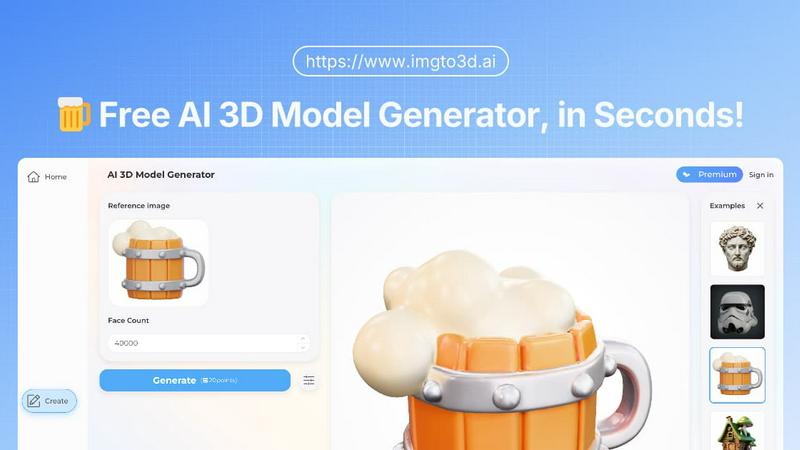
About Image to 3D AI
Image to 3D AI, powered by ImgTo3D.ai, represents a foundational shift in the landscape of digital content creation. This advanced platform is an AI 3D model generator that transforms static two-dimensional inputs—including photographs, digital art, and hand-drawn sketches—into fully realized, textured 3D geometry in a matter of seconds. It directly addresses the exploding demands of modern creative industries by automating the complex, traditionally time-consuming process of 3D modeling. This eliminates the steep learning curve and extensive manual effort required in professional software like Blender or Maya, thereby democratizing access to professional-grade asset creation. The product is engineered for a vast and diverse spectrum of users, from indie game developers and 3D printing enthusiasts to e-commerce managers, XR experience creators, and digital artists. Its core value proposition is threefold: delivering unprecedented speed in asset generation, providing truly accessible creation through a robust and permanent free tier, and outputting production-ready, optimized 3D models. By intelligently analyzing depth, shape, and texture from a single image, its AI constructs models that are immediately usable in popular game engines like Unity and Unreal Engine or suitable for 3D printing, effectively bridging the gap from initial concept to functional asset faster than ever before.
Features of Image to 3D AI
AI-Powered Textured Image-to-3D Conversion
This core feature leverages cutting-edge deep learning algorithms to instantly transform any 2D image into a detailed, textured 3D model. The AI intelligently interprets depth, form, and surface details from a single input, constructing a complete three-dimensional mesh. Users can select between different generation modes like "Turbo" and "Ultra" to balance speed and detail, making it a versatile tool for both rapid prototyping and high-fidelity asset creation without any manual modeling required.
Texture Support and Multi-Format Export
Image to 3D AI ensures production-ready output by supporting textured models and exporting them in the industry-standard OBJ, GLB, and STL formats. This comprehensive format compatibility makes the generated assets perfect for a wide range of downstream workflows, including game development, AR/VR application building, and 3D printing, ensuring seamless integration into professional pipelines and software ecosystems.
Free Tier with Adaptive Polygon Control
Upholding a vision of democratized 3D creation, the platform offers a permanently free AI 3D model generator with no sign-up or credit card required. This free tier includes intelligent control over polygon density, allowing users to adjust the face count to balance model detail with performance needs. The algorithm preserves critical details while optimizing the mesh, ensuring an optimal balance between quality and efficiency for most personal and prototyping use cases.
Professional-Grade Mesh Optimization
Beyond simple conversion, the platform provides advanced mesh optimization tailored for real-time performance. Features like adaptive mesh optimization ensure models are not only detailed but also efficient, crucial for maintaining high frame rates in games and VR experiences. This intelligent processing cuts down integration time significantly and produces models that are optimized for their intended use, whether it's a low-poly game asset or a high-detail printable object.
Use Cases of Image to 3D AI
Game Development
Indie and professional developers can rapidly create characters, environments, props, and other in-game assets in minutes instead of days. The tool is perfect for both rapid prototyping and generating final production assets, with export formats and optimization settings that ensure seamless import into engines like Unity and Unreal Engine, dramatically accelerating development cycles.
3D Printing
Hobbyists and professionals can easily transform photos or sketches into printable 3D objects. The platform converts 2D concepts into 3D models exportable in STL and OBJ formats, which are ideal for physical production. This enables the creation of custom figurines, practical tools, artistic sculptures, and more, sending designs straight from imagination to the 3D printer with minimal technical barrier.
XR/VR Experience Creation
Creators building virtual and augmented reality worlds can quickly populate their environments with high-quality 3D assets. The AI's ability to generate optimized meshes is critical for maintaining performance in resource-constrained VR and AR applications. This allows for the efficient creation of expansive, detailed virtual spaces for training, simulation, entertainment, and retail experiences.
Creative Portfolio Development
Digital artists, concept artists, and designers can use the tool to rapidly iterate on ideas and transform 2D sketches or paintings into 3D models. This capability allows for the quick visualization of concepts and the building of dynamic, impressive portfolios that showcase both artistic vision and technical adaptability, without requiring weeks of dedicated 3D modeling training or effort.
Frequently Asked Questions
How does the free tier of Image to 3D AI work?
The free tier is a permanently available service that requires no sign-up, no software installation, and no credit card. Users can upload an image, adjust the polygon density, and generate a 3D model in OBJ format instantly. To ensure service quality for all users, free access may encounter processing queues during peak hours, but it remains a fully-featured tool designed to meet the needs of most individual creators and hobbyists.
What image formats and types work best with the AI?
The AI 3D model generator works best with clear, well-lit images of single objects in common formats like JPG, PNG, or WebP. For optimal results, use images with good contrast and minimal background clutter. The technology is also specifically adept at converting hand-drawn sketches and digital art into 3D models, making it a versatile tool for bringing various forms of 2D creativity into the third dimension.
What are the benefits of upgrading to Pro access?
Upgrading to Pro Image to 3D AI provides stable, priority access with no waiting queues or generation limits. Pro users gain the ability to export textured models in multiple formats (OBJ, GLB, STL) and access to advanced generation modes. This tier is designed for professionals and studios who require reliable, high-volume asset creation for commercial projects, ensuring maximum productivity without interruptions.
Are the generated 3D models ready for commercial use?
Yes, the 3D models generated by the platform are production-ready and can be used for commercial purposes, including in games, 3D printing for sale, and XR applications. The models are optimized, come with textures where applicable, and are exported in standard formats compatible with most industry software, allowing for immediate integration into professional workflows and final products.
Similar to Image to 3D AI

GetYouTubeTranscript
Free YouTube transcripts on the web, a Chrome extension, and an API + MCP server so AI assistants can read YouTube.


amaze.directory
Find an AI tool by the job you need done, not the buzzword.

benchmark.directory
A working index of AI tools. We record what each one costs, what it connects to, and exactly where it stops being useful.

saasgrow.ai
No sponsored slots, no paid placement. Just SaaS growth tools that passed screening, sorted into categories you can browse.

Tools Network
Tools Network is a curated directory that brings the internet's best AI tools together in one organized, easy-to-navigate place.