
dmaya vs vaethat
Side-by-side comparison to help you choose the right tool.

dmaya
dMaya is an AI design platform that streamlines UI creation, client collaboration, and code export, empowering teams to design efficiently.
Last updated: April 13, 2026

vaethat
Vaethat is the specialized AI that upscales and enhances architectural renders with precision and ease.
Last updated: February 28, 2026
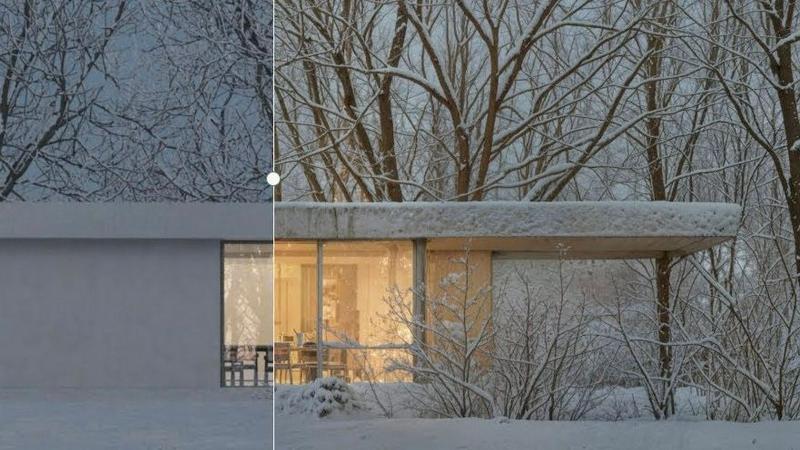
Visual Comparison
dmaya
vaethat
Feature Comparison
dmaya
AI-Powered Design Generation
dMaya's core feature is its ability to generate production-ready UI designs in mere seconds. By simply describing what you need in plain language, the platform creates complete layouts and responsive variants, allowing teams to focus on creativity rather than tedious manual design work.
Multi-Screen Canvas
The multi-screen canvas feature allows users to work across both desktop and mobile frames simultaneously. This infinite canvas mimics the flexibility of design tools like Figma, enabling users to drag, zoom, and organize their screens effortlessly while benefiting from AI-assisted design capabilities.
Built for Teams & Collaboration
Designed with collaboration in mind, dMaya facilitates real-time teamwork. Users can invite team members, share projects with clients, and leave comments, ensuring that everyone is aligned. Role-based access controls keep the workflow organized, allowing for efficient collaboration among designers, developers, and stakeholders.
Client Presentation Mode
dMaya offers a dedicated client presentation mode that enables users to share polished, interactive previews through a single link. This feature eliminates the need for clients to create accounts, simplifying the feedback process. Users can collect client insights and iterate on designs without ever leaving the platform.
vaethat
Specialized Archviz AI Engine
Unlike generic AI enhancers, vaethat's core technology is trained exclusively on a vast dataset of architectural visualization imagery. This allows it to recognize and optimally enhance architectural elements—from brickwork and glass to foliage and furniture—with an innate understanding of design intent. It preserves structural lines, avoids distorting geometric forms, and applies enhancements that are contextually appropriate for built environments, resulting in superior, more believable outcomes compared to standard models.
Multi-Image Project Workspace
Vaethat streamlines workflow for entire projects through its Multi-Image Workspace. Professionals can upload entire folders of renders from a single architectural visualization project simultaneously. This feature allows for batch processing, consistent application of enhancement presets across multiple views, and the ability to save sessions. It ensures a cohesive look and feel across all project imagery, dramatically saving time compared to enhancing each image individually.
One-Click Enhancement Presets
Eliminating complexity, vaethat operates on a simple upload-and-export principle without the need for textual prompts or intricate slider adjustments. Users select from predefined enhancement presets tailored for archviz, and the AI automatically applies a sophisticated suite of improvements. This includes intelligent upscaling for sharpness, detail refinement for textures and edges, and balanced lighting enhancement, making professional-grade post-production accessible in seconds.
Intelligent Artifact & Noise Cleanup
A critical feature for high-quality output, vaethat's AI is adept at identifying and removing common rendering artifacts such as noise, grain, fireflies, and banding. It cleans up these imperfections while meticulously preserving and even enhancing the intended detail of the scene. This results in impeccably clean, presentation-ready images that meet the highest industry standards without requiring manual cleanup in other software.
Use Cases
dmaya
Agencies
Agencies can leverage dMaya to pitch faster and win more clients. By generating design concepts during discovery calls and presenting multiple directions to stakeholders in a matter of hours rather than weeks, agencies can streamline their workflow and enhance client engagement.
Product Teams
Product teams can utilize dMaya to accelerate their design process, moving from ideation to sign-off without the burden of engineering resources. The platform fosters collaboration across design, product, and engineering teams, allowing for version comparisons and reducing the gap between design and development.
Freelancers
Freelancers can take advantage of dMaya to enhance their productivity and profitability. By delivering high-quality designs without extending their working hours, freelancers can accommodate more projects, thereby maximizing their earnings and client satisfaction.
Startups
Startups can benefit from dMaya's rapid design capabilities, allowing them to iterate quickly on their product concepts. By obtaining client feedback early in the process, startups can ensure that their designs resonate with their target audience, leading to a more successful product launch.
vaethat
Final Presentation Polish for Client Deliverables
Architectural firms and visualization studios use vaethat to apply the final layer of polish to renders before delivering to clients or stakeholders. The tool's ability to enhance sharpness, material definition, and overall realism ensures that every presentation image communicates the design with maximum impact and professionalism, helping to secure approvals and impress during critical reviews.
Portfolio Enhancement for Artists and Studios
3D artists and archviz specialists utilize vaethat to elevate the quality of work in their professional portfolios. By upscaling resolution and refining details, older renders can be revitalized, and current projects can be showcased at their absolute best. The consistent, high-quality output helps artists stand out in a competitive market, attracting potential clients and employers.
Batch Processing for Real Estate and Development Marketing
For large-scale real estate developments or marketing campaigns requiring dozens of render views, vaethat's Multi-Image Workspace is invaluable. Marketing teams can process entire sets of interior and exterior visuals efficiently, ensuring uniform enhancement quality across all assets used in brochures, websites, and advertisements, thereby maintaining a cohesive and premium brand image.
Pre-Print Enhancement for Large-Format Outputs
When architectural renders are destined for large-format printing, such as exhibition boards, banners, or billboards, resolution and detail are critical. Vaethat's AI upscaling and detail refinement capabilities prepare images for print at any scale, intelligently adding perceptible detail and clarity to ensure the final physical output is sharp, detailed, and free of pixelation or artifacts.
Overview
About dmaya
dMaya is a revolutionary vibe design platform crafted specifically for agencies, teams, and freelancers who prioritize the design phase before diving into coding. Unlike many AI tools that jump straight to code, dMaya facilitates a seamless design-first workflow that allows users to articulate their vision through natural language. By leveraging an intelligent AI agent, users can generate professional-grade UI designs based on simple text descriptions. Whether you're conceptualizing a SaaS dashboard, designing an e-commerce flow, or crafting a mobile app, dMaya turns your ideas into polished screens within seconds. The platform supports real-time iterations through conversational design, enabling users to adjust colors, layouts, typography, and more with immediate precision. When the design is ready, users can share a preview link with clients for instant feedback and approval, significantly accelerating the review cycle. Once approved, dMaya allows for easy exportation of designs as clean HTML, CSS, and JS code, ready for integration with various coding agents like Cursor or Claude Code. Ultimately, dMaya empowers teams to present, approve, and ship their designs with unmatched confidence and efficiency.
About vaethat
Vaethat represents a paradigm shift in the post-production workflow for architectural visualization, standing as a specialized AI-powered render enhancer meticulously crafted for the unique demands of archviz professionals. In an industry where visual fidelity, realism, and presentation quality are paramount, vaethat addresses the critical gap between raw 3D render output and client-ready imagery. It transcends the limitations of general-purpose AI image tools by leveraging a model trained exclusively on architectural visualization data. This deep specialization ensures it understands the intricacies of architectural geometry, material properties, lighting scenarios, and compositional intent. The core value proposition of vaethat lies in its ability to intelligently upscale resolution, refine minute details, enhance material realism, and eliminate rendering artifacts—all through an exceptionally streamlined, no-prompt-required interface. It empowers architects, 3D artists, and visualization studios to elevate their work efficiently, transforming good renders into exceptional, hyper-realistic presentations for portfolios, client approvals, and marketing materials without the time-intensive burden of manual digital painting or software hopping.
Frequently Asked Questions
dmaya FAQ
How does dMaya improve the design workflow?
dMaya enhances the design workflow by integrating AI technology that generates production-ready designs from text descriptions, allowing teams to focus on creativity rather than manual design tasks. This ensures that the design phase is efficient and effective.
Can I collaborate with my team in real-time on dMaya?
Yes, dMaya is built for collaboration. It allows users to invite team members, share projects, leave comments, and work together in real-time, ensuring that everyone involved is aligned and informed throughout the design process.
What frameworks can I export my designs to?
Once your designs are approved, you can export them as clean HTML, CSS, and JS code, which can then be handed over to any coding agent, including Cursor or Claude Code, for development in frameworks like React, Next.js, and Flutter.
Is there a need for clients to create accounts to provide feedback?
No, dMaya simplifies the feedback process by allowing clients to review designs through a single link without needing to create an account. This feature streamlines client interactions and speeds up the approval cycle.
vaethat FAQ
How does the AI render enhancer calculate credits?
Vaethat operates on a credit-based system where one credit is typically consumed per image enhancement process. The exact number of credits required may depend on the image's resolution or the specific enhancement preset applied. Uploading an image and applying the AI enhancement counts as a single credit use, allowing you to download the final result.
Can I use the archviz AI upscaler with V-Ray, Lumion, Enscape, 3ds Max, and SketchUp?
Absolutely. Vaethat is a post-production tool that works independently of your 3D modeling or rendering software. You simply export your final renders from any application—including V-Ray, Lumion, Enscape, 3ds Max, SketchUp, Twinmotion, and others—in a standard image format (like JPG or PNG) and upload it to vaethat for enhancement.
What makes this AI post-production tool different from manual editing?
Vaethat automates and standardizes complex post-production tasks that would otherwise require significant manual skill and time in software like Photoshop. It applies a sophisticated, consistent set of enhancements—upscaling, denoising, detail recovery, lighting balance—in seconds based on archviz-specific intelligence, achieving results that are often more uniform and faster than manual methods.
Does Vaethat use my architectural renders to train AI models?
No. According to the provided information, user privacy and data security are priorities. Your uploaded architectural renders are processed solely for the purpose of providing the enhancement service and are not used to train or improve vaethat's AI models. You retain full ownership of your original and enhanced images.
Alternatives
dmaya Alternatives
dMaya is an innovative AI vibe design platform tailored for agencies, teams, and freelancers who require a streamlined approach to UI design before diving into coding. By leveraging artificial intelligence, dMaya allows users to generate professional-quality UI designs from simple text descriptions, facilitating rapid design iterations and client feedback. This emphasis on design helps ensure intentional decision-making and early problem detection, ultimately enhancing the overall development process. Users frequently seek alternatives to dMaya for various reasons, including pricing considerations, specific feature requirements, or the need for compatibility with certain platforms. When exploring alternatives, it is essential to consider aspects such as the ease of use, the flexibility of design tools, collaboration capabilities, and the ability to integrate with existing workflows. Understanding these factors can help users find a solution that aligns with their unique project needs and enhances their design and development processes.
vaethat Alternatives
Vaethat is an AI-powered tool in the design software category, specifically built for architectural visualization professionals. Its core function is to intelligently upscale and enhance 3D renders, refining details and improving overall image clarity to produce presentation-ready results. Users often explore alternatives for various practical reasons. These can include budget considerations, the need for different or more extensive feature sets, compatibility with specific operating systems or workflows, and preferences for different user interfaces or subscription models. The search for the right tool is a common step in optimizing a professional's toolkit. When evaluating an alternative, key factors to consider are the quality of AI upscaling and detail enhancement, the tool's ability to preserve the original design intent, the efficiency of the workflow, and the output's suitability for professional portfolios and client presentations. The ideal solution should seamlessly integrate into an existing archviz pipeline.