
Fusedash vs Threat Watch
Side-by-side comparison to help you choose the right tool.

Fusedash transforms raw data into clear dashboards and charts for instant team insights and action.
Last updated: March 4, 2026

Threat Watch
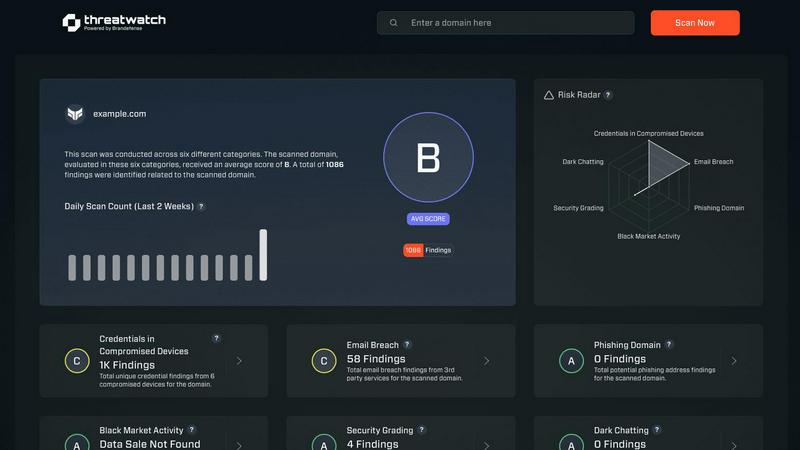
Threat Watch instantly evaluates your organization's complete cybersecurity health across all critical categories.
Last updated: March 1, 2026
Visual Comparison
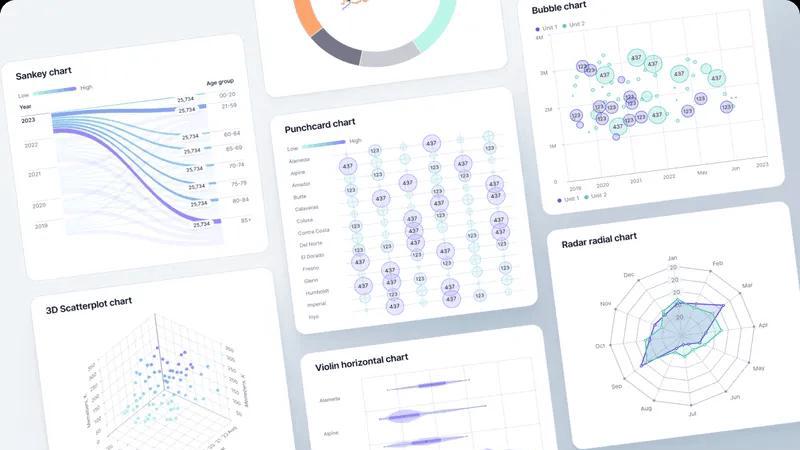
Fusedash
Threat Watch
Feature Comparison
Fusedash
Unified AI Visualization Workspace
Fusedash consolidates the entire data reporting workflow into one intuitive environment. Instead of juggling separate tools for dashboards, charts, maps, and reports, teams can create all these views from the same connected dataset. This unified approach means you build your data logic and KPIs a single time, then deploy them across interactive dashboards for monitoring, detailed charts for analysis, narrative reports for stakeholders, and even real-time monitoring interfaces. The platform's flexibility allows for custom layouts, filters, and time ranges, ensuring each audience gets the precise view they need without duplicating effort or compromising data consistency.
AI-Powered Chart Generator
This feature accelerates the initial step of data exploration and presentation. Users can instantly generate clear, accurate visualizations by simply uploading a CSV file or connecting to an API. The AI assists in selecting the most appropriate chart type for the data, applying meaningful comparisons, and refining labels to ensure the visual tells the correct story. These AI-generated charts can serve as powerful standalone visuals for quick reports or be seamlessly integrated into larger, more comprehensive dashboards, providing a fast track from raw data to understandable insight.
Intelligent Data Chat & Exploration
Fusedash incorporates a conversational AI interface that allows users to interact with their data using plain language. When unsure where to begin or needing a specific breakdown, users can ask questions like "What were sales by region last quarter?" or "Show me a breakdown of user churn by plan." The smart chat interprets these queries, explores the data, and provides suggested metrics, charts, and visual breakdowns. Crucially, these insights can be instantly transformed into permanent, shareable dashboard views, making advanced data analysis accessible to every team member regardless of their technical expertise.
Flexible Data Integration & Management
The platform is built to handle diverse data sources with ease, eliminating the need to rebuild analyses across different systems. Users can upload static CSVs, connect live data via APIs, and even enrich their views with relevant public datasets for added context, such as geographic or market data. Fusedash acts as a central hub where these datasets are organized, combined for unified views, and—most importantly—made reusable across every chart, dashboard, and report. This ensures data integrity and saves significant time in data preparation and management.
Threat Watch
Comprehensive Digital Footprint Analysis
Threat Watch performs a deep and continuous scan of an organization's external digital presence, identifying all internet-facing assets, domains, and associated infrastructure. This foundational feature maps the entire attack surface, ensuring no blind spots are left unmonitored, which is critical for understanding the scope of potential vulnerabilities and exposures that could be targeted by malicious actors.
Dark Web & Breach Intelligence Monitoring
The platform actively surveils the dark web, underground forums, and a vast array of breach databases to detect if corporate credentials, sensitive data, or intellectual property are being traded or discussed. This proactive monitoring provides early warning signs of compromise long before traditional security tools might alert, allowing for preemptive action such as credential resets and security policy enforcement.
Real-Time Phishing & Impersonation Detection
Threat Watch continuously scans for phishing campaigns, fraudulent domains, and brand impersonation attempts that target the organization and its employees. By identifying malicious sites and email addresses that mimic legitimate ones, it helps prevent successful social engineering attacks and protects the organization's brand integrity and stakeholder trust.
Prioritized Risk Scoring & Actionable Insights
Beyond mere data aggregation, Threat Watch employs advanced correlation and analytics to assign contextual risk scores to every discovered threat and vulnerability. This prioritization transforms raw data into a clear, actionable roadmap for security teams, directing remediation efforts to the issues that pose the most significant business risk first, thereby optimizing resource allocation and response efficiency.
Use Cases
Fusedash
Executive Leadership Reporting
For C-suite executives and department heads, Fusedash provides a high-level, consistent view of organizational health. Leaders can access a unified dashboard that combines financial, operational, and customer KPIs from various sources into a single narrative. The storytelling and reporting features add crucial context to the numbers, explaining what changed, why it matters, and what the proposed next steps are. This eliminates the need for manually compiled slide decks and ensures all leadership discussions are grounded in the same verified data.
Marketing Campaign Performance Analysis
Marketing teams can use Fusedash to move beyond scattered analytics tools. They can connect data from ad platforms, CRM systems, and web analytics into one workspace to build comprehensive campaign dashboards. The AI chart generator helps quickly visualize conversion trends and ROI, while the ability to drill down allows them to segment performance by channel, audience, or geographic region. This enables rapid, data-driven optimization of campaigns and clear reporting of results to stakeholders.
Operational Real-Time Monitoring
Operations and support teams require live visibility into key processes. Fusedash's real-time interface capabilities allow for the creation of live monitoring dashboards that track metrics like system uptime, ticket volume, or supply chain status. Teams can see issues as they emerge, and the drill-down functionality helps quickly diagnose root causes by examining specific time periods or operational segments, enabling faster response and resolution.
Cross-Departmental Strategic Alignment
Fusedash acts as the single source of truth that bridges departmental silos. Sales, finance, and product teams can all build their specific views—from sales pipelines and revenue charts to user engagement maps—from the same core dataset with consistent metric definitions. This shared foundation prevents conflicts arising from different data interpretations, fosters transparency, and aligns all teams around common organizational goals and KPIs, driving cohesive strategic action.
Threat Watch
Proactive External Risk Management
Security and risk management teams utilize Threat Watch to gain a continuous, outside-in view of their organization's security posture. This enables them to identify and assess external threats—like exposed databases, misconfigured cloud storage, or leaked credentials—before they are exploited, allowing for proactive mitigation and strengthening of the overall security framework.
Accelerated Incident Response & Investigation
During a suspected breach or security incident, Threat Watch serves as a critical intelligence source. Teams can quickly investigate if corporate assets or employee credentials have appeared in recent breach dumps or dark web markets, providing crucial context for the incident's scope and origin, which dramatically speeds up containment and eradication efforts.
Third-Party & Supply Chain Risk Assessment
Organizations can extend the platform's monitoring capabilities to assess the cybersecurity health of key vendors, partners, and suppliers. By understanding the external risks present in their supply chain, businesses can make more informed partnership decisions and enforce stronger security requirements, reducing third-party risk exposure.
Executive & Board-Level Security Reporting
Threat Watch provides clear, non-technical dashboards and reports that translate complex threat data into business-centric metrics. This empowers CISOs, executives, and board members to understand the organization's cyber risk in financial and operational terms, facilitating better-informed strategic decisions and cybersecurity investment justifications.
Overview
About Fusedash
Fusedash represents a paradigm shift in how modern organizations interact with their data, moving beyond fragmented tools to a unified, intelligent workspace. It is an AI-powered data visualization platform engineered to transform raw, connected data into clear, actionable insights that drive alignment and decisive action. At its core, Fusedash solves the pervasive problem of data inconsistency and manual reporting fatigue by providing a single source of truth. Teams can define their key metrics and KPIs once and then reuse those consistent definitions across every dashboard, chart, map, and narrative report. This ensures that everyone from executive leadership and marketing teams to operations specialists is interpreting the same trusted numbers, eliminating conflicting data stories and endless cycles of reconciliation. Designed for agility, Fusedash empowers users to not only monitor real-time performance through dynamic interfaces but also to deeply understand the 'why' behind the numbers by drilling down into specific segments, regions, or time periods. By integrating advanced AI capabilities like natural language data chat and smart visualization assistance, it dramatically lowers the barrier to sophisticated data exploration. Fusedash is the comprehensive solution for teams seeking to replace a patchwork of disconnected tools with a cohesive platform that turns data into a strategic asset for storytelling, monitoring, and informed decision-making.
About Threat Watch
In the contemporary digital ecosystem, where cyber threats evolve with alarming sophistication and frequency, maintaining robust security is a universal imperative for every organization. Threat Watch stands as a definitive answer to this challenge, offering a unified cybersecurity intelligence platform that provides unparalleled visibility into an organization's external security posture. It is engineered to function as a continuous diagnostic and monitoring system, meticulously scanning and analyzing an organization's digital footprint across the internet, dark web, and various breach repositories. By aggregating and correlating data from diverse and critical sources—including compromised credentials, exposed assets, phishing campaigns, and dark web chatter—it synthesizes a clear, actionable, and real-time overview of cyber health. This solution is designed for IT security teams, risk management professionals, and executive leaders who seek to transition from a reactive, incident-driven approach to a proactive, intelligence-led security strategy. The core value proposition of Threat Watch is its powerful ability to distill vast oceans of complex threat data into prioritized, comprehensible insights. It automates critical external assessments, enabling organizations to swiftly uncover lurking threats, understand their actual business risk, and orchestrate efficient remediation efforts, thereby significantly reducing the window of exposure and potential operational or reputational damage.
Frequently Asked Questions
Fusedash FAQ
What types of data sources can I connect to Fusedash?
Fusedash is designed for flexibility in data integration. You can start by uploading static data files like CSVs or Excel sheets. For live, updating data, you can connect directly to a wide variety of sources using API connections. The platform also allows you to combine multiple datasets, including enriching your views with public data, to create comprehensive and context-rich analyses without needing to switch between different tools.
How does the AI Chart Generator work?
The AI Chart Generator simplifies the initial visualization process. After you provide your dataset via CSV or API, the AI analyzes the structure and content of your data. It then suggests the most appropriate and effective chart types (e.g., line charts for trends, bar charts for comparisons) to represent your information clearly. You maintain full control to refine the suggestions, add filters, apply comparisons, and adjust labels to ensure the final visual accurately communicates the intended story.
Can I control who sees which dashboards and reports?
Yes, Fusedash is built for collaborative yet controlled sharing. You can create different views—from high-level executive dashboards to detailed team-specific reports—from the same consistent data. These views can then be shared with specific stakeholders, teams, or the entire organization. This ensures that each audience receives information tailored to their needs while maintaining underlying data integrity and security permissions.
What is the benefit of having dashboards and reports in one workspace?
The primary benefit is efficiency and consistency. Traditionally, teams build dashboards in one tool and then manually recreate the data in slides or documents for reporting, leading to errors and version control issues. Fusedash eliminates this duplication. You build your metrics once, and then use them for both real-time monitoring dashboards and narrative, context-driven reports. This "define once, use everywhere" philosophy saves immense time and guarantees that everyone is aligned with the same numbers and insights.
Threat Watch FAQ
How does Threat Watch discover my organization's digital assets?
Threat Watch employs a combination of advanced discovery techniques, including passive DNS analysis, SSL certificate scanning, and active reconnaissance within safe and legal boundaries. It continuously crawls the public internet and associated data sources to identify all digital properties—such as domains, subdomains, IP addresses, and cloud instances—associated with your organization's brand and infrastructure.
What types of data sources does the platform monitor?
The platform aggregates intelligence from a vast and diverse array of sources. This includes public breach databases, dark web forums and marketplaces, phishing feeds, paste sites, code repositories, SSL certificate logs, and global domain registration data. This multi-source approach ensures comprehensive coverage and reduces the chance of missing critical threat indicators.
Is the free scan truly free, and what does it include?
Yes, the initial scan offered by Threat Watch is completely free and requires no credit card. It provides a snapshot assessment of your organization's security across key categories like exposed credentials, compromised devices, and phishing risks. This serves as a valuable proof-of-concept to demonstrate the platform's immediate value and the specific risks facing your organization.
How does Threat Watch help prioritize which threats to address first?
Threat Watch does not just list findings; it analyzes them through a risk-based lens. Each identified vulnerability or exposure is assigned a dynamic risk score based on factors like exploitability, asset criticality, and active threat context. This scoring system, presented through an intuitive dashboard, clearly highlights the most severe and imminent risks, enabling security teams to focus their efforts where they will have the greatest impact.
Alternatives
Fusedash Alternatives
Fusedash is an AI-powered data visualization and business intelligence platform. It serves as a unified workspace where teams can transform raw data from various sources into consistent dashboards, interactive charts, and narrative reports. The core aim is to create a single, trusted source of truth that drives organizational alignment and informed action. Users often explore alternatives for a variety of practical reasons. These can include budget constraints, the need for specific integrations with an existing tech stack, or requirements for more advanced or niche analytical capabilities. Some teams may also seek solutions with different user experience philosophies or deployment options, such as on-premise versus cloud-based models. When evaluating alternatives, it's crucial to consider several key factors. Look for a platform's ability to connect to your essential data sources and its scalability as your data grows. Assess the ease of use for both creators and viewers, the depth of visualization and reporting features, and the strength of collaboration tools. Ultimately, the right choice should empower your entire team with consistent, accessible insights that streamline decision-making.
Threat Watch Alternatives
Threat Watch is a unified cybersecurity intelligence platform, operating within the business intelligence and security analytics category. It delivers a comprehensive, real-time evaluation of an organization's external digital health by aggregating data from diverse sources like the dark web and breach databases, transforming it into prioritized, actionable insights for proactive defense. Users often explore alternatives for various practical reasons. These can include budget constraints and specific pricing models, the need for integration with an existing security stack, or a requirement for different feature sets tailored to unique organizational workflows. The search for a different solution is a natural part of finding the optimal fit for a company's size, maturity, and specific risk profile. When evaluating any alternative, key considerations should include the depth and real-time nature of threat intelligence coverage, the clarity and actionability of the presented insights, and the platform's ability to automate monitoring to reduce manual overhead. The ideal solution should not just collect data, but effectively contextualize it to empower strategic, risk-based decision-making across technical and business teams.