
diffray vs Skene
Side-by-side comparison to help you choose the right tool.

diffray
Diffray uses multi-agent AI to catch real bugs in code reviews, not just nitpicks.
Last updated: February 28, 2026

Skene automates onboarding and retention directly from your codebase, enabling seamless product-led growth without.
Last updated: February 28, 2026
Visual Comparison
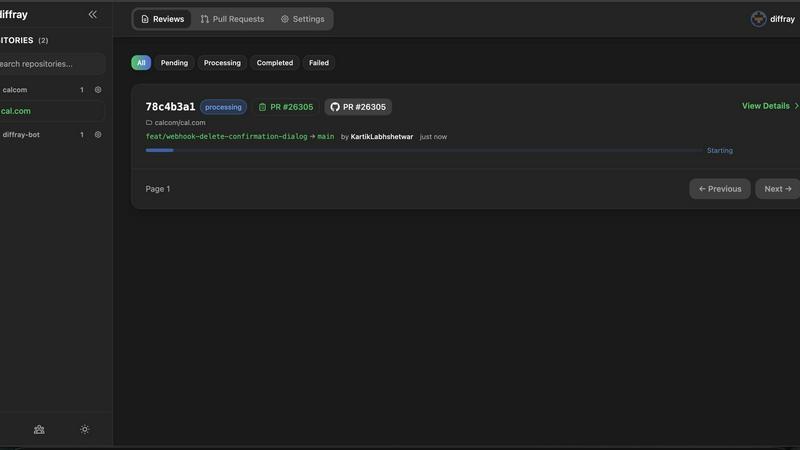
diffray
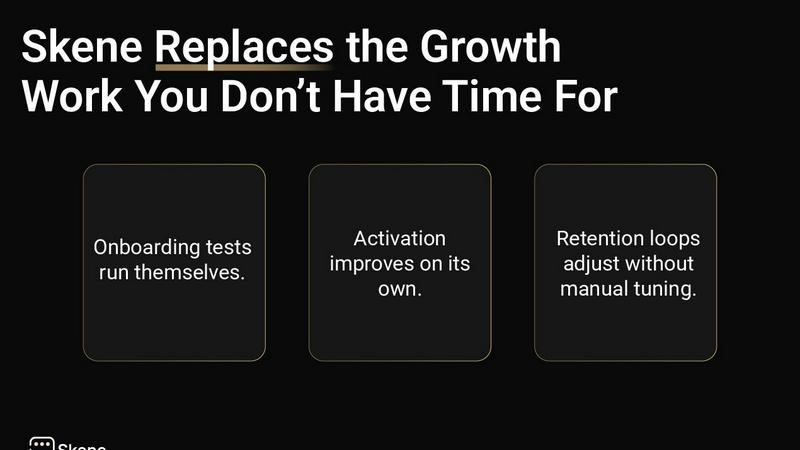
Skene
Feature Comparison
diffray
Multi-Agent AI Architecture
Unlike single-model AI review tools, diffray leverages a team of over 30 specialized AI agents, each trained as an expert in a specific domain. This includes dedicated agents for security vulnerabilities, performance anti-patterns, language-specific best practices, bug detection, and even SEO for relevant codebases. This collaborative, expert-driven approach ensures that feedback is not generic but is precisely targeted and highly relevant to the specific type of issue being examined, dramatically increasing the accuracy and usefulness of every comment.
Full-Codebase Contextual Analysis
diffray moves beyond simple line-by-line diff analysis. Its agents intelligently investigate the full context of your repository. They cross-reference new changes against existing code patterns, library usage, architectural decisions, and established conventions within the project. This deep contextual understanding allows diffray to distinguish between a genuine mistake and an intentional design pattern, providing suggestions that are truly relevant to your project's unique environment and significantly reducing false positives.
High-Signal, Actionable Feedback
The platform is engineered to prioritize quality over quantity. By combining domain expertise with deep contextual awareness, diffray filters out the noise that plagues other tools. It delivers concise, actionable insights that developers can immediately understand and act upon. This transforms the AI from a source of alert fatigue into a trusted advisor, enabling developers to focus their cognitive energy on complex problem-solving rather than sifting through low-value suggestions.
Seamless GitHub Integration & Privacy Commitment
diffray integrates directly into your existing GitHub workflow, appearing as a native participant in your pull request review process. Setup is minimal, requiring no disruptive changes to developer habits. Furthermore, the platform is built with a fundamental commitment to code privacy and security, ensuring your intellectual property remains protected. This combination of effortless integration and strong security principles makes it a viable and trustworthy tool for teams of all sizes, from fast-moving startups to large enterprises.
Skene
Automated User Journey Optimization
Skene streamlines the user journey by automatically analyzing user behaviors and interactions. This feature allows for continuous optimization of onboarding, activation, and retention stages, ensuring that the user experience is always improving without manual intervention.
Codebase Integration
Skene connects directly to your codebase, analyzing it to derive valuable growth signals. This direct integration eliminates the need for third-party scripts that can disrupt product performance and keeps your data accessible and manageable within your system.
Real-Time Analytics Dashboard
The platform provides a robust analytics dashboard that tracks real-time user progress, completion rates, and engagement metrics. This feature helps identify bottlenecks in the user journey, enabling developers to make informed adjustments to enhance user experiences.
Outcome-Based Pricing Model
Skene employs an innovative pricing strategy where costs are incurred only when customers successfully complete their onboarding journey. This model aligns Skene's success with that of its users, providing a risk-free way to enhance growth without upfront costs.
Use Cases
diffray
Accelerating Pull Request Reviews for Engineering Teams
Development teams use diffray to drastically reduce the time spent on manual code review cycles. By automatically surfacing critical issues, security flaws, and performance concerns as soon as a PR is opened, diffray allows human reviewers to focus on higher-level architecture, design patterns, and knowledge sharing. This leads to faster merge times, increased developer velocity, and more consistent code quality across the entire team without adding bureaucratic overhead.
Enforcing Code Quality and Best Practices at Scale
For engineering leads and architects, diffray acts as a scalable, always-on guardian of code quality. It consistently enforces project-specific and industry-wide best practices, coding standards, and architectural patterns across every pull request, regardless of the reviewer's individual expertise. This ensures a uniformly high-quality codebase, reduces technical debt accumulation, and accelerates the onboarding of new developers by providing immediate, contextual feedback aligned with team standards.
Proactive Security and Vulnerability Prevention
Security teams and developers leverage diffray's specialized security agents to shift vulnerability detection left in the development lifecycle. The platform proactively identifies potential security anti-patterns, insecure API usage, and common vulnerability exposures (CVEs) in dependencies directly within the developer's workflow. This allows teams to remediate risks before code is merged, preventing security flaws from ever reaching production and building a more robust security posture proactively.
Maintaining Open Source Project Health
Maintainers of open-source projects utilize diffray's free tier to manage contributions from a diverse and global community. The platform helps efficiently review external pull requests by automatically checking for common issues, ensuring contributions adhere to project conventions, and identifying potential bugs or performance regressions. This helps maintain high standards of quality and security while reducing the maintainer's review burden and fostering a healthier, more sustainable open-source ecosystem.
Skene
Optimizing Onboarding Flows
Indie developers can utilize Skene to refine their onboarding processes. By leveraging automated insights and adjustments, they can ensure new users quickly understand and derive value from their product, reducing drop-off rates significantly.
Enhancing User Retention
Startups can implement Skene to focus on user retention strategies. By continuously monitoring engagement metrics and user behavior, Skene helps identify areas for improvement, ensuring users remain engaged and satisfied over time.
Streamlining Growth Strategies
Product managers can use Skene to develop and implement growth strategies seamlessly. With its automated feature set, managers can focus on high-level strategy while Skene handles the intricate details of user journey optimization.
Facilitating Data-Driven Decisions
With Skene's comprehensive analytics, teams can make data-driven decisions that enhance user experiences. By understanding user behavior and engagement patterns, businesses can tailor their product offerings more effectively to meet user needs.
Overview
About diffray
diffray represents a fundamental evolution in AI-powered code review, moving beyond the limitations of generic, single-model tools. It is a sophisticated platform designed for development teams who are serious about code quality, security, and developer productivity. At its core, diffray employs a revolutionary multi-agent architecture, where over 30 specialized AI agents—each an expert in a distinct domain like security vulnerabilities, performance bottlenecks, bug patterns, best practices, or SEO—collaboratively analyze pull requests. This targeted approach stands in stark contrast to traditional tools that use one model for everything, which often results in a flood of noisy, irrelevant comments that developers learn to ignore. The primary value proposition of diffray is delivering actionable, high-signal feedback that developers can actually use. By understanding not just the diff but the full context of your codebase, diffray's agents investigate rather than speculate. They cross-reference changes against existing patterns, libraries, and architectural decisions to provide precise, context-aware suggestions. The result is a transformative developer experience: teams report cutting PR review time dramatically while catching three times more genuine issues with 87% fewer false positives. diffray is built for professional engineering teams across startups and enterprises who want to leverage AI not as a source of distraction, but as a reliable, intelligent partner in maintaining robust and clean code. It integrates seamlessly with GitHub, offers a free tier for open-source projects, and ensures your code's privacy is never compromised.
About Skene
Skene is a groundbreaking automated Product-Led Growth (PLG) iteration engine tailored specifically for indie developers and early-stage startups. Its primary mission is to enable products to achieve sustainable growth autonomously, eliminating the necessity for dedicated growth teams. Skene continuously refines pivotal user journey stages, including onboarding, activation, and retention, by harnessing insights from user behaviors and interactions within the codebase. The platform intelligently monitors user actions to pinpoint friction zones and identify where activation may falter. By automatically creating, testing, and deploying enhanced user flows, Skene ensures that your onboarding process evolves to become more effective over time. This self-learning growth engine liberates developers from the burden of cumbersome dashboards and manual growth meetings, allowing indie creators to concentrate on their core development tasks. Moreover, startups can leverage a comprehensive growth solution conveniently packaged as a “growth team in a box.” With Skene, Product-Led Growth companies can refine their activation strategies and extend customer lifetime value without incurring the costs of additional personnel.
Frequently Asked Questions
diffray FAQ
How is diffray different from other AI code review tools?
diffray fundamentally differs through its multi-agent architecture. While most tools use a single, generalized AI model to comment on everything, diffray deploys a team of over 30 specialized agents, each an expert in a specific domain like security, performance, or bug detection. This allows for deeper, more accurate analysis. Furthermore, diffray analyzes your full codebase for context, leading to more relevant suggestions and far fewer false positives compared to tools that only look at the diff in isolation.
What programming languages and frameworks does diffray support?
diffray is designed with broad compatibility in mind. Its multi-agent system includes specialists for all major programming languages and popular frameworks. The platform continuously evolves, with agents trained on the latest language features, library updates, and framework-specific best practices. For the most current and detailed list of supported languages, it is recommended to check the official diffray documentation.
Is my source code kept private and secure with diffray?
Absolutely. Code privacy and security are foundational principles for diffray. The platform is built with enterprise-grade security measures to ensure your intellectual property is protected. Your code is analyzed in a secure environment, and diffray is committed to not storing or misusing your source code. You retain full ownership and control of your code at all times.
How do I get started with diffray for my team?
Getting started is straightforward. diffray offers a seamless integration with GitHub. You can typically begin by installing the diffray GitHub App on your organization or personal account, selecting the repositories you wish to enable it for, and configuring your review preferences. The platform often provides a free tier or trial, allowing teams to experience the benefits on their own codebase with minimal setup effort before committing to a paid plan.
Skene FAQ
What is PLG software?
PLG (Product-Led Growth) software is designed to help users discover value in a product autonomously, without relying on sales or customer success teams. It automates the user journey, guiding users towards activation and feature adoption through the product itself.
How is Skene different from traditional customer experience software?
Unlike traditional customer experience tools that require manual setup and maintenance, Skene automatically reads your codebase and generates onboarding flows and analytics. This ensures that every change you make to your code updates the user experience without additional effort.
How long does it take to set up?
The setup process is incredibly quick, taking less than 60 seconds. By simply connecting your read-only GitHub or GitLab repository, Skene analyzes the codebase and generates PLG flows without the need for code alterations or API modifications.
Is my code secure with Skene?
Yes, your code remains secure as Skene only requires read-only access to your repository. All analyses are conducted in a secure, isolated environment, ensuring the integrity and confidentiality of your code.
Alternatives
diffray Alternatives
diffray is a sophisticated AI-powered code review platform that represents a significant advancement in the development tool category. It moves beyond basic linting and static analysis by employing a multi-agent architecture, where over thirty specialized AI experts collaboratively analyze pull requests to catch genuine bugs, security flaws, and performance issues with high precision. Users may explore alternatives to diffray for various reasons, including budget constraints, specific integration requirements with platforms like GitLab or Bitbucket, or a preference for tools with different feature emphases, such as those focused solely on security scanning or simpler, single-model AI assistance. The needs of a solo developer differ greatly from those of a large enterprise team, driving a diverse market of solutions. When evaluating alternatives, key considerations should include the depth and accuracy of the AI analysis, the tool's ability to understand full codebase context to reduce false positives, integration capabilities with your existing development workflow, and robust data security and privacy policies. The ultimate goal is to find a solution that enhances developer productivity without becoming a source of noisy distractions.
Skene Alternatives
Skene is an innovative automated Product-Led Growth (PLG) iteration engine designed for indie developers and early-stage startups. This tool enhances the onboarding, activation, and retention processes by leveraging user behavior insights directly from the codebase, allowing products to evolve independently without requiring specialized growth teams. As a result, Skene empowers businesses to optimize user journeys seamlessly and effectively. Users often seek alternatives to Skene due to various factors, including pricing, specific feature sets, or compatibility with their existing platforms. When considering an alternative, it is essential to evaluate the solution’s ability to integrate with your existing workflow, the quality of insights it provides, and the overall cost-effectiveness. Look for tools that offer automated optimization and contextual insights while ensuring minimal disruption to your development process.