
CloudBurn vs Mod
Side-by-side comparison to help you choose the right tool.

CloudBurn
CloudBurn shows AWS cost estimates in pull requests to prevent expensive infrastructure mistakes.
Last updated: February 28, 2026

Mod is a CSS framework that accelerates SaaS development with a comprehensive library of ready to use UI components.
Visual Comparison
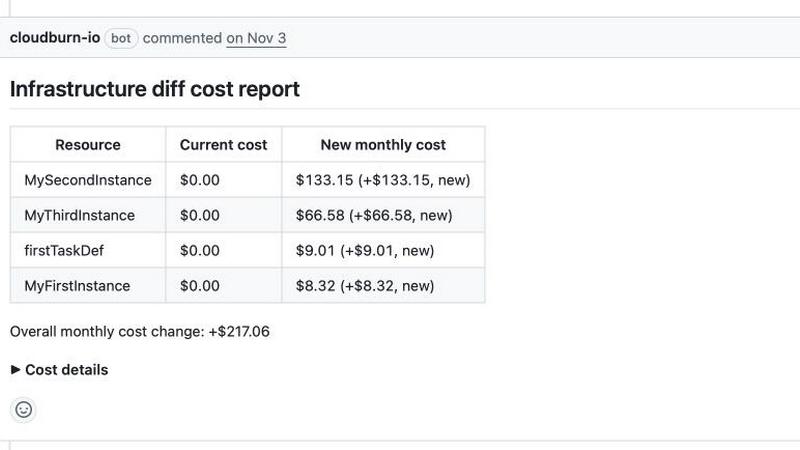
CloudBurn
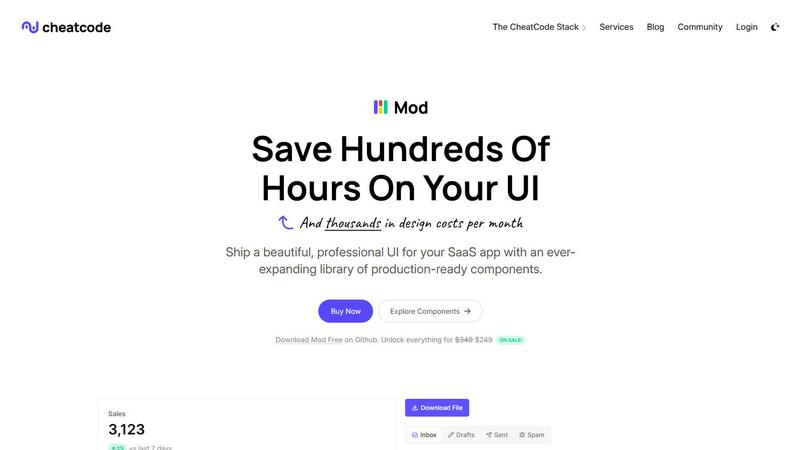
Mod
Feature Comparison
CloudBurn
Real-Time Pre-Deployment Cost Analysis
CloudBurn provides instantaneous, accurate cost estimates for infrastructure changes directly within the pull request workflow. By analyzing the output of cdk diff or terraform plan, it calculates the precise monthly financial impact using live AWS pricing data. This feature ensures that every stakeholder, from developers to engineering managers, understands the cost consequences of their code before it merges, enabling proactive optimization and preventing budgetary surprises.
Automated GitHub Integration
The platform offers seamless and secure integration with GitHub, requiring no complex billing setups or manual permission management. Once installed from the GitHub Marketplace, CloudBurn operates entirely through GitHub Actions. It automatically detects infrastructure changes in pull requests, processes the diff, and posts detailed cost reports as comments, creating a frictionless and automated FinOps feedback loop that requires minimal ongoing maintenance from your team.
Detailed Cost Breakdown Reports
Beyond a simple total, CloudBurn delivers granular, line-item cost reports for each resource being added, modified, or removed. Each report includes the current cost, the new projected monthly cost, the delta, and a detailed breakdown showing the hourly price and AWS service description. This level of detail is crucial for identifying specific, high-cost resources and understanding the pricing drivers behind your infrastructure decisions.
Support for Major IaC Tools
CloudBurn is built to integrate with the industry's leading Infrastructure-as-Code frameworks. It offers dedicated, easy-to-install GitHub Actions for both AWS Cloud Development Kit (CDK) and HashiCorp Terraform. This broad compatibility ensures that teams can adopt CloudBurn regardless of their preferred IaC tooling, making advanced cost governance accessible to a wide range of engineering organizations and cloud provisioning strategies.
Mod
Extensive Component Library
Mod provides an expansive suite of over 88 meticulously crafted, reusable UI components. This library covers the entire spectrum of interface needs for a SaaS product, including complex data tables, interactive forms, navigation bars, modals, cards, buttons, and feedback elements like alerts and toasts. Each component is built with accessibility and semantic HTML in mind, ensuring a solid foundation. This depth means developers rarely need to build common elements from scratch, instead assembling interfaces from reliable, pre-tested building blocks. The components are designed to work in harmony, guaranteeing visual consistency across your entire application without any extra effort.
Comprehensive Design System & Theming
Beyond individual components, Mod delivers a complete, coherent design system. This includes 168 distinct style utilities and two fully realized themes (light and dark) that can be applied globally. The system encompasses typography scales, a cohesive color palette with semantic meaning, consistent spacing units, and shadow elevations. The built-in, easy-to-implement dark mode support is a significant advantage for modern applications. This systematic approach ensures that every element you place adheres to the same visual rules, creating a professional and polished look that users instinctively trust, all without requiring a dedicated designer.
Framework Agnostic & Easy Integration
A standout feature of Mod is its complete independence from any specific JavaScript framework or meta-framework. It is crafted as pure, modern CSS with intuitive class names, allowing it to seamlessly integrate with Next.js, Nuxt, SvelteKit, Vite, Ruby on Rails, Django, PHP applications, and virtually any other web technology. This future-proofs your investment, as you can adopt Mod today and carry it forward through any stack migration. Integration is typically as simple as linking a CSS file or installing a package, meaning you can inject a complete design language into a new or existing project in minutes, not days.
Mobile-First & Fully Responsive
Every component and layout utility in Mod is constructed with a mobile-first, responsive philosophy at its core. The styles ensure that interfaces look and function flawlessly on devices of all sizes, from compact smartphones to large desktop monitors. Responsive behavior is baked in through intelligent use of CSS Grid, Flexbox, and responsive utility classes. This eliminates the need to write complex, custom media queries for common adjustments, allowing developers to build for all platforms simultaneously and ensuring a superior user experience regardless of how customers access your SaaS application.
Use Cases
CloudBurn
Preventing Costly Misconfigurations in PR Reviews
Engineering teams use CloudBurn to catch accidental provisioning of over-sized or unnecessarily expensive resources before code is merged. For instance, a developer might mistakenly specify a t3.xlarge instance instead of a t3.micro. CloudBurn flags this as a +$133.15 monthly increase in the PR comment, allowing the team to correct the error instantly, preventing a significant and recurring cost from ever hitting the AWS bill.
Enabling Data-Driven Architectural Discussions
During the design phase of a new feature or service, platform engineers and architects leverage CloudBurn's reports to compare the cost implications of different infrastructure approaches. Teams can evaluate the cost difference between EC2 instances, Fargate tasks, or various database tiers directly in their pull requests, making cost an integral part of the architectural decision-making process alongside performance and reliability.
Empowering Developer-Led FinOps
CloudBurn democratizes cloud cost management by putting actionable data directly into the hands of developers. Instead of a central FinOps team policing budgets reactively, developers gain immediate visibility into the financial impact of their own code. This fosters a culture of ownership and cost-awareness, where engineers are equipped to make efficient choices naturally as part of their standard development workflow.
Streamlining Compliance and Budget Governance
Organizations with strict cloud budget controls or chargeback models integrate CloudBurn as a governance gate. By setting up required status checks, they can ensure that no pull request with a cost impact exceeding a certain threshold can be merged without explicit approval. This creates an automated, scalable guardrail that enforces financial policy without slowing down development velocity.
Mod
Rapid Prototyping and MVP Development
For entrepreneurs and startups, speed to market is critical. Mod is the perfect tool for rapidly prototyping ideas and building a Minimum Viable Product (MVP). With its vast component library, developers can assemble a fully functional, visually credible front-end in a fraction of the time it would take to design and code from zero. This allows founders to validate business hypotheses with real users quickly, gather feedback, and iterate without being bottlenecked by UI development, enabling a lean and efficient startup methodology.
Modernizing Legacy Application UIs
Many established businesses struggle with outdated, inconsistent user interfaces that harm user satisfaction and productivity. Mod provides a strategic path for incremental UI modernization. Teams can integrate Mod's CSS into specific sections or new features of a legacy application—be it Rails, Django, or a traditional server-rendered app—without a full, risky rewrite. This allows for a gradual, low-risk refresh that delivers immediate visual and UX improvements, boosting internal morale and customer perception while planning for larger architectural changes.
Standardizing Design Across Development Teams
In growing engineering organizations, inconsistent UI implementation across different teams and features is a common pain point. Adopting Mod as a company-wide design system standardizes the visual language and component implementation. It serves as a single source of truth for front-end styles, reducing design debt, eliminating repetitive discussions about pixels and colors, and ensuring a unified brand experience. This leads to more efficient collaboration, faster onboarding for new developers, and a consistently professional product.
Building Internal Tools and Admin Panels
The development of internal dashboards, admin panels, and operational tools often receives less design resources but still requires clarity, functionality, and efficiency. Mod is ideally suited for this use case. Developers can leverage the pre-built data tables, form controls, charts containers, and layout components to construct powerful internal interfaces quickly. The result is a tool that is not only highly functional but also pleasant and intuitive for employees to use, improving operational efficiency and reducing training time.
Pricing Comparison
CloudBurn
CloudBurn offers a tiered pricing model designed to scale with your team's needs. You can start using the platform immediately with their Community plan, which is free forever and provides essential cost estimation features. For teams requiring advanced functionality, they offer a Pro plan with a 14-day free trial, after which it is available via a paid subscription. The platform emphasizes immediate ROI, stating that one subscription often pays for itself by preventing costly misconfigurations. All billing and setup are handled securely through GitHub, and you can cancel the Pro trial at any time.
Mod
Mod is offered through simple, transparent pricing designed for individuals and teams. It is available as a one-time purchase license, which includes access to the complete CSS framework, all 88+ components, 168+ styles, both themes, the full icon library, and comprehensive documentation. The license typically includes one year of updates and support, with the option to renew for subsequent years to continue receiving new features and improvements. This straightforward model provides exceptional value, especially when compared to the recurring costs of design software subscriptions or the time cost of building a comparable system in-house. Specific tier details and current pricing can be found on the official CheatCode website.
Overview
About CloudBurn
CloudBurn is a pioneering FinOps platform that fundamentally redefines how engineering organizations manage and control their cloud expenditures. It is engineered to shift cloud cost governance left, embedding financial accountability directly into the earliest stages of the software development lifecycle. The platform is specifically designed for modern engineering teams that leverage Infrastructure-as-Code (IaC) frameworks such as Terraform and AWS CDK. Its core mission is to eliminate the all-too-common and financially damaging problem of surprise AWS bills by providing precise, real-time, pre-deployment cost intelligence. Traditional cloud financial management operates reactively, often leaving teams to discover budgetary overruns weeks after deployment, when resources are already provisioned and accruing charges. CloudBurn disrupts this outdated paradigm by integrating seamlessly into the existing code review and CI/CD workflow. It automatically analyzes pull requests containing infrastructure changes, calculates the exact monthly cost impact using live, up-to-date AWS pricing data, and posts a comprehensive, actionable report as a comment. This empowers developers, platform engineers, and FinOps practitioners to engage in informed, data-driven discussions about cost efficiency during the design and review phase, when architectural changes are trivial and free. By proactively catching expensive misconfigurations before they ever reach production, CloudBurn transforms cloud cost from a post-deployment shock into a first-class, actionable metric for every infrastructure decision. This fosters a sustainable culture of cost-aware development and delivers immediate, measurable return on investment by preventing wasteful spending before it occurs.
About Mod
In the modern landscape of software as a service (SaaS), the user interface is not merely a layer of presentation; it is the primary conduit for user experience, engagement, and value perception. Mod emerges as a definitive solution to the perennial challenge of crafting beautiful, functional, and consistent UIs without the prohibitive costs of custom design or the fragility of piecing together disparate libraries. It is a comprehensive CSS framework meticulously engineered for building SaaS applications. Designed for developers of all stripes—from solo founders and indie hackers to product teams within established enterprises—Mod provides a robust, production-ready design system out of the box. Its core value proposition is profound acceleration. By offering a vast, cohesive collection of pre-styled components and utilities, Mod eliminates countless hours of design decision-making, CSS debugging, and cross-browser compatibility testing. This allows developers to focus their intellectual energy on core application logic, unique features, and business innovation, dramatically shortening the path from concept to a polished, professional product. Its framework-agnostic philosophy ensures this velocity is not sacrificed regardless of your chosen technology stack, making it a versatile and enduring tool in any developer's arsenal.
Frequently Asked Questions
CloudBurn FAQ
How does CloudBurn calculate cost estimates?
CloudBurn calculates cost estimates by parsing the infrastructure change diff (from cdk diff or terraform plan) generated in your pull request. It identifies each AWS resource being created, modified, or destroyed. Then, it queries the official, live AWS Price List API to fetch the most up-to-date pricing for those specific resources in your configured region. It combines this with assumed usage (e.g., 730 hours for a monthly running instance) to generate a precise projected monthly cost.
Is my code or cloud configuration data secure with CloudBurn?
Yes, security is a foundational principle. CloudBurn's integration is 100% handled through GitHub. The platform never requires direct access to your AWS accounts, secret keys, or billing information. It operates solely on the plan/diff output that you choose to send via the GitHub Action. This architecture ensures that your sensitive cloud infrastructure credentials and detailed configurations remain entirely within your own secure GitHub environment.
What happens if my PR includes a complex change with many resources?
CloudBurn is designed to handle PRs of any complexity. It will analyze all changes present in the diff output and generate a comprehensive report that summarizes the total monthly cost delta. The report will list every affected resource with its individual cost impact, providing both a high-level overview and the granular detail needed to understand the financial drivers of even the most extensive infrastructure modifications.
Can I use CloudBurn for free?
Yes, CloudBurn offers a Community plan that is free to use forever. This allows teams to get started with core pre-deployment cost analysis features. Additionally, they offer a 14-day free trial of the Pro plan, which includes advanced features. You can begin using the platform without a credit card and choose to continue on the free Community plan or upgrade to Pro for enhanced capabilities based on your organization's needs.
Mod FAQ
What makes Mod different from other CSS frameworks like Tailwind or Bootstrap?
While frameworks like Tailwind provide low-level utility classes and Bootstrap offers a component library, Mod is specifically architected for the SaaS domain. It combines the best of both: a comprehensive, high-quality component library (like Bootstrap) that is built upon a consistent, customizable design system with utility classes (conceptually like Tailwind). The key differentiators are its SaaS-focused component selection, its built-in light/dark theme system, its extensive icon suite, and its framework-agnostic purity, offering a more opinionated and complete starting point for business applications.
Is Mod suitable for completely custom designs, or will my app look generic?
Mod is designed as a foundation for custom design, not a constraint. The included themes are professional and polished starting points. However, the entire system is built with customization in mind. Through CSS custom properties (variables) and a well-organized structure, you can easily modify colors, typography, spacing, and component specifics to create a unique brand identity. It provides the consistency and speed of a framework while leaving the door open for deep customization, preventing a "generic" look.
How does the framework-agnostic approach work in practice?
Mod is distributed as standard CSS. You can include it via a CDN link, import it into your main JavaScript/TypeScript file, or install it as an npm package and import the CSS. Since it uses plain CSS class names (e.g., .btn, .card, .grid), it works with any technology that can render HTML and apply CSS classes. There are no framework-specific dependencies, JavaScript bindings, or proprietary syntax to learn, ensuring compatibility with your current and future tech stack.
What is included in the "yearly updates" mentioned?
The yearly updates refer to a commitment to ongoing development and maintenance of the Mod library. Purchasers can expect regular improvements, which typically include new components, additional style variants, enhancements to existing components for accessibility or browser support, updates to the icon library, and adaptations to follow modern web design trends. This ensures that applications built with Mod remain contemporary and leverage the latest best practices in front-end development without requiring manual overhaul.