
CloudBurn vs diffray
Side-by-side comparison to help you choose the right tool.

CloudBurn
CloudBurn shows AWS cost estimates in pull requests to prevent expensive infrastructure mistakes.
Last updated: February 28, 2026

diffray
Diffray uses multi-agent AI to catch real bugs in code reviews, not just nitpicks.
Last updated: February 28, 2026
Visual Comparison
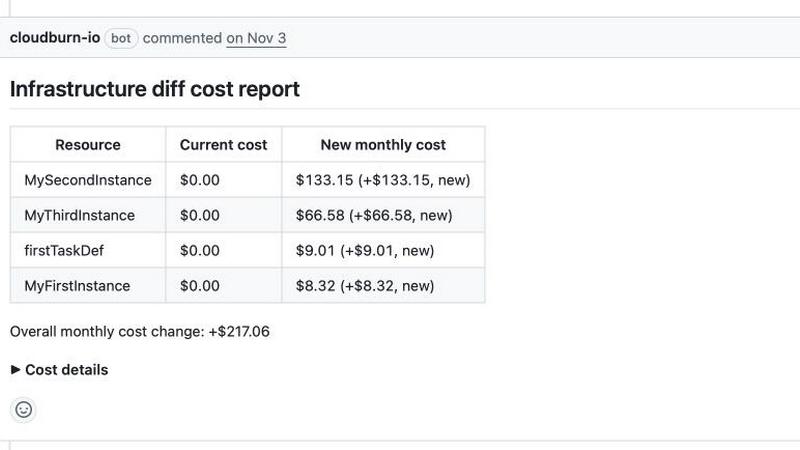
CloudBurn
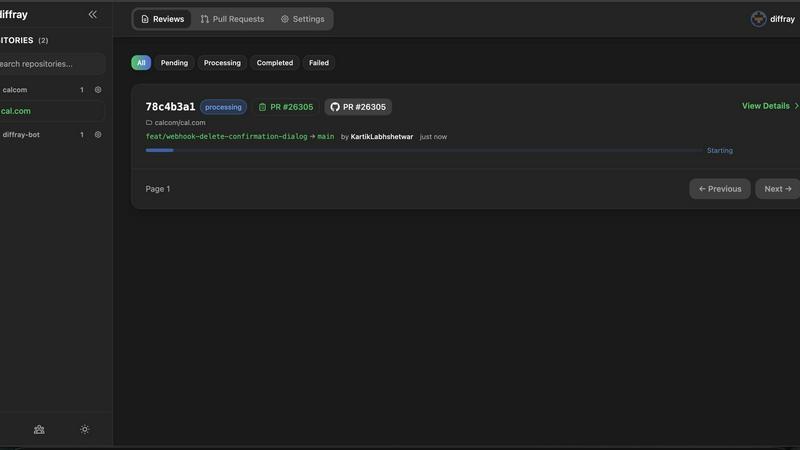
diffray
Feature Comparison
CloudBurn
Real-Time Pre-Deployment Cost Analysis
CloudBurn provides instantaneous, accurate cost estimates for infrastructure changes directly within the pull request workflow. By analyzing the output of cdk diff or terraform plan, it calculates the precise monthly financial impact using live AWS pricing data. This feature ensures that every stakeholder, from developers to engineering managers, understands the cost consequences of their code before it merges, enabling proactive optimization and preventing budgetary surprises.
Automated GitHub Integration
The platform offers seamless and secure integration with GitHub, requiring no complex billing setups or manual permission management. Once installed from the GitHub Marketplace, CloudBurn operates entirely through GitHub Actions. It automatically detects infrastructure changes in pull requests, processes the diff, and posts detailed cost reports as comments, creating a frictionless and automated FinOps feedback loop that requires minimal ongoing maintenance from your team.
Detailed Cost Breakdown Reports
Beyond a simple total, CloudBurn delivers granular, line-item cost reports for each resource being added, modified, or removed. Each report includes the current cost, the new projected monthly cost, the delta, and a detailed breakdown showing the hourly price and AWS service description. This level of detail is crucial for identifying specific, high-cost resources and understanding the pricing drivers behind your infrastructure decisions.
Support for Major IaC Tools
CloudBurn is built to integrate with the industry's leading Infrastructure-as-Code frameworks. It offers dedicated, easy-to-install GitHub Actions for both AWS Cloud Development Kit (CDK) and HashiCorp Terraform. This broad compatibility ensures that teams can adopt CloudBurn regardless of their preferred IaC tooling, making advanced cost governance accessible to a wide range of engineering organizations and cloud provisioning strategies.
diffray
Multi-Agent AI Architecture
Unlike single-model AI review tools, diffray leverages a team of over 30 specialized AI agents, each trained as an expert in a specific domain. This includes dedicated agents for security vulnerabilities, performance anti-patterns, language-specific best practices, bug detection, and even SEO for relevant codebases. This collaborative, expert-driven approach ensures that feedback is not generic but is precisely targeted and highly relevant to the specific type of issue being examined, dramatically increasing the accuracy and usefulness of every comment.
Full-Codebase Contextual Analysis
diffray moves beyond simple line-by-line diff analysis. Its agents intelligently investigate the full context of your repository. They cross-reference new changes against existing code patterns, library usage, architectural decisions, and established conventions within the project. This deep contextual understanding allows diffray to distinguish between a genuine mistake and an intentional design pattern, providing suggestions that are truly relevant to your project's unique environment and significantly reducing false positives.
High-Signal, Actionable Feedback
The platform is engineered to prioritize quality over quantity. By combining domain expertise with deep contextual awareness, diffray filters out the noise that plagues other tools. It delivers concise, actionable insights that developers can immediately understand and act upon. This transforms the AI from a source of alert fatigue into a trusted advisor, enabling developers to focus their cognitive energy on complex problem-solving rather than sifting through low-value suggestions.
Seamless GitHub Integration & Privacy Commitment
diffray integrates directly into your existing GitHub workflow, appearing as a native participant in your pull request review process. Setup is minimal, requiring no disruptive changes to developer habits. Furthermore, the platform is built with a fundamental commitment to code privacy and security, ensuring your intellectual property remains protected. This combination of effortless integration and strong security principles makes it a viable and trustworthy tool for teams of all sizes, from fast-moving startups to large enterprises.
Use Cases
CloudBurn
Preventing Costly Misconfigurations in PR Reviews
Engineering teams use CloudBurn to catch accidental provisioning of over-sized or unnecessarily expensive resources before code is merged. For instance, a developer might mistakenly specify a t3.xlarge instance instead of a t3.micro. CloudBurn flags this as a +$133.15 monthly increase in the PR comment, allowing the team to correct the error instantly, preventing a significant and recurring cost from ever hitting the AWS bill.
Enabling Data-Driven Architectural Discussions
During the design phase of a new feature or service, platform engineers and architects leverage CloudBurn's reports to compare the cost implications of different infrastructure approaches. Teams can evaluate the cost difference between EC2 instances, Fargate tasks, or various database tiers directly in their pull requests, making cost an integral part of the architectural decision-making process alongside performance and reliability.
Empowering Developer-Led FinOps
CloudBurn democratizes cloud cost management by putting actionable data directly into the hands of developers. Instead of a central FinOps team policing budgets reactively, developers gain immediate visibility into the financial impact of their own code. This fosters a culture of ownership and cost-awareness, where engineers are equipped to make efficient choices naturally as part of their standard development workflow.
Streamlining Compliance and Budget Governance
Organizations with strict cloud budget controls or chargeback models integrate CloudBurn as a governance gate. By setting up required status checks, they can ensure that no pull request with a cost impact exceeding a certain threshold can be merged without explicit approval. This creates an automated, scalable guardrail that enforces financial policy without slowing down development velocity.
diffray
Accelerating Pull Request Reviews for Engineering Teams
Development teams use diffray to drastically reduce the time spent on manual code review cycles. By automatically surfacing critical issues, security flaws, and performance concerns as soon as a PR is opened, diffray allows human reviewers to focus on higher-level architecture, design patterns, and knowledge sharing. This leads to faster merge times, increased developer velocity, and more consistent code quality across the entire team without adding bureaucratic overhead.
Enforcing Code Quality and Best Practices at Scale
For engineering leads and architects, diffray acts as a scalable, always-on guardian of code quality. It consistently enforces project-specific and industry-wide best practices, coding standards, and architectural patterns across every pull request, regardless of the reviewer's individual expertise. This ensures a uniformly high-quality codebase, reduces technical debt accumulation, and accelerates the onboarding of new developers by providing immediate, contextual feedback aligned with team standards.
Proactive Security and Vulnerability Prevention
Security teams and developers leverage diffray's specialized security agents to shift vulnerability detection left in the development lifecycle. The platform proactively identifies potential security anti-patterns, insecure API usage, and common vulnerability exposures (CVEs) in dependencies directly within the developer's workflow. This allows teams to remediate risks before code is merged, preventing security flaws from ever reaching production and building a more robust security posture proactively.
Maintaining Open Source Project Health
Maintainers of open-source projects utilize diffray's free tier to manage contributions from a diverse and global community. The platform helps efficiently review external pull requests by automatically checking for common issues, ensuring contributions adhere to project conventions, and identifying potential bugs or performance regressions. This helps maintain high standards of quality and security while reducing the maintainer's review burden and fostering a healthier, more sustainable open-source ecosystem.
Overview
About CloudBurn
CloudBurn is a pioneering FinOps platform that fundamentally redefines how engineering organizations manage and control their cloud expenditures. It is engineered to shift cloud cost governance left, embedding financial accountability directly into the earliest stages of the software development lifecycle. The platform is specifically designed for modern engineering teams that leverage Infrastructure-as-Code (IaC) frameworks such as Terraform and AWS CDK. Its core mission is to eliminate the all-too-common and financially damaging problem of surprise AWS bills by providing precise, real-time, pre-deployment cost intelligence. Traditional cloud financial management operates reactively, often leaving teams to discover budgetary overruns weeks after deployment, when resources are already provisioned and accruing charges. CloudBurn disrupts this outdated paradigm by integrating seamlessly into the existing code review and CI/CD workflow. It automatically analyzes pull requests containing infrastructure changes, calculates the exact monthly cost impact using live, up-to-date AWS pricing data, and posts a comprehensive, actionable report as a comment. This empowers developers, platform engineers, and FinOps practitioners to engage in informed, data-driven discussions about cost efficiency during the design and review phase, when architectural changes are trivial and free. By proactively catching expensive misconfigurations before they ever reach production, CloudBurn transforms cloud cost from a post-deployment shock into a first-class, actionable metric for every infrastructure decision. This fosters a sustainable culture of cost-aware development and delivers immediate, measurable return on investment by preventing wasteful spending before it occurs.
About diffray
diffray represents a fundamental evolution in AI-powered code review, moving beyond the limitations of generic, single-model tools. It is a sophisticated platform designed for development teams who are serious about code quality, security, and developer productivity. At its core, diffray employs a revolutionary multi-agent architecture, where over 30 specialized AI agents—each an expert in a distinct domain like security vulnerabilities, performance bottlenecks, bug patterns, best practices, or SEO—collaboratively analyze pull requests. This targeted approach stands in stark contrast to traditional tools that use one model for everything, which often results in a flood of noisy, irrelevant comments that developers learn to ignore. The primary value proposition of diffray is delivering actionable, high-signal feedback that developers can actually use. By understanding not just the diff but the full context of your codebase, diffray's agents investigate rather than speculate. They cross-reference changes against existing patterns, libraries, and architectural decisions to provide precise, context-aware suggestions. The result is a transformative developer experience: teams report cutting PR review time dramatically while catching three times more genuine issues with 87% fewer false positives. diffray is built for professional engineering teams across startups and enterprises who want to leverage AI not as a source of distraction, but as a reliable, intelligent partner in maintaining robust and clean code. It integrates seamlessly with GitHub, offers a free tier for open-source projects, and ensures your code's privacy is never compromised.
Frequently Asked Questions
CloudBurn FAQ
How does CloudBurn calculate cost estimates?
CloudBurn calculates cost estimates by parsing the infrastructure change diff (from cdk diff or terraform plan) generated in your pull request. It identifies each AWS resource being created, modified, or destroyed. Then, it queries the official, live AWS Price List API to fetch the most up-to-date pricing for those specific resources in your configured region. It combines this with assumed usage (e.g., 730 hours for a monthly running instance) to generate a precise projected monthly cost.
Is my code or cloud configuration data secure with CloudBurn?
Yes, security is a foundational principle. CloudBurn's integration is 100% handled through GitHub. The platform never requires direct access to your AWS accounts, secret keys, or billing information. It operates solely on the plan/diff output that you choose to send via the GitHub Action. This architecture ensures that your sensitive cloud infrastructure credentials and detailed configurations remain entirely within your own secure GitHub environment.
What happens if my PR includes a complex change with many resources?
CloudBurn is designed to handle PRs of any complexity. It will analyze all changes present in the diff output and generate a comprehensive report that summarizes the total monthly cost delta. The report will list every affected resource with its individual cost impact, providing both a high-level overview and the granular detail needed to understand the financial drivers of even the most extensive infrastructure modifications.
Can I use CloudBurn for free?
Yes, CloudBurn offers a Community plan that is free to use forever. This allows teams to get started with core pre-deployment cost analysis features. Additionally, they offer a 14-day free trial of the Pro plan, which includes advanced features. You can begin using the platform without a credit card and choose to continue on the free Community plan or upgrade to Pro for enhanced capabilities based on your organization's needs.
diffray FAQ
How is diffray different from other AI code review tools?
diffray fundamentally differs through its multi-agent architecture. While most tools use a single, generalized AI model to comment on everything, diffray deploys a team of over 30 specialized agents, each an expert in a specific domain like security, performance, or bug detection. This allows for deeper, more accurate analysis. Furthermore, diffray analyzes your full codebase for context, leading to more relevant suggestions and far fewer false positives compared to tools that only look at the diff in isolation.
What programming languages and frameworks does diffray support?
diffray is designed with broad compatibility in mind. Its multi-agent system includes specialists for all major programming languages and popular frameworks. The platform continuously evolves, with agents trained on the latest language features, library updates, and framework-specific best practices. For the most current and detailed list of supported languages, it is recommended to check the official diffray documentation.
Is my source code kept private and secure with diffray?
Absolutely. Code privacy and security are foundational principles for diffray. The platform is built with enterprise-grade security measures to ensure your intellectual property is protected. Your code is analyzed in a secure environment, and diffray is committed to not storing or misusing your source code. You retain full ownership and control of your code at all times.
How do I get started with diffray for my team?
Getting started is straightforward. diffray offers a seamless integration with GitHub. You can typically begin by installing the diffray GitHub App on your organization or personal account, selecting the repositories you wish to enable it for, and configuring your review preferences. The platform often provides a free tier or trial, allowing teams to experience the benefits on their own codebase with minimal setup effort before committing to a paid plan.
Alternatives
CloudBurn Alternatives
CloudBurn is a specialized FinOps platform within the development tooling category, designed to provide pre-deployment AWS cost estimates directly in infrastructure-as-code pull requests. Its core purpose is to shift cost governance left, preventing budgetary surprises by making cost an integral part of the code review process. Users may explore alternatives for various reasons, including specific budget constraints, the need for support across multiple cloud providers beyond AWS, or a desire for different integration methods with their existing CI/CD and project management ecosystems. The search often stems from a need to tailor the solution's scope, pricing model, or feature depth to their team's unique operational maturity and financial governance requirements. When evaluating alternatives, key considerations should include the accuracy and granularity of cost intelligence, the depth of native integration with your development workflow, and the tool's ability to foster collaboration between engineering and finance teams. The ideal solution seamlessly embeds cost awareness without disrupting developer velocity, turning financial accountability into a natural byproduct of the development lifecycle.
diffray Alternatives
diffray is a sophisticated AI-powered code review platform that represents a significant advancement in the development tool category. It moves beyond basic linting and static analysis by employing a multi-agent architecture, where over thirty specialized AI experts collaboratively analyze pull requests to catch genuine bugs, security flaws, and performance issues with high precision. Users may explore alternatives to diffray for various reasons, including budget constraints, specific integration requirements with platforms like GitLab or Bitbucket, or a preference for tools with different feature emphases, such as those focused solely on security scanning or simpler, single-model AI assistance. The needs of a solo developer differ greatly from those of a large enterprise team, driving a diverse market of solutions. When evaluating alternatives, key considerations should include the depth and accuracy of the AI analysis, the tool's ability to understand full codebase context to reduce false positives, integration capabilities with your existing development workflow, and robust data security and privacy policies. The ultimate goal is to find a solution that enhances developer productivity without becoming a source of noisy distractions.