
Prefactor vs Stable Commerce
Side-by-side comparison to help you choose the right tool.

Prefactor
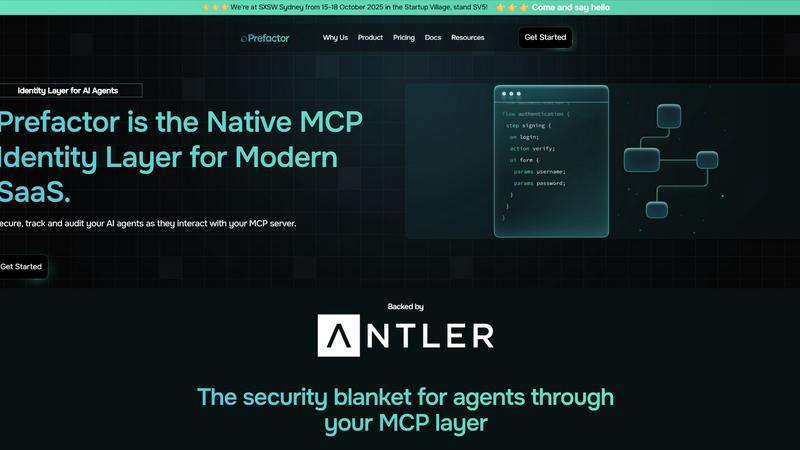
Prefactor is the essential control plane for governing AI agents at scale in regulated enterprises.
Last updated: March 1, 2026

Stable Commerce
Stable Commerce is an AI agent that builds and autonomously runs your entire online store from a single prompt.
Last updated: March 4, 2026
Visual Comparison
Prefactor
Stable Commerce
Feature Comparison
Prefactor
Real-Time Agent Monitoring
Gain complete operational visibility across your entire agent infrastructure with the Prefactor dashboard. Track every agent action as it happens, monitor which agents are active or idle, see what resources they are accessing, and identify where failures occur in real-time. This proactive monitoring allows teams to spot and address issues before they cascade into major incidents, providing a single pane of glass for managing an automated workforce at scale.
Compliance-Ready Audit Trails
Prefactor transforms technical agent events into clear, business-context audit logs. Instead of cryptic API calls, our system records agent actions in language that stakeholders and auditors understand. This enables teams to generate audit-ready reports in minutes, not weeks, providing clear answers to compliance questions about what an agent did and why. The logs are designed to withstand rigorous regulatory scrutiny in industries like finance and healthcare.
Identity-First Access Control
Every AI agent managed by Prefactor is assigned a unique, first-class identity. Every action an agent takes is authenticated, and every permission is scoped using fine-grained, role-based access control (RBAC). This applies the proven governance principles used for human users to your AI agents, creating a foundational layer of trust and security that is essential for safe production deployment in enterprise environments.
Emergency Kill Switches & Cost Tracking
Maintain ultimate control with emergency kill switches that allow for the immediate deactivation of any agent activity. Alongside this safety mechanism, Prefactor provides cost tracking and optimization features, enabling you to monitor agent compute costs across different providers. Identify expensive operational patterns and optimize spending without sacrificing performance or security, all from within the unified control plane.
Stable Commerce
Prompt-to-Store Generator
This foundational feature allows users to generate a complete, live online store in under two minutes simply by describing what they want to sell. The AI agent interprets the prompt, automatically designs the storefront, configures necessary systems, and establishes the foundational structure. This eliminates weeks of setup work, making the initial launch phase almost instantaneous and removing barriers to entry for new entrepreneurs.
Autonomous Commerce Agent
Acting as a tireless, full-stack operations manager, the autonomous agent is the heart of the platform. It continuously orchestrates all connected systems—including storefronts, marketplaces, payment processors, analytics, and fulfillment APIs—without manual intervention. It analyzes real-time data, optimizes store performance, and ensures all workflows run smoothly 24/7, effectively replacing the need for multiple specialized team members or constant developer input.
Unified E-Commerce Stack
Stable Commerce provides a fully integrated, complete platform that consolidates every essential tool. This includes built-in inventory management, order processing, customer service tools, and enterprise-grade security with SSL and fraud protection. The platform seamlessly integrates with major payment gateways like Stripe and PayPal, creating a cohesive environment where all components are designed to work in harmony from the start.
Intelligent Optimization & Analytics
The platform goes beyond basic reporting by offering managed, intelligent analytics. The system tracks sales, customer behavior, and operational metrics in real time, then uses this data to autonomously suggest and implement optimizations. This continuous cycle of analysis and improvement aims to boost conversion rates, enhance efficiency, and maximize revenue without requiring the store owner to become a data analyst.
Use Cases
Prefactor
Scaling AI Pilots in Financial Services
A Fortune 500 bank has multiple AI agent pilots for tasks like fraud detection and customer service automation. Prefactor provides the unified governance layer needed to move these pilots into production by delivering the audit trails, real-time visibility, and identity control required to satisfy internal security and external financial regulators, turning experimental projects into compliant operational assets.
Managing Autonomous Systems in Healthcare
A healthcare technology company deploys AI agents to handle patient data processing and administrative workflows. Using Prefactor, they can enforce strict access controls, maintain detailed audit logs of all agent interactions with sensitive PHI (Protected Health Information), and generate compliance reports for HIPAA audits, ensuring patient privacy is never compromised.
Operational Oversight in Mining & Resources
A mining technology firm uses autonomous agents to analyze geological data and manage equipment logistics. Prefactor gives their platform team real-time visibility into agent activity across remote sites, allows them to instantly halt any malfunctioning agent with a kill switch, and provides clear audit trails to demonstrate operational integrity and safety compliance to stakeholders.
Unifying Multi-Framework Agent Deployments
An enterprise product team uses a mix of LangChain, CrewAI, and custom agent frameworks across different departments. Prefactor integrates with all these frameworks, providing a single source of truth for identity, access, and audit. This eliminates siloed governance and allows security teams to apply consistent policies across the entire diverse agent ecosystem.
Stable Commerce
First-Time Entrepreneur Launch
An individual with a product idea but no technical or eCommerce experience can use Stable Commerce to articulate their vision in a prompt. Within minutes, they have a professional, mobile-responsive store complete with secure payments and basic analytics, allowing them to go from concept to live sales with zero coding or complex configuration, dramatically accelerating their market entry.
Scaling Small Business Operations
A growing online store overwhelmed by managing dozens of plugins, spreadsheets for analytics, and separate systems for logistics can consolidate everything onto Stable Commerce. The autonomous agent takes over the orchestration and optimization, freeing the owner from daily technical management and reducing operational overhead, which allows them to reallocate resources towards marketing and product development.
Product Import and Multi-Channel Selling
A seller looking to expand their reach can easily import up to 5 products (on the Free plan) or an unlimited number from marketplaces like eBay, Etsy, or Amazon directly into their Stable Commerce store. The unified stack simplifies managing this inventory across a single dashboard, making it an efficient hub for testing new products or aggregating listings from various sources.
Agency and Professional E-Commerce Management
Agencies or professional operators managing multiple client stores can leverage the Pro or Enterprise plans. The ability to run several stores under one dashboard, with high volumes of AI prompts and managed analytics, allows them to deliver consistent, optimized storefronts for clients at scale while significantly reducing the manual labor and development costs typically associated with client work.
Overview
About Prefactor
Prefactor is the essential control plane for AI agents, designed to bridge the critical gap between experimental proof-of-concept and secure, compliant, and scalable production deployment. In an era where autonomous AI agents are rapidly evolving from demos to core operational components, organizations face immense challenges in governance, visibility, and security. Prefactor directly addresses this by providing every AI agent with a first-class, auditable identity, transforming how enterprises manage their automated workforce. It is built specifically for product, engineering, security, and compliance teams within regulated enterprises such as those in financial services, healthcare, and mining, who are running multiple agent pilots and need a unified source of truth. The platform's core value proposition lies in turning the complex, fragmented challenge of agent authentication and authorization into a single, elegant layer of trust. By offering dynamic client registration, fine-grained role-based access control, policy-as-code management, and full auditability, Prefactor enables companies to govern their AI agents at scale with confidence. This ensures that innovation can proceed without compromising on security or regulatory requirements, allowing teams to move from isolated pilots to governed production deployments efficiently.
About Stable Commerce
Stable Commerce represents a fundamental shift in the eCommerce paradigm, moving beyond traditional platform-as-a-service models to an AI-native infrastructure. It is an autonomous eCommerce operations (eComOps) framework designed to empower entrepreneurs, small businesses, and professional operators to launch and scale online stores with unprecedented simplicity and efficiency. At its core, Stable Commerce replaces the complex, fragmented ecosystem of plugins, developers, and manual integrations with a single, intelligent agent. This platform is built for anyone who wants to bypass the technical overhead of eCommerce, from first-time sellers with a simple idea to established merchants seeking to optimize and automate their operations. Its main value proposition is the radical reduction of time, cost, and complexity. By allowing users to generate a fully operational store from a simple prompt and then autonomously managing orchestration, analytics, and optimization, Stable Commerce enables business owners to focus purely on strategy, inventory, and customer relationships, transforming a traditionally labor-intensive process into a streamlined, automated engine for growth.
Frequently Asked Questions
Prefactor FAQ
What is an AI Agent Control Plane?
An AI Agent Control Plane is a centralized governance platform that provides the essential infrastructure for managing autonomous AI software in production. It handles critical functions like agent identity and authentication, authorization and access control, real-time monitoring, audit logging, and policy enforcement. Think of it as the operating system or management layer that brings order, security, and observability to a fleet of AI agents, much like Kubernetes does for containers.
Who is Prefactor designed for?
Prefactor is specifically built for product, engineering, security, and compliance teams within regulated enterprises. This includes industries like financial services, healthcare, insurance, and industrial sectors (e.g., mining) where data security, compliance, and operational integrity are non-negotiable. It is ideal for organizations that are running multiple AI agent pilots and need a secure path to scale them into production with proper governance.
How does Prefactor handle compliance and auditing?
Prefactor is built with regulated industries in mind. It automatically generates detailed, business-context audit trails that translate technical agent actions into understandable events for auditors and stakeholders. This allows compliance teams to quickly generate reports that clearly show what agents did, when they did it, and under what permissions, satisfying regulatory requirements without requiring manual log correlation or interpretation.
Can Prefactor work with any AI agent framework?
Yes, Prefactor is designed to be integration-ready and works with popular agent frameworks like LangChain, CrewAI, and AutoGen, as well as custom-built agents. The platform provides the necessary SDKs and APIs to integrate within hours, not months, allowing you to bring governance to your existing agent deployments without rebuilding them from scratch.
Stable Commerce FAQ
How quickly can I really launch a store?
You can launch a fully functional, basic online store in under two minutes. The process begins with you providing a simple text prompt describing your business or products. The AI agent then automatically generates the storefront, configures essential settings, and integrates core systems. Your store will be live and capable of accepting orders almost immediately after this brief setup.
What does the "Autonomous Agent" actually do?
The Autonomous Agent functions as your AI-powered operations manager. Once your store is live, it handles the ongoing orchestration of all connected tools (payments, analytics, fulfillment), monitors performance in real-time, and implements optimizations to improve sales and efficiency. It works continuously to ensure smooth operations, effectively automating tasks that would normally require constant manual oversight or a team of specialists.
Can I use my own domain name?
Yes, custom domain integration is available. The Free plan includes the default Stable Commerce subdomain, while the Basic plan includes support for 1 custom domain, and the Pro plan supports up to 5 custom domains. This allows you to brand your store with a professional web address that matches your business name, enhancing credibility and customer trust.
How does the pricing and "success fee" work?
Stable Commerce uses a hybrid pricing model. There is a monthly platform fee (Free, $29, or $79) that grants access to features, prompts, and store limits. The "success fee" is a small transaction fee applied only when you make a sale, aligning the platform's success with your own. This fee decreases as you move to higher plans (3% on Free, 2% on Basic, 0.5% on Pro), rewarding scale with better rates.
Alternatives
Prefactor Alternatives
Prefactor is an AI agent governance platform, a specialized control plane designed to bring security and compliance to autonomous AI systems at scale. As organizations move from pilot projects to production, the need for robust oversight becomes critical, leading many to evaluate the landscape of available solutions. Users explore alternatives for various reasons, including specific budget constraints, the need for different feature integrations, or a preference for platforms that align with their existing technology stack and operational philosophy. The decision is rarely about a single factor but a holistic fit. When evaluating options, key considerations should include the depth of identity and access management for non-human entities, the granularity of real-time monitoring and audit capabilities, and the platform's proven ability to meet the stringent compliance demands of regulated industries like finance and healthcare.
Stable Commerce Alternatives
Stable Commerce is an AI-native eCommerce and automation platform designed to simplify the entire process of launching and managing an online store. Its core promise is to handle complex setup and optimization tasks through artificial intelligence, allowing entrepreneurs to focus on business growth rather than technical details. This positions it within the competitive landscape of modern, user-centric online retail solutions. Users explore alternatives for a variety of strategic reasons. Common motivations include seeking different pricing models or cost structures, requiring specific feature sets or integrations not offered, or needing a platform that aligns with a particular business scale or industry niche. The search for the right tool is often driven by the unique demands of one's products, target audience, and long-term operational vision. When evaluating alternatives, it's crucial to assess several key factors. Consider the total cost of ownership, including transaction fees and any hidden costs. Scrutinize the platform's scalability, customization capabilities, and the strength of its ecosystem, such as available payment gateways and third-party apps. Ultimately, the choice should balance immediate ease of use with the flexibility to support your business's future evolution.