
PoYo API vs Quitlo
Side-by-side comparison to help you choose the right tool.

PoYo API
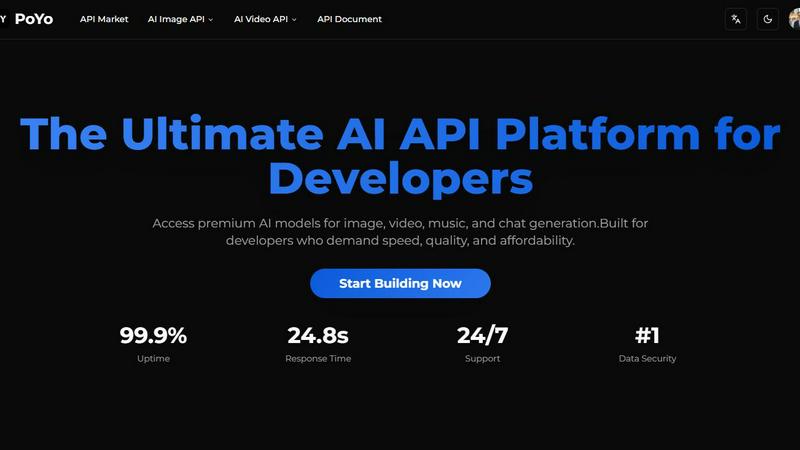
PoYo API provides unified access to premium AI models for image, video, music, and chat generation.
Last updated: February 28, 2026

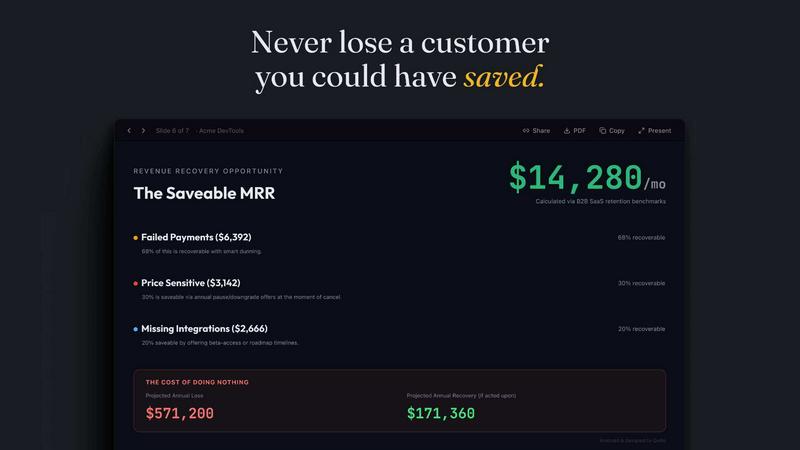
Quitlo uses AI voice calls to reveal why customers leave and delivers actionable insights directly to your team.
Last updated: March 4, 2026
Visual Comparison
PoYo API
Quitlo
Feature Comparison
PoYo API
Unified Multi-Model Access
PoYo API provides a single, centralized integration point to a vast and continuously updated library of over 500 premium AI models. This eliminates the need for developers to source, negotiate with, and manage integrations across multiple AI vendors. With unified access to leading models in image, video, music, and chat generation, teams can effortlessly switch between or combine different AI capabilities within a single workflow, streamlining development and reducing time-to-market for complex, multi-modal applications.
Flexible Credit-Based Pricing
The platform operates on a transparent, pay-as-you-go credit system that completely eschews recurring subscription fees. Users purchase credits that never expire and are consumed based on actual API usage. This model offers exceptional financial flexibility, allowing projects to scale up during peak demand or experiment freely without being locked into rigid monthly plans. It ensures cost predictability and control, as you only pay for the computational resources you directly utilize.
Enterprise-Grade Security & Reliability
PoYo API is built with a zero-knowledge architecture, ensuring that sensitive API keys and user credentials are encrypted and stored with industry-standard security protocols. The platform guarantees 99.9% uptime through robust monitoring systems and provides full audit logging for compliance. This enterprise-level foundation ensures that businesses can integrate AI with confidence, knowing their operations are protected and their applications will remain consistently available.
Developer-First API Design
Featuring a clean, intuitive asynchronous API design, PoYo API reduces integration complexity to just two primary endpoints: one to submit a generation task and another to query its results. This simplicity is complemented by support for webhook callbacks for real-time notifications, ultra-low latency responses, and high concurrency handling. The platform also offers a free playground for testing all models, enabling developers to fine-tune parameters and debug workflows without any initial cost or commitment.
Quitlo
Adaptive AI Conversations
Quitlo replaces outdated static surveys with engaging two-minute AI conversations that adapt based on customer responses. This dynamic interaction captures the nuances of customer sentiment and motivations, providing richer data to drive retention strategies.
Intelligent Signal Detection
The platform automatically identifies critical churn signals, such as cancellations, low NPS scores, and failed payments, ensuring timely engagement with at-risk customers. This proactive approach enables teams to understand issues before they escalate.
Structured Summary Delivery
After each conversation, Quitlo delivers a detailed summary directly to communication tools like Slack, highlighting essential information such as churn reasons, customer sentiment, and suggested next steps. This immediacy supports quick decision-making for customer success teams.
Comprehensive Coverage of Customer Interactions
Quitlo is designed to engage with customers across various touchpoints—cancellation flows, surveys, payment recovery, win-back initiatives, and check-ins—ensuring that no moment of potential churn is overlooked.
Use Cases
PoYo API
Rapid Prototyping for Startups
Startups and indie developers can leverage PoYo API to quickly prototype and validate AI-powered features without significant upfront investment in infrastructure or vendor contracts. The unified access to multiple model types and the credit-based pricing model allow small teams to experiment with image generation for marketing assets, create AI chatbots for customer service, or synthesize music for content, accelerating the product development cycle and enabling swift pivots based on user feedback.
Scalable Content Creation Platforms
Media companies, marketing agencies, and content platforms can build scalable internal tools or customer-facing applications that generate high-quality visual and audio content on demand. By integrating PoYo API, they can offer services like automated video clip generation, dynamic image creation for ads, or custom music scoring, all powered by the latest AI models. The platform's high concurrency and reliability ensure these services can handle large volumes of requests seamlessly.
Next-Generation SaaS Applications
Software-as-a-Service (SaaS) providers can embed advanced AI capabilities directly into their core offerings. For instance, a project management tool could integrate AI-generated summary videos, a design platform could offer instant AI image variations, or an e-learning system could incorporate AI tutors via the chat API. PoYo API's single integration simplifies the technical overhead, allowing SaaS companies to enhance their product value proposition and stay competitive.
Research & Development in AI
Academic institutions and corporate R&D teams can utilize PoYo API as a foundational tool for exploring the frontiers of generative AI. The platform provides easy access to a wide array of state-of-the-art models for comparative analysis, benchmarking, and developing novel AI methodologies. The free playground and flexible credits facilitate extensive experimentation, making it an ideal sandbox for innovation without the burden of managing complex AI infrastructure.
Quitlo
Understanding Customer Cancellations
When a customer decides to cancel a subscription, Quitlo can initiate a conversation to gather insights on their decision. This understanding allows businesses to address specific pain points, potentially saving the customer.
Recovering Failed Payments
In cases of failed payments, Quitlo engages customers to discover underlying issues, such as expired cards or dissatisfaction with the service. By addressing these concerns, companies can improve payment recovery rates and enhance customer satisfaction.
Monitoring Customer Satisfaction
For customers who score low on NPS or CSAT surveys, Quitlo can open a dialogue to explore their experiences further. This feedback loop helps companies identify areas for improvement and foster stronger customer relationships.
Re-engaging Churned Customers
After customers have left, Quitlo can initiate win-back conversations to understand why they left and explore opportunities for re-engagement. This helps companies refine their offerings and potentially bring back valuable customers.
Overview
About PoYo API
PoYo API stands as a transformative force in the artificial intelligence integration landscape, engineered to dismantle the traditional barriers that developers and businesses face when harnessing the power of advanced AI. It is a singular, comprehensive platform that consolidates access to a meticulously curated library of over 500 premium AI models across the most sought-after creative and analytical domains: image generation, video synthesis, music creation, and conversational chat. This platform is explicitly designed for developers, product teams, and enterprises who demand operational excellence, characterized by unparalleled speed, superior output quality, and uncompromising cost-effectiveness. By providing a unified gateway to top-tier models like Sora-2, Nano Banana Pro, GPT-4o, and Veo3.1, PoYo API eliminates the cumbersome overhead of managing disparate vendor accounts, multiple API keys, and complex billing systems. Its core value proposition is profound simplification, offering a single, robust integration point that empowers teams to rapidly prototype, seamlessly scale, and confidently deploy next-generation AI applications. Backed by enterprise-grade security, a commitment to 99.9% uptime, and 24/7 technical support, PoYo API makes cutting-edge AI not only accessible but also operationally efficient for projects of any magnitude, ensuring users remain at the forefront of technological innovation.
About Quitlo
Quitlo is an innovative Churn Intelligence Platform specifically designed for B2B SaaS companies, addressing the persistent challenge of customer churn. Traditional methods such as exit surveys and cancellation forms often yield minimal insights, with response rates as low as 8% and vague answers like “pricing.” Quitlo transforms this process by employing adaptive, empathetic AI conversations, allowing businesses to engage customers through voice and text at critical moments in their lifecycle. The platform intelligently detects churn signals—such as cancellations, low Net Promoter Scores (NPS), and payment failures—and initiates a genuine two-minute dialogue to uncover the reasons behind customer departures. This approach not only provides actionable insights within minutes but also integrates seamlessly with tools like Slack and Jira, delivering structured summaries that highlight churn reasons, customer sentiment, competitor mentions, and opportunities for retention. Quitlo empowers teams to convert single data points into robust retention strategies, significantly enhancing revenue preservation and customer understanding.
Frequently Asked Questions
PoYo API FAQ
What is the difference between PoYo API and using individual model providers directly?
PoYo API acts as a powerful aggregator and abstraction layer. Instead of dealing with the unique APIs, authentication methods, rate limits, and billing systems of dozens of individual providers like OpenAI, Midjourney, or Suno, you manage one integration. This saves immense development time, reduces code complexity, and provides a single point of support and billing. It also allows you to easily compare and switch between different models for the same task to find the best fit for your needs.
How does the credit-based pricing work?
You purchase credits upfront through the PoYo dashboard; these credits never expire. Each AI model has a specific credit cost per use (e.g., generating one image or one minute of video). When you make an API call, the corresponding number of credits is deducted from your balance. This system offers full transparency and control, as you only pay for what you use without any recurring subscription fees or hidden costs, allowing for perfect alignment with your project's actual usage patterns.
Is there a way to test the API before committing?
Yes, PoYo API offers a comprehensive free playground accessible directly on the model pages of the website. You can experiment with every available AI model, adjust generation parameters, and see real outputs without spending any credits or providing a credit card. This allows developers to thoroughly evaluate output quality, test API behavior, and debug their integration logic before moving to a paid plan, ensuring a smooth and informed development process.
What happens if an AI generation task fails?
PoYo API is designed with developer control in mind. If a generation task fails due to a model error or timeout, you are not charged for the attempt. The platform provides clear error statuses, and for asynchronous tasks, you have the option to manually retry failed jobs directly from your dashboard. This policy, combined with webhook support for task status updates, ensures you maintain full control over your workflows and costs.
Quitlo FAQ
How does Quitlo collect customer feedback?
Quitlo uses an AI-driven conversation approach to engage customers at critical moments, such as cancellations or low satisfaction scores, allowing for nuanced feedback rather than relying on traditional surveys.
What types of insights does Quitlo provide?
The platform delivers structured summaries that include churn reasons, customer sentiment, competitor insights, and suggested next steps for follow-up, helping teams formulate effective retention strategies.
Can Quitlo integrate with other tools?
Yes, Quitlo seamlessly integrates with popular tools like Slack and Jira, making it easy for teams to access insights and take action quickly in their existing workflows.
Is Quitlo suitable for all types of businesses?
Quitlo is specifically designed for B2B SaaS companies, making it uniquely positioned to address the challenges faced by this sector regarding customer churn and retention.
Alternatives
PoYo API Alternatives
PoYo API is a comprehensive platform in the AI Assistants category, designed as a unified gateway to over 500 premium models for generating images, videos, music, and chat. It simplifies the complex AI landscape by aggregating top-tier technologies into a single, developer-friendly API, eliminating the need to manage multiple vendor accounts and integrations. Users may explore alternatives for various reasons, including specific budgetary constraints, a need for different pricing models, or a requirement for specialized features not covered by a broad platform. Some may seek a provider with a stronger focus on a single modality, like only image generation, or prefer a different commercial structure, such as direct subscriptions to individual model providers. When evaluating alternatives, key considerations include the scope and quality of the available AI models, the transparency and flexibility of the pricing model, and the robustness of the developer experience and platform reliability. The ideal solution should align with both the technical requirements of the project and the operational needs of the business, ensuring a balance of capability, cost, and ease of integration.
Quitlo Alternatives
Quitlo is an innovative Churn Intelligence Platform designed specifically for B2B SaaS companies, leveraging AI voice calls to uncover the underlying reasons behind customer churn. By replacing traditional surveys and cancel forms with engaging, empathetic conversations, Quitlo aims to provide actionable insights that help teams understand customer sentiment and save revenue. Users often seek alternatives to Quitlo for various reasons, such as pricing concerns, feature sets that may better align with their specific needs, or compatibility with existing systems. When searching for an alternative, it's essential to consider factors like the effectiveness of customer engagement, the depth of insights provided, integration capabilities, and overall user experience. These elements will help ensure that teams can effectively address customer churn and enhance retention strategies.