
MemMachine vs Storydoc
Side-by-side comparison to help you choose the right tool.

MemMachine
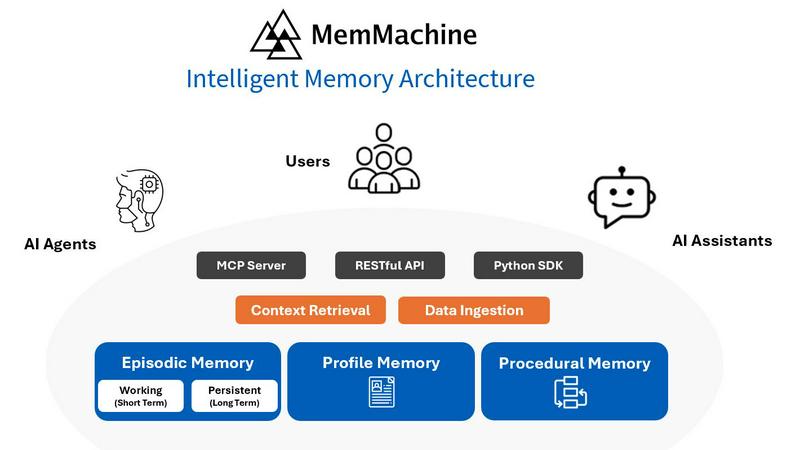
MemMachine gives AI agents persistent memory to learn from every interaction and personalize every response.
Last updated: February 28, 2026

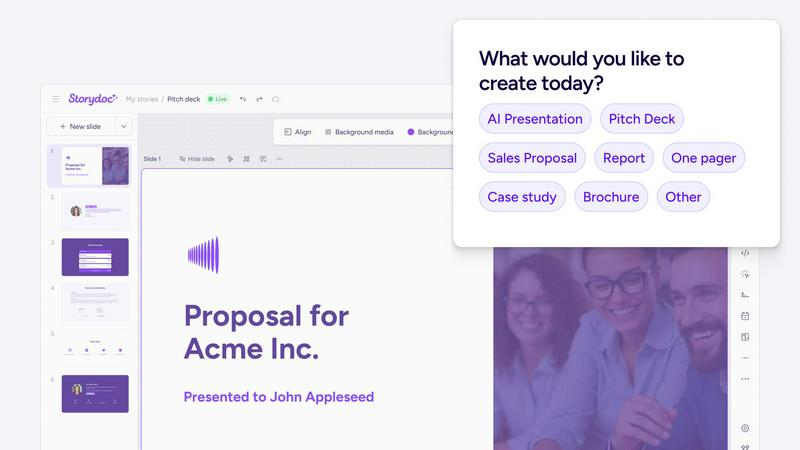
Storydoc is an AI-native platform that empowers professionals to create, manage, and scale interactive business presentations and documents.
Last updated: March 26, 2026
Visual Comparison
MemMachine
Storydoc
Feature Comparison
MemMachine
Persistent Cross-Session Memory
MemMachine's core functionality is its ability to maintain a continuous memory store that persists long after a single conversation or session ends. Unlike standard AI models that reset with each query, MemMachine ensures that user preferences, past discussions, and learned information are retained and made available for future interactions, creating a sense of continuity and deepening the relationship between the user and the AI agent over time.
Multi-Agent and Multi-LLM Memory Layer
The memory infrastructure is designed to be universally accessible, not tied to a single agent or language model. This allows different AI applications within an ecosystem to share and build upon the same user profile. A user can interact with a support chatbot, a personal assistant, and an analytical tool, and each can leverage the unified memory context provided by MemMachine for a cohesive and intelligent experience across all touchpoints.
Sophisticated Profile Memory & Personalization
Going beyond simple chat history, MemMachine builds a rich, evolving user profile. It can store complex user data, such as appointment preferences, dietary restrictions, project histories, or communication styles. This "profile memory" enables agents to anticipate needs and personalize responses proactively, as demonstrated by recalling a patient's dislike for morning appointments and fasting requirements to offer a better-suited alternative.
Open-Source and Flexible Architecture
As an open-source solution, MemMachine offers transparency, community-driven innovation, and adaptability. Developers have the freedom to inspect, modify, and extend the code to fit specific use cases. The architecture abstracts away the underlying complexity of memory management while providing the flexibility to use its components—like vector databases and graph-based relationships—independently or as a unified system.
Storydoc
AI-Powered Document Creation
Storydoc's core AI engine allows users to generate complete, professionally designed business documents in mere seconds. By simply inputting a topic or goal, the platform produces a fully structured draft complete with narrative flow, relevant sections, and on-brand visual design. This feature eliminates the blank page problem and the need for specialized skills in writing or graphic design, enabling teams to move from concept to a polished, client-ready document faster than ever before.
Interactive & Dynamic Elements
To maximize engagement, Storydoc enables users to embed a wide array of interactive components directly into their documents. This includes scheduling tools like Calendly, YouTube or Loom videos, clickable buttons, dynamic calls-to-action, and embedded forms. These elements transform static pages into immersive experiences, allowing recipients to take immediate action—such as booking a meeting or submitting information—without ever leaving the document, thereby shortening sales cycles.
Personalization & Automation at Scale
The platform allows for mass personalization through smart workflows and integrations. Using connectors via Zapier and Make, teams can pull live data from their CRM and other business tools to populate documents with dynamic fields tailored to each recipient. This means proposals, pitch decks, and reports can be automatically customized for every lead or client stage at scale, ensuring relevant messaging without manual, time-consuming rebuilds for each prospect.
Centralized Management & Deep Analytics
Storydoc acts as a single source of truth for all business documents, offering a centralized, searchable hub for creation, collaboration, and version control. Coupled with this is its powerful analytics suite, which tracks detailed engagement data on every shared document. Creators gain insights into opens, time spent, scroll depth, and clicks on interactive elements, providing clear intelligence on what content resonates and where prospects disengage.
Use Cases
MemMachine
Personalized Healthcare Assistants
Transform healthcare chatbots and virtual assistants into compassionate, context-aware partners. By remembering patient histories, medication schedules, appointment preferences, and past symptoms, these agents can provide proactive reminders, personalized scheduling, and follow-up care that respects individual patient needs and circumstances, significantly improving patient experience and adherence.
Intelligent Customer Support & Engagement
Elevate customer service platforms by deploying support agents that remember past tickets, user preferences, and previous solutions. This allows for faster, more accurate support without requiring customers to repeat information, leading to higher satisfaction, increased loyalty, and more efficient resolution of complex, multi-session issues.
Next-Generation AI Coaching and Advisory Tools
Enable the creation of persistent AI coaches, sparring partners, or business advisors. These agents can learn a user's goals, blind spots, decision-making patterns, and progress over time. With MemMachine, they can offer increasingly relevant challenges, insights, and feedback, building a meaningful, evolving advisory relationship rather than providing generic, one-off advice.
Context-Aware Productivity and Collaboration Agents
Power team collaboration and productivity tools with AI that understands project context, team member roles, historical decisions, and ongoing workflows. An agent integrated with MemMachine can recall past discussions, automate repetitive tasks based on learned patterns, and provide intelligent insights that improve with every team interaction, acting as a true digital team member.
Storydoc
Sales Proposals & Pitch Decks
Sales teams use Storydoc to create compelling, interactive proposals and pitch decks that close deals faster. By embedding product videos, personalized pricing calculators, and instant meeting schedulers, they guide prospects seamlessly through the buying journey. Real-time engagement tracking shows which parts of the pitch capture attention, allowing reps to follow up with precision. This results in higher meeting conversion rates and accelerated sales cycles.
Marketing & Lead Generation Collateral
Marketing professionals leverage the platform to produce high-conversion lead magnets, interactive reports, and sales enablement one-pagers. By turning static content into engaging experiences with embedded forms and dynamic content, they capture more qualified leads directly within the asset. The ability to personalize content for different audience segments at scale also increases relevance and response rates across campaigns.
Investor & Board Reporting
Executives and founders utilize Storydoc to build sophisticated quarterly business reviews and investor update reports. The interactive format allows them to present complex data, financials, and milestones in a more digestible and engaging narrative. Embedding live data dashboards or video messages adds depth, helping to tell a more compelling story about company performance and future prospects to key stakeholders.
Client Onboarding & Success Materials
Customer success and account management teams create interactive onboarding guides, training manuals, and business review documents. Embedding tutorial videos, feedback forms, and resource links directly into these materials improves client comprehension and adoption. The analytics feature also helps teams verify that clients are engaging with the provided materials, enabling proactive support.
Overview
About MemMachine
MemMachine is a foundational open-source memory layer engineered to transform artificial intelligence from a transient, session-bound tool into a persistent, learning companion. It directly addresses the critical shortcoming of conventional AI systems: their inherent amnesia. By providing a sophisticated infrastructure for applications to learn, store, and intelligently recall user-specific data, preferences, and historical context, MemMachine enables the creation of AI agents that evolve with every interaction. This persistent memory layer operates seamlessly across multiple sessions, different AI agents, and various underlying large language models, constructing a continuous and dynamic user profile. The core value proposition is profound personalization and contextual awareness, moving beyond simple question-and-answer scripts to foster interactions that feel genuinely understanding and relevant. It is designed for developers building next-generation chatbots, data scientists crafting adaptive AI applications, and businesses of all sizes seeking to elevate customer engagement, support, and internal tools by infusing them with lasting intelligence and a personalized touch.
About Storydoc
Storydoc is an AI-native business documents platform that fundamentally transforms how professionals create and share critical business content. It moves beyond static, one-way files like PDFs and PowerPoints to create interactive, engaging documents built for the modern decision-maker. The platform automates the creation of presentations, pitch decks, proposals, reports, and one-pagers, empowering users to generate beautiful, structured documents in seconds without needing design or writing expertise. Designed for sales, marketing, and business teams—from solo founders to large enterprises—Storydoc centralizes the entire document lifecycle. It combines creation, personalization, sharing, and deep engagement analytics into a single, streamlined workflow. By embedding interactive elements like calendars, videos, forms, and live data, Storydoc turns passive reading into actionable moments, dramatically increasing meeting bookings, deal velocity, and content engagement. With robust security certifications including ISO 27001 and GDPR compliance, it provides a powerful, secure, and scalable solution for creating business collateral that truly stands out and drives measurable results.
Frequently Asked Questions
MemMachine FAQ
What exactly is MemMachine?
MemMachine is an open-source software layer that acts as a long-term memory system for AI applications. It is not an AI model itself but a infrastructure that allows AI agents and chatbots to save, organize, and recall information from past interactions across different sessions and even different applications, enabling them to become more personalized and context-aware over time.
How does MemMachine handle privacy and user data?
As an open-source tool, MemMachine provides the infrastructure, but the implementation and data governance policies are controlled by the developers and organizations that deploy it. This means data storage, encryption, access controls, and compliance with regulations like GDPR are the responsibility of the implementing party, offering flexibility to design privacy-first architectures suited to specific needs and jurisdictions.
Can MemMachine work with any AI model or chatbot framework?
Yes, one of MemMachine's key design principles is interoperability. Its memory layer is built to be model-agnostic, meaning it can persist and serve memory context to agents powered by various large language models (like GPT, Claude, or open-source models) and can be integrated into different chatbot or agent frameworks through its APIs and flexible architecture.
Is MemMachine suitable for small projects or only large enterprises?
MemMachine is designed for builders at all scales. Its open-source nature makes it accessible for individual developers, startups, and researchers to experiment and build sophisticated agents. Simultaneously, its robust architecture for handling complex, multi-agent ecosystems with evolving user profiles makes it a powerful solution for large enterprises requiring scalable, personalized AI interactions.
Storydoc FAQ
What types of documents can I create with Storydoc?
Storydoc is designed for a wide range of business documents. Its primary templates and AI are optimized for creating interactive pitch decks, sales proposals, business reports, quarterly reviews, investor updates, one-pagers, and onboarding documents. The platform provides structured starting points for each type, which you can then fully customize and enhance with interactive elements.
How does Storydoc ensure the security of my data?
Storydoc takes data security very seriously and is built with enterprise-grade protections. It is ISO 27001 certified, demonstrating a robust framework for information security management. The platform is fully GDPR compliant, ensuring data privacy for EU citizens. It also offers secure Single Sign-On (SSO) authentication options and provides secure sharing links for documents, giving you control over access.
Can I collaborate with my team on documents?
Yes, Storydoc includes strong collaboration features designed for team workflows. Multiple users can work on documents simultaneously, leave comments, sync feedback, and manage approvals all within the platform. This ensures consistency, maintains version control, and streamlines the review process, making it easy for cross-functional teams to create on-brand content together.
Does Storydoc integrate with other tools I use?
Absolutely. Storydoc offers native integrations and connects with thousands of other applications through automation platforms like Zapier and Make. This allows you to pull live data from your CRM (like Salesforce or HubSpot), marketing automation tools, and other business systems to personalize documents dynamically and automate sharing workflows, fitting seamlessly into your existing tech stack.
Alternatives
MemMachine Alternatives
MemMachine is an open-source memory layer designed for AI agents and applications. It belongs to the category of AI infrastructure tools that provide persistent, context-aware memory, enabling systems to learn from past interactions and deliver personalized experiences over time. Users often explore alternatives for various practical reasons. These can include specific budget constraints, the need for different feature sets like specialized integrations or advanced data management, or requirements for particular deployment models such as fully managed cloud services versus self-hosted solutions. The search for the right tool is driven by the unique technical and business needs of each project. When evaluating an alternative, key considerations should include the core memory architecture, data persistence and security protocols, ease of integration with your existing AI stack, and the overall flexibility of deployment. The goal is to find a solution that not only stores information but effectively leverages it to create more intelligent, adaptive, and user-centric AI applications.
Storydoc Alternatives
Storydoc is an AI-powered platform in the business presentation and document automation category. It transforms static sales and marketing collateral like proposals and pitch decks into interactive, data-rich experiences designed to engage modern decision-makers. Users often explore alternatives for various reasons, including budget constraints, specific feature requirements not covered by their current solution, or a need for deeper integration with their existing tech stack. The search for a different tool can also stem from a desire for a different user experience or more specialized functionality for a particular use case. When evaluating alternatives, key considerations should include the core capability for interactive content creation, the depth of personalization and automation, robust analytics to track engagement, and strong security credentials. The ideal platform should seamlessly fit into your team's workflow, enhancing productivity without adding complexity.