
Hostim.dev vs Requestly
Side-by-side comparison to help you choose the right tool.

Hostim.dev
Hostim.dev simplifies Docker app deployment with built-in databases and secure, GDPR-compliant hosting in minutes.
Last updated: March 1, 2026

Requestly is a lightweight, git-native API client that enables effortless testing and collaboration without requiring a login.
Last updated: April 4, 2026
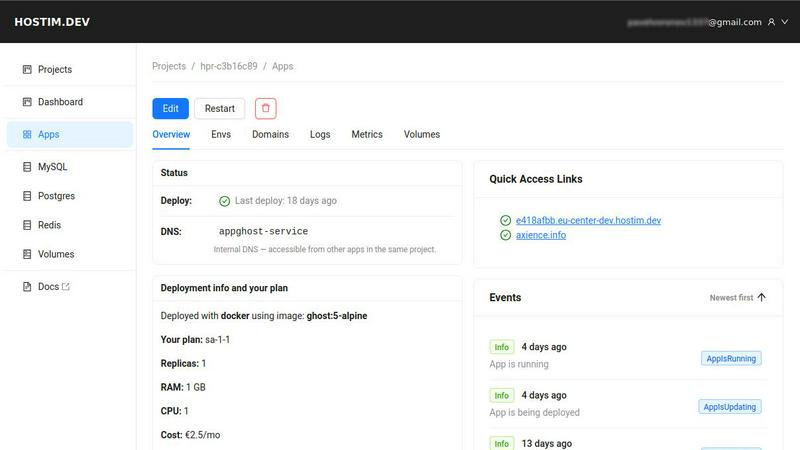
Visual Comparison
Hostim.dev
Requestly
Feature Comparison
Hostim.dev
Seamless Deployment
Hostim.dev enables rapid deployment of applications from Docker images, Git repositories, or Docker Compose files. This feature allows developers to get their projects up and running in minutes, removing the need for complex configurations or extensive DevOps knowledge.
Built-in Managed Databases
With Hostim.dev, users gain instant access to managed databases such as MySQL and PostgreSQL, along with Redis and storage volumes. This pre-wired setup means developers can focus on application development rather than the intricacies of database management, streamlining the deployment process significantly.
Project Isolation and Security
Each project on Hostim.dev operates within its own isolated Kubernetes namespace, ensuring that applications remain secure and organized. This feature promotes a clean environment for development and helps protect sensitive data, providing developers with added peace of mind.
Transparent Pricing Model
Hostim.dev features a clear, flat pricing model that starts at just €2.50 per month. This transparent billing system allows developers to track costs on a per-project basis, eliminating unexpected charges and enabling straightforward budgeting for projects.
Requestly
Git-Native API Collections
Requestly redefines API management by treating collections as local files that seamlessly integrate with Git. This allows developers to version control their API specs, track changes through commits, review modifications via pull requests, and collaborate with teammates using the same robust workflows they use for their source code. This feature eliminates the lock-in and sync issues common with cloud-only platforms, ensuring your API definitions are portable, auditable, and always under your control.
Local-First & Login-Free Operation
Prioritizing developer privacy and immediate productivity, Requestly operates on a local-first paradigm. All your data, including collections, environments, and logs, is stored securely on your local device. This architecture not only enhances security and performance but also means you can start using the application instantly without any sign-up process. There is no dependency on a central cloud for core functionality, giving you uninterrupted access and peace of mind regarding data ownership.
Advanced REST & GraphQL Client
Requestly provides a comprehensive playground for testing both REST and GraphQL endpoints. For REST, it supports all standard methods, custom headers, and body types. For GraphQL, it includes a sophisticated client with schema introspection, which automatically fetches and understands your GraphQL schema to provide intelligent auto-completion, query validation, and documentation lookup directly within the editor, dramatically speeding up API exploration and testing.
Free Team Collaboration Workspaces
Unlike many competitors that lock collaboration behind paywalls, Requestly offers powerful team features for free. Users can create shared workspaces to organize and manage APIs collectively. These workspaces include role-based access control (RBAC), allowing you to assign Admin, Editor, or Viewer permissions to team members, ensuring secure and organized teamwork without any subscription cost.
Use Cases
Hostim.dev
Freelance Development
Freelancers can leverage Hostim.dev to deploy applications quickly and efficiently for their clients. With per-project billing and easy handover features, developers can demonstrate their work without the need for complex server management, ensuring a smooth transition for clients.
Agency Projects
Agencies often juggle multiple client projects, and Hostim.dev helps in isolating these projects effectively. By providing clear cost breakdowns and ensuring that each client has a dedicated environment, agencies can manage resources efficiently while maintaining control over costs.
Educational Purposes
Students and learners can benefit from Hostim.dev by using real infrastructure for their projects. With a free trial and student credits available, learners can deploy applications, gain hands-on experience, and create portfolios showcasing their skills without financial barriers.
Rapid Prototyping
Startups and developers can utilize Hostim.dev for rapid prototyping of their application ideas. The platform's ability to deploy quickly and manage essential services allows teams to iterate and pivot their projects efficiently, bringing ideas to market faster.
Requestly
Migrating from Legacy API Clients
Teams looking to escape bloated, slow, or restrictive API platforms can use Requestly as their modern, lightweight successor. The one-click import feature allows for effortless migration of collections, environments, and scripts from tools like Postman. Combined with local storage and Git integration, this provides a seamless transition to a faster, more controlled, and developer-friendly API workflow.
Secure Enterprise API Development
Enterprises with strict data security and compliance requirements can leverage Requestly's local-first model and enterprise-ready features. By keeping sensitive API data on-premise or within controlled local environments and utilizing features like SOC-II compliance frameworks, SSO integration, and detailed audit logs, development teams can maintain high productivity without compromising on corporate security policies and data governance.
CI/CD Pipeline Integration
Development and DevOps teams can integrate Requestly's Git-native collections directly into their Continuous Integration and Delivery pipelines. Since collections are stored as files in a repository, automated scripts can run API tests, validate contracts, or deploy mock servers as part of the build process. This ensures API reliability is continuously verified alongside code changes, promoting higher software quality.
Collaborative API Design and Testing
API teams, including frontend and backend developers, can use shared workspaces to collaborate in real-time on API design and testing. Backend developers can publish endpoints, while frontend developers can immediately start building and testing against them using environment variables and pre-request scripts. This parallel workflow, facilitated by free collaboration tools, reduces development cycles and improves team alignment.
Overview
About Hostim.dev
Hostim.dev is a groundbreaking bare-metal Platform-as-a-Service (PaaS) solution designed specifically for developers seeking to deploy containerized applications with speed and efficiency. By simplifying the complexities often associated with DevOps tasks, this platform enables developers to focus on building and innovating rather than managing infrastructure. Hostim.dev allows for seamless deployment from various sources, including Docker images, Git repositories, and full Docker Compose files, all within a matter of minutes. This flexibility makes it a valuable asset to both experienced developers and those new to the field. The platform automatically provisions critical services such as MySQL, PostgreSQL, and Redis, as well as persistent storage volumes, providing users with all essential resources at their disposal. Each project enjoys its own isolated Kubernetes namespace, enhancing security and organization. With a transparent hourly billing system, developers can predict costs effectively. Additionally, Hostim.dev is hosted in Germany, ensuring GDPR compliance and peace of mind regarding data privacy. Whether you are a freelancer, a startup, or part of a larger agency, Hostim.dev offers a robust, intuitive environment that empowers you to bring your ideas to fruition without the burden of managing underlying infrastructure.
About Requestly
Requestly is a modern, developer-centric API client engineered to provide development teams with unparalleled control, security, and efficiency in their API workflows. It stands as a powerful alternative to traditional, often bloated, cloud-based API platforms by championing a local-first architecture. This foundational principle ensures that all your sensitive API collections, environment variables, and request history are stored directly on your machine, not on external servers, giving you complete data sovereignty and enhanced privacy. Designed for teams that value seamless integration into their existing development lifecycle, Requestly is inherently Git-native. It allows API collections to be stored as simple, version-controllable files, enabling collaboration through the same familiar Git workflows used for code.
The platform is built to accelerate the entire API development process, from design and testing to debugging and collaboration. It offers robust support for both REST and GraphQL APIs, featuring intelligent tools like schema introspection and auto-completion. Integrated AI capabilities assist in writing requests, generating tests, and debugging, significantly reducing manual effort. Furthermore, Requestly breaks down collaboration barriers with its generous free tier, offering shared workspaces and role-based access control at no cost. With no mandatory login required to start, it empowers over 300,000 developers from leading companies like Microsoft, Amazon, and Google to begin testing APIs instantly, making it the agile and trustworthy choice for modern development teams.
Frequently Asked Questions
Hostim.dev FAQ
What does the free tier include?
The free tier of Hostim.dev includes a 5-day trial with no signup required. This allows users to explore the platform's features, deploy applications, and test the environment without any financial commitment.
Can I deploy with just a Compose file?
Yes, you can deploy applications using just a Docker Compose file on Hostim.dev. This feature simplifies the deployment process, enabling users to go live in minutes without needing extensive DevOps expertise.
Where is my app hosted?
Your applications are hosted on bare-metal servers located in Germany, ensuring compliance with GDPR regulations. This means that data privacy is prioritized, making it an ideal choice for developers concerned about data protection.
Do I need to know Kubernetes?
No, you do not need to have prior knowledge of Kubernetes to use Hostim.dev. The platform abstracts the complexities of Kubernetes management, allowing developers to focus on application development without needing to understand the underlying infrastructure.
Requestly FAQ
How does Requestly handle data privacy and security?
Requestly employs a local-first architecture, meaning your primary API data (collections, environment variables, request history) is stored directly on your computer and never leaves your machine unless you explicitly choose to sync it via Git or a shared workspace. This approach provides inherent security. For enterprise collaboration, Requestly offers additional security layers including data encryption, SOC-II compliance, SSO, and role-based access control to protect shared information.
Can I import my existing Postman collections into Requestly?
Yes, importing your work from Postman is a straightforward process. Requestly provides a dedicated one-click import feature that allows you to seamlessly bring in your complete Postman collections, including all requests, folders, environment variables, and pre-request/test scripts. This ensures a smooth and immediate transition without the need to manually recreate your API testing setup.
Is team collaboration really free in Requestly?
Absolutely. Requestly's free tier includes core collaboration features that many other API clients reserve for paid plans. You can create shared workspaces, invite an unlimited number of team members, and manage their permissions using role-based access control (Admin, Editor, Viewer) at no cost. This makes it an ideal tool for startups, open-source projects, and teams wanting to collaborate without budget constraints.
What makes Requestly "Git-native"?
Requestly is Git-native because it stores your API collections as plain text files (in JSON format) on your local filesystem. You can point these files to any Git repository (like GitHub, GitLab, or Bitbucket). This allows you to use standard Git commands for version control, branching, merging, and code review for your API specifications. Collaboration happens through Git workflows, making it a natural fit for developers.
Alternatives
Hostim.dev Alternatives
Hostim.dev is a cutting-edge Platform-as-a-Service (PaaS) solution designed specifically for developers aiming to deploy containerized applications effortlessly. By removing the complexities traditionally associated with DevOps, Hostim.dev enables users to launch applications from Docker images or Git repositories swiftly. This user-friendly platform is especially appealing to freelancers, startups, and agencies seeking to focus on application development rather than infrastructure management. Users often seek alternatives to Hostim.dev for various reasons, including pricing structures, specific feature sets, or unique platform requirements that better align with their projects. When exploring alternatives, it's essential to consider factors such as deployment speed, ease of use, database management options, security features, and compliance with data privacy regulations. A thorough understanding of these aspects will help users find a solution that meets their specific needs while maintaining efficiency and reliability.
Requestly Alternatives
Requestly is a modern API client that falls into the category of developer tools, specifically designed for efficient API testing and collaboration. It distinguishes itself with a local-first, git-based architecture that gives teams full control over their data and workflow versioning. Users often explore alternatives for various reasons, including specific budget constraints, the need for different feature sets like advanced monitoring or public API documentation, or a preference for cloud-centric versus local-first application models. Platform compatibility, such as operating system support or integration with certain CI/CD pipelines, also drives the search for other solutions. When evaluating alternatives, key considerations should include the core philosophy of data storage and security, the depth of collaboration features for team workflows, and the overall approach to streamlining the API development lifecycle. The ideal tool should align with your team's technical requirements, security policies, and preferred method of working, whether that's entirely cloud-based, self-hosted, or a hybrid model.