
Fallom vs qtrl.ai
Side-by-side comparison to help you choose the right tool.

Fallom provides complete observability and control for your AI agents and LLM applications.
Last updated: February 28, 2026

qtrl.ai
qtrl.ai empowers QA teams to scale testing with AI while ensuring full control, governance, and seamless integration.
Last updated: March 4, 2026
Visual Comparison
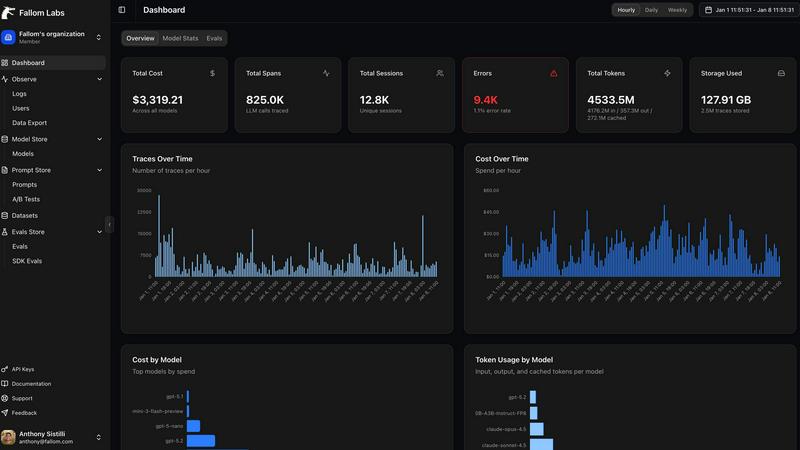
Fallom
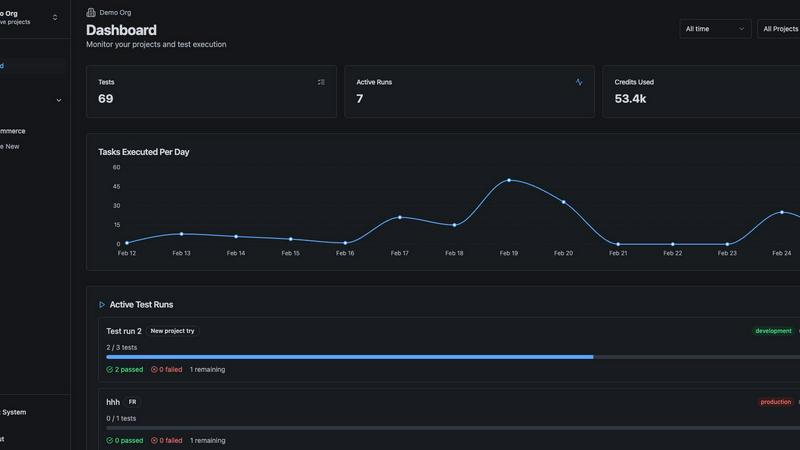
qtrl.ai
Feature Comparison
Fallom
End-to-End LLM Tracing
Fallom provides complete, real-time observability for every LLM call and AI agent interaction. It captures the full context of each operation, including the exact input prompts, model-generated outputs, all intermediate tool and function calls with their arguments and results, token consumption, latency breakdowns, and precise cost data. This granular, waterfall-style tracing is essential for understanding complex, multi-step workflows, diagnosing failures, and identifying performance bottlenecks that simple logs cannot reveal.
Enterprise Compliance & Audit Trails
The platform is built from the ground up to support the stringent requirements of regulated industries. Fallom automatically generates immutable, detailed audit trails for every AI interaction, providing the necessary documentation for compliance with frameworks like the EU AI Act, SOC 2, and GDPR. Features include comprehensive input/output logging, model versioning tracking, user consent recording, and configurable privacy modes that allow for metadata-only logging to protect sensitive data while maintaining full telemetry.
Cost Attribution & Spend Management
Fallom delivers unparalleled transparency into AI operational costs. It automatically attributes spend across multiple dimensions, including per model, per API call, per user, per team, or per customer. This allows for accurate budgeting, internal chargebacks, and identifying cost-optimization opportunities. Real-time dashboards and visualizations help teams monitor their monthly burn, compare model costs, and control unpredictable expenses before they escalate.
Model Management & A/B Testing
The platform enables safe and data-driven model evolution. Teams can conduct live A/B tests by splitting traffic between different models or prompt versions, comparing their performance on key metrics like cost, latency, and quality evaluations. Coupled with a integrated Prompt Store for version control, this allows organizations to systematically roll out improvements, validate new models in production, and instantly deploy winning configurations with confidence.
qtrl.ai
Autonomous QA Agents
qtrl.ai features autonomous QA agents that can execute testing instructions on demand or continuously. These agents are capable of running tests at scale across multiple environments while adhering to defined rules, ensuring reliable results. With real browser execution instead of mere simulations, the agents provide accurate and meaningful testing outcomes.
Enterprise-Grade Test Management
This platform offers centralized management of test cases, plans, and runs, ensuring full traceability and comprehensive audit trails. It supports both manual and automated workflows, making it adaptable to the specific needs of any team. Designed with compliance in mind, qtrl.ai enables organizations to maintain robust governance throughout their QA processes.
Progressive Automation
qtrl.ai supports a progressive automation model, allowing teams to start with human-written test instructions. As teams gain confidence, they can transition to AI-generated tests that are fully reviewable. This feature includes suggestions for new tests based on coverage gaps, empowering teams to enhance their testing strategies while maintaining control.
Adaptive Memory
The adaptive memory component of qtrl.ai builds a living knowledge base of the application under test. It learns from test execution and previous issues, enabling smarter, context-aware test generation. With each interaction, the platform becomes more effective, streamlining the QA process and improving overall testing accuracy.
Use Cases
Fallom
Debugging Complex AI Agent Workflows
When a multi-step AI agent—involving sequential LLM calls, database queries, and API tool usage—fails or behaves unexpectedly, traditional logging is insufficient. Fallom’s end-to-end tracing allows developers to visually follow the entire execution path, inspect the state at each step, see the exact inputs and outputs of every tool call, and pinpoint precisely where and why an error occurred, drastically reducing mean time to resolution (MTTR).
Ensuring Regulatory Compliance for AI Products
For companies operating in finance, healthcare, or any sector bound by regulations like the EU AI Act, demonstrating accountability is non-negotiable. Fallom provides the necessary audit trail, documenting every AI decision, the model version used, user interactions, and data handling. This creates a verifiable record that proves due diligence, supports compliance audits, and helps build trustworthy, transparent AI systems.
Optimizing AI Performance and Cost Efficiency
Organizations scaling their AI usage often face ballooning, opaque costs and latency issues. Fallom’s detailed metrics allow teams to analyze which models, prompts, or users are driving the highest spend and latency. Engineers can use this data to optimize prompts, switch to more cost-effective models for certain tasks, cache frequent responses, and right-size their AI infrastructure, leading to direct improvements in unit economics and user experience.
Managing Production AI Rollouts and Experiments
Safely introducing a new LLM model or a major prompt update into a live application is risky. Fallom’s A/B testing and evaluation framework allows product teams to roll out changes to a small percentage of traffic, compare the new version’s performance against the baseline on real-world data, and monitor for regressions in accuracy or hallucinations before committing to a full deployment, minimizing operational risk.
qtrl.ai
Product-Led Engineering Teams
Product-led engineering teams can leverage qtrl.ai to enhance their QA processes by automating testing while ensuring that quality remains a top priority. The platform’s combination of test management and AI-driven automation supports rapid development cycles without sacrificing oversight.
QA Teams Scaling Beyond Manual Testing
For QA teams that are transitioning from manual testing to more automated approaches, qtrl.ai provides a structured pathway. It enables teams to start with manual processes and gradually adopt automation, ensuring a smooth transition that minimizes risks associated with sudden changes.
Companies Modernizing Legacy QA Workflows
Organizations looking to modernize their outdated QA workflows can utilize qtrl.ai to integrate advanced testing strategies. The platform’s features allow for the automation of existing processes while maintaining essential compliance and audit capabilities necessary for enterprise environments.
Enterprises Requiring Governance and Traceability
Large enterprises with strict governance and audit requirements can benefit from qtrl.ai’s comprehensive test management capabilities. The platform ensures that all testing activities are traceable and transparent, allowing organizations to maintain compliance while improving the efficiency of their QA efforts.
Overview
About Fallom
Fallom is the definitive AI-native observability platform engineered for the complex realities of production-level large language model (LLM) and AI agent workloads. As artificial intelligence transitions from experimental prototypes to being deeply integrated into core business operations, the need for comprehensive visibility and control becomes paramount. Fallom answers this critical need by providing engineering, product, and compliance teams with the tools required to operate with confidence. It transcends basic logging by offering end-to-end tracing for every LLM interaction, capturing a complete picture that includes the full prompt, the generated output, every tool and function call, token usage, latency metrics, and precise per-call cost data. This granular insight is indispensable for debugging intricate, multi-step agentic workflows, optimizing performance for speed and cost, and governing unpredictable AI spend. Built on the open standard of OpenTelemetry, Fallom ensures teams are never locked into a proprietary ecosystem, offering a unified SDK for instrumentation in minutes. Designed for enterprise scale and rigor, it provides not just technical observability but also the session-level context, detailed audit trails, model versioning, and user consent tracking necessary to meet stringent compliance standards like the EU AI Act, SOC 2, and GDPR. Fallom empowers organizations to build, deploy, and scale reliable, governable, and cost-effective AI applications.
About qtrl.ai
qtrl.ai is an innovative quality assurance platform designed to empower software teams by streamlining their QA processes while maintaining robust control and governance. This platform stands out by integrating enterprise-grade test management with advanced AI-driven automation, creating a centralized hub where teams can efficiently organize test cases, plan test runs, and track quality metrics through real-time dashboards. By providing clear visibility into testing outcomes, qtrl.ai enables engineering leads and QA managers to identify what has been tested, what is passing, and where potential risks may exist.
The unique strength of qtrl.ai lies in its gradual implementation of intelligent automation. Unlike other platforms that may adopt a risky black-box approach, qtrl allows teams to begin with manual test management, progressively introducing autonomous agents as they become ready. These agents can generate UI tests from simple English descriptions, adapt to application changes, and execute tests across various browsers and environments at scale. This makes qtrl.ai ideal for product-led engineering teams, QA groups transitioning from manual testing, organizations modernizing outdated workflows, and enterprises requiring stringent compliance and auditability. Ultimately, qtrl.ai aims to bridge the gap between the slow pace of manual testing and the complexities of traditional automation, offering a reliable pathway to faster and smarter quality assurance.
Frequently Asked Questions
Fallom FAQ
How does Fallom differ from traditional application monitoring tools?
Traditional Application Performance Monitoring (APM) tools are built for conventional software, focusing on metrics like CPU usage, HTTP request latency, and database queries. They lack the native concepts required for AI: prompts, completions, token usage, model costs, and multi-step agent reasoning. Fallom is purpose-built for the AI stack, providing semantic understanding of LLM calls, tool executions, and the unique cost and compliance dimensions of generative AI, offering insights that generic tools cannot.
Is my data secure and private with Fallom?
Yes, Fallom is designed with enterprise-grade security and privacy controls. It offers a configurable Privacy Mode that allows you to disable full content capture for sensitive interactions, logging only metadata (like timings and token counts) while still providing crucial observability. Data is encrypted in transit and at rest, and the platform's compliance features, including audit trails and access controls, help you meet stringent data protection standards like GDPR.
How difficult is it to integrate Fallom into my existing AI application?
Integration is designed to be straightforward and fast. Fallom provides a unified SDK based on the OpenTelemetry standard. For most applications, developers can instrument their LLM calls and tool usage in under five minutes. The platform works with all major model providers (OpenAI, Anthropic, Google, etc.) and AI frameworks, ensuring there is no vendor lock-in and you can maintain your existing AI infrastructure.
Can Fallom help me reduce my overall LLM API costs?
Absolutely. Cost optimization is a core strength. By providing detailed, per-call cost attribution, Fallom helps you identify the most expensive operations, users, or model choices. You can analyze patterns, A/B test more cost-effective models for specific tasks, optimize inefficient prompts that consume excessive tokens, and set up alerts for unexpected spend spikes, enabling proactive cost management and significant savings.
qtrl.ai FAQ
What makes qtrl.ai different from traditional QA tools?
qtrl.ai distinguishes itself by combining enterprise-grade test management with progressive AI automation. It allows teams to gradually adopt automation while maintaining control and governance, unlike traditional tools that may be either too rigid or overly reliant on black-box AI.
Can qtrl.ai integrate with existing tools?
Yes, qtrl.ai is designed to work seamlessly with your existing tools and workflows. It supports integration with various CI/CD pipelines and requirements management systems, ensuring a smooth transition and continuous quality feedback loops.
How does qtrl.ai ensure data security during testing?
qtrl.ai prioritizes security by maintaining governance through defined autonomy levels and full agent visibility. Sensitive information, such as environment variables and encrypted secrets, is securely managed, ensuring that they are not exposed to AI agents during testing.
Is qtrl.ai suitable for small teams?
Absolutely. qtrl.ai is versatile and scalable, making it suitable for teams of all sizes. Whether you are a small startup or a large enterprise, the platform can adapt to your specific needs, facilitating growth and efficiency in your QA processes.
Alternatives
Fallom Alternatives
Fallom is an AI-native observability platform, a specialized category of development tool designed to monitor, debug, and govern production-level large language model and AI agent applications. Users may explore alternatives for various reasons, including budget constraints, specific feature requirements not covered by their current solution, or a need for a platform that integrates more seamlessly with their existing technology stack and operational workflows. When evaluating different solutions in this space, it is crucial to consider several key factors. The depth of tracing and granularity of data captured for each LLM interaction is fundamental for effective debugging. Equally important are the platform's scalability, its approach to data privacy and security, and the robustness of its compliance features, such as audit trails and consent tracking, which are essential for enterprise deployments. The ideal alternative should not only provide technical visibility but also align with your organization's long-term strategy for AI governance and cost management. It should empower teams to move from experimentation to reliable, controlled production deployments with confidence.
qtrl.ai Alternatives
qtrl.ai is a cutting-edge quality assurance platform that integrates AI technology to help software teams enhance their testing processes while maintaining governance and control. It is particularly effective for organizations looking to streamline their quality assurance efforts through intelligent automation and robust test management capabilities. As teams evolve, they often seek alternatives to qtrl.ai for various reasons, such as pricing structures, feature sets, or specific platform compatibility requirements that better align with their unique operational needs. When considering alternatives to qtrl.ai, users should evaluate several key factors. It's essential to assess the scalability of the solution, the flexibility of its automation features, and the ability to maintain visibility and control over testing processes. Additionally, understanding the level of support provided and how well the platform integrates with existing tools can significantly impact the overall effectiveness of a chosen QA solution.