
diffray vs qtrl.ai
Side-by-side comparison to help you choose the right tool.

diffray
Diffray uses multi-agent AI to catch real bugs in code reviews, not just nitpicks.
Last updated: February 28, 2026

qtrl.ai
qtrl.ai empowers QA teams to scale testing with AI while ensuring full control, governance, and seamless integration.
Last updated: March 4, 2026
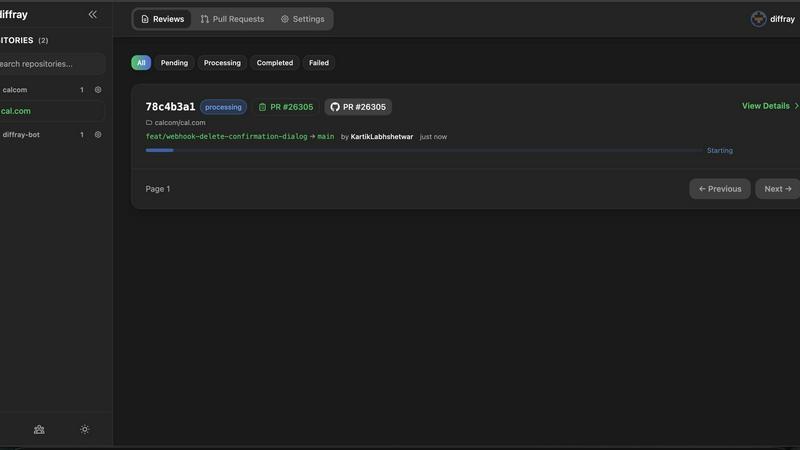
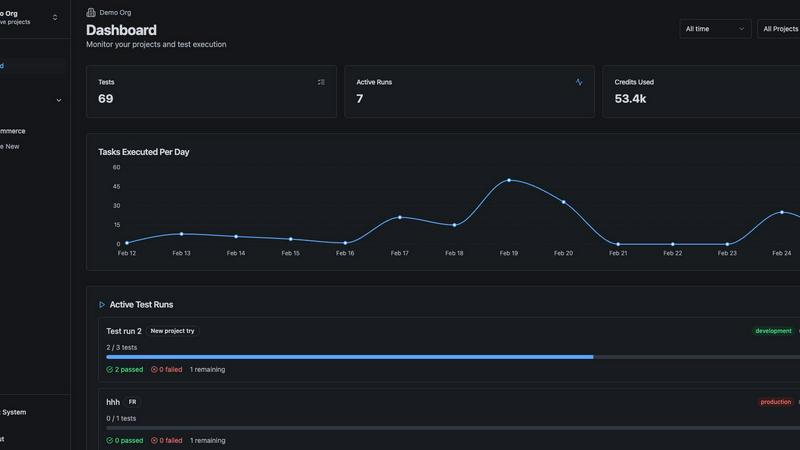
Visual Comparison
diffray
qtrl.ai
Feature Comparison
diffray
Multi-Agent AI Architecture
Unlike single-model AI review tools, diffray leverages a team of over 30 specialized AI agents, each trained as an expert in a specific domain. This includes dedicated agents for security vulnerabilities, performance anti-patterns, language-specific best practices, bug detection, and even SEO for relevant codebases. This collaborative, expert-driven approach ensures that feedback is not generic but is precisely targeted and highly relevant to the specific type of issue being examined, dramatically increasing the accuracy and usefulness of every comment.
Full-Codebase Contextual Analysis
diffray moves beyond simple line-by-line diff analysis. Its agents intelligently investigate the full context of your repository. They cross-reference new changes against existing code patterns, library usage, architectural decisions, and established conventions within the project. This deep contextual understanding allows diffray to distinguish between a genuine mistake and an intentional design pattern, providing suggestions that are truly relevant to your project's unique environment and significantly reducing false positives.
High-Signal, Actionable Feedback
The platform is engineered to prioritize quality over quantity. By combining domain expertise with deep contextual awareness, diffray filters out the noise that plagues other tools. It delivers concise, actionable insights that developers can immediately understand and act upon. This transforms the AI from a source of alert fatigue into a trusted advisor, enabling developers to focus their cognitive energy on complex problem-solving rather than sifting through low-value suggestions.
Seamless GitHub Integration & Privacy Commitment
diffray integrates directly into your existing GitHub workflow, appearing as a native participant in your pull request review process. Setup is minimal, requiring no disruptive changes to developer habits. Furthermore, the platform is built with a fundamental commitment to code privacy and security, ensuring your intellectual property remains protected. This combination of effortless integration and strong security principles makes it a viable and trustworthy tool for teams of all sizes, from fast-moving startups to large enterprises.
qtrl.ai
Autonomous QA Agents
qtrl.ai features autonomous QA agents that can execute testing instructions on demand or continuously. These agents are capable of running tests at scale across multiple environments while adhering to defined rules, ensuring reliable results. With real browser execution instead of mere simulations, the agents provide accurate and meaningful testing outcomes.
Enterprise-Grade Test Management
This platform offers centralized management of test cases, plans, and runs, ensuring full traceability and comprehensive audit trails. It supports both manual and automated workflows, making it adaptable to the specific needs of any team. Designed with compliance in mind, qtrl.ai enables organizations to maintain robust governance throughout their QA processes.
Progressive Automation
qtrl.ai supports a progressive automation model, allowing teams to start with human-written test instructions. As teams gain confidence, they can transition to AI-generated tests that are fully reviewable. This feature includes suggestions for new tests based on coverage gaps, empowering teams to enhance their testing strategies while maintaining control.
Adaptive Memory
The adaptive memory component of qtrl.ai builds a living knowledge base of the application under test. It learns from test execution and previous issues, enabling smarter, context-aware test generation. With each interaction, the platform becomes more effective, streamlining the QA process and improving overall testing accuracy.
Use Cases
diffray
Accelerating Pull Request Reviews for Engineering Teams
Development teams use diffray to drastically reduce the time spent on manual code review cycles. By automatically surfacing critical issues, security flaws, and performance concerns as soon as a PR is opened, diffray allows human reviewers to focus on higher-level architecture, design patterns, and knowledge sharing. This leads to faster merge times, increased developer velocity, and more consistent code quality across the entire team without adding bureaucratic overhead.
Enforcing Code Quality and Best Practices at Scale
For engineering leads and architects, diffray acts as a scalable, always-on guardian of code quality. It consistently enforces project-specific and industry-wide best practices, coding standards, and architectural patterns across every pull request, regardless of the reviewer's individual expertise. This ensures a uniformly high-quality codebase, reduces technical debt accumulation, and accelerates the onboarding of new developers by providing immediate, contextual feedback aligned with team standards.
Proactive Security and Vulnerability Prevention
Security teams and developers leverage diffray's specialized security agents to shift vulnerability detection left in the development lifecycle. The platform proactively identifies potential security anti-patterns, insecure API usage, and common vulnerability exposures (CVEs) in dependencies directly within the developer's workflow. This allows teams to remediate risks before code is merged, preventing security flaws from ever reaching production and building a more robust security posture proactively.
Maintaining Open Source Project Health
Maintainers of open-source projects utilize diffray's free tier to manage contributions from a diverse and global community. The platform helps efficiently review external pull requests by automatically checking for common issues, ensuring contributions adhere to project conventions, and identifying potential bugs or performance regressions. This helps maintain high standards of quality and security while reducing the maintainer's review burden and fostering a healthier, more sustainable open-source ecosystem.
qtrl.ai
Product-Led Engineering Teams
Product-led engineering teams can leverage qtrl.ai to enhance their QA processes by automating testing while ensuring that quality remains a top priority. The platform’s combination of test management and AI-driven automation supports rapid development cycles without sacrificing oversight.
QA Teams Scaling Beyond Manual Testing
For QA teams that are transitioning from manual testing to more automated approaches, qtrl.ai provides a structured pathway. It enables teams to start with manual processes and gradually adopt automation, ensuring a smooth transition that minimizes risks associated with sudden changes.
Companies Modernizing Legacy QA Workflows
Organizations looking to modernize their outdated QA workflows can utilize qtrl.ai to integrate advanced testing strategies. The platform’s features allow for the automation of existing processes while maintaining essential compliance and audit capabilities necessary for enterprise environments.
Enterprises Requiring Governance and Traceability
Large enterprises with strict governance and audit requirements can benefit from qtrl.ai’s comprehensive test management capabilities. The platform ensures that all testing activities are traceable and transparent, allowing organizations to maintain compliance while improving the efficiency of their QA efforts.
Overview
About diffray
diffray represents a fundamental evolution in AI-powered code review, moving beyond the limitations of generic, single-model tools. It is a sophisticated platform designed for development teams who are serious about code quality, security, and developer productivity. At its core, diffray employs a revolutionary multi-agent architecture, where over 30 specialized AI agents—each an expert in a distinct domain like security vulnerabilities, performance bottlenecks, bug patterns, best practices, or SEO—collaboratively analyze pull requests. This targeted approach stands in stark contrast to traditional tools that use one model for everything, which often results in a flood of noisy, irrelevant comments that developers learn to ignore. The primary value proposition of diffray is delivering actionable, high-signal feedback that developers can actually use. By understanding not just the diff but the full context of your codebase, diffray's agents investigate rather than speculate. They cross-reference changes against existing patterns, libraries, and architectural decisions to provide precise, context-aware suggestions. The result is a transformative developer experience: teams report cutting PR review time dramatically while catching three times more genuine issues with 87% fewer false positives. diffray is built for professional engineering teams across startups and enterprises who want to leverage AI not as a source of distraction, but as a reliable, intelligent partner in maintaining robust and clean code. It integrates seamlessly with GitHub, offers a free tier for open-source projects, and ensures your code's privacy is never compromised.
About qtrl.ai
qtrl.ai is an innovative quality assurance platform designed to empower software teams by streamlining their QA processes while maintaining robust control and governance. This platform stands out by integrating enterprise-grade test management with advanced AI-driven automation, creating a centralized hub where teams can efficiently organize test cases, plan test runs, and track quality metrics through real-time dashboards. By providing clear visibility into testing outcomes, qtrl.ai enables engineering leads and QA managers to identify what has been tested, what is passing, and where potential risks may exist.
The unique strength of qtrl.ai lies in its gradual implementation of intelligent automation. Unlike other platforms that may adopt a risky black-box approach, qtrl allows teams to begin with manual test management, progressively introducing autonomous agents as they become ready. These agents can generate UI tests from simple English descriptions, adapt to application changes, and execute tests across various browsers and environments at scale. This makes qtrl.ai ideal for product-led engineering teams, QA groups transitioning from manual testing, organizations modernizing outdated workflows, and enterprises requiring stringent compliance and auditability. Ultimately, qtrl.ai aims to bridge the gap between the slow pace of manual testing and the complexities of traditional automation, offering a reliable pathway to faster and smarter quality assurance.
Frequently Asked Questions
diffray FAQ
How is diffray different from other AI code review tools?
diffray fundamentally differs through its multi-agent architecture. While most tools use a single, generalized AI model to comment on everything, diffray deploys a team of over 30 specialized agents, each an expert in a specific domain like security, performance, or bug detection. This allows for deeper, more accurate analysis. Furthermore, diffray analyzes your full codebase for context, leading to more relevant suggestions and far fewer false positives compared to tools that only look at the diff in isolation.
What programming languages and frameworks does diffray support?
diffray is designed with broad compatibility in mind. Its multi-agent system includes specialists for all major programming languages and popular frameworks. The platform continuously evolves, with agents trained on the latest language features, library updates, and framework-specific best practices. For the most current and detailed list of supported languages, it is recommended to check the official diffray documentation.
Is my source code kept private and secure with diffray?
Absolutely. Code privacy and security are foundational principles for diffray. The platform is built with enterprise-grade security measures to ensure your intellectual property is protected. Your code is analyzed in a secure environment, and diffray is committed to not storing or misusing your source code. You retain full ownership and control of your code at all times.
How do I get started with diffray for my team?
Getting started is straightforward. diffray offers a seamless integration with GitHub. You can typically begin by installing the diffray GitHub App on your organization or personal account, selecting the repositories you wish to enable it for, and configuring your review preferences. The platform often provides a free tier or trial, allowing teams to experience the benefits on their own codebase with minimal setup effort before committing to a paid plan.
qtrl.ai FAQ
What makes qtrl.ai different from traditional QA tools?
qtrl.ai distinguishes itself by combining enterprise-grade test management with progressive AI automation. It allows teams to gradually adopt automation while maintaining control and governance, unlike traditional tools that may be either too rigid or overly reliant on black-box AI.
Can qtrl.ai integrate with existing tools?
Yes, qtrl.ai is designed to work seamlessly with your existing tools and workflows. It supports integration with various CI/CD pipelines and requirements management systems, ensuring a smooth transition and continuous quality feedback loops.
How does qtrl.ai ensure data security during testing?
qtrl.ai prioritizes security by maintaining governance through defined autonomy levels and full agent visibility. Sensitive information, such as environment variables and encrypted secrets, is securely managed, ensuring that they are not exposed to AI agents during testing.
Is qtrl.ai suitable for small teams?
Absolutely. qtrl.ai is versatile and scalable, making it suitable for teams of all sizes. Whether you are a small startup or a large enterprise, the platform can adapt to your specific needs, facilitating growth and efficiency in your QA processes.
Alternatives
diffray Alternatives
diffray is a sophisticated AI-powered code review platform that represents a significant advancement in the development tool category. It moves beyond basic linting and static analysis by employing a multi-agent architecture, where over thirty specialized AI experts collaboratively analyze pull requests to catch genuine bugs, security flaws, and performance issues with high precision. Users may explore alternatives to diffray for various reasons, including budget constraints, specific integration requirements with platforms like GitLab or Bitbucket, or a preference for tools with different feature emphases, such as those focused solely on security scanning or simpler, single-model AI assistance. The needs of a solo developer differ greatly from those of a large enterprise team, driving a diverse market of solutions. When evaluating alternatives, key considerations should include the depth and accuracy of the AI analysis, the tool's ability to understand full codebase context to reduce false positives, integration capabilities with your existing development workflow, and robust data security and privacy policies. The ultimate goal is to find a solution that enhances developer productivity without becoming a source of noisy distractions.
qtrl.ai Alternatives
qtrl.ai is a cutting-edge quality assurance platform that integrates AI technology to help software teams enhance their testing processes while maintaining governance and control. It is particularly effective for organizations looking to streamline their quality assurance efforts through intelligent automation and robust test management capabilities. As teams evolve, they often seek alternatives to qtrl.ai for various reasons, such as pricing structures, feature sets, or specific platform compatibility requirements that better align with their unique operational needs. When considering alternatives to qtrl.ai, users should evaluate several key factors. It's essential to assess the scalability of the solution, the flexibility of its automation features, and the ability to maintain visibility and control over testing processes. Additionally, understanding the level of support provided and how well the platform integrates with existing tools can significantly impact the overall effectiveness of a chosen QA solution.