
Blueberry vs Mod
Side-by-side comparison to help you choose the right tool.

Blueberry
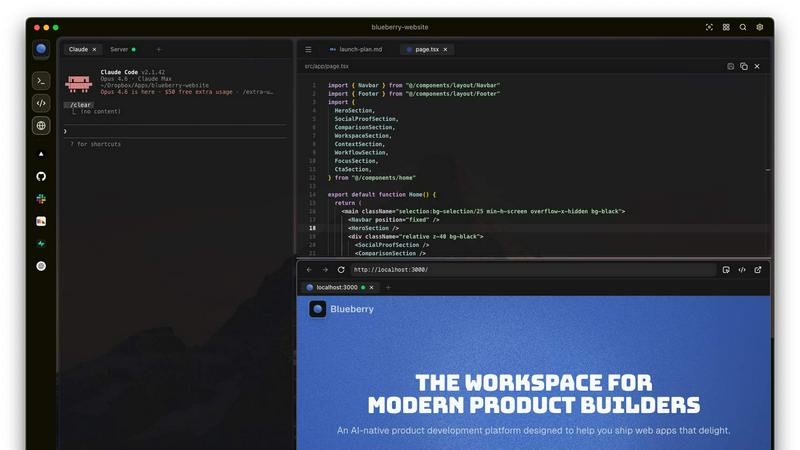
Blueberry unifies your editor, terminal, and browser into one seamless workspace for efficient web app development.
Last updated: February 28, 2026

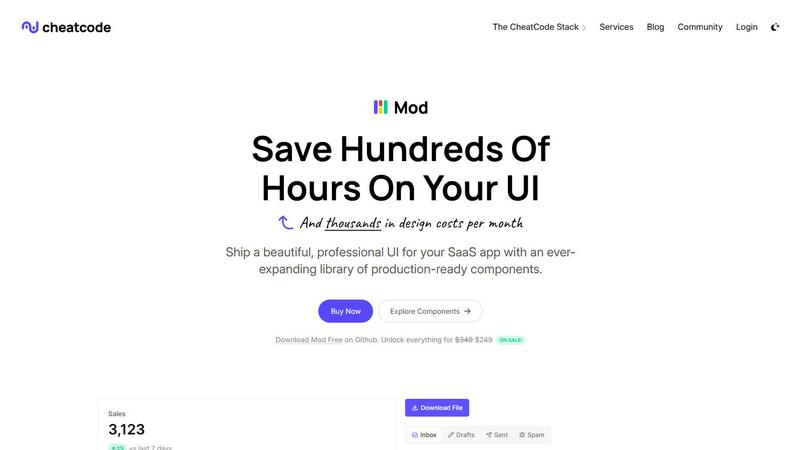
Mod is a CSS framework that accelerates SaaS development with a comprehensive library of ready to use UI components.
Visual Comparison
Blueberry
Mod
Feature Comparison
Blueberry
Integrated Workspace
Blueberry combines a terminal, code editor, and preview browser into one cohesive workspace. This integration allows developers to manage their projects without the need to switch between different applications, enhancing focus and productivity.
Real-Time AI Context
With Blueberry's MCP server, users can connect AI models like Claude and Codex directly to their workspace. This feature ensures that the AI has full context of the project, including open files and terminal outputs, enabling smarter and more context-aware interactions.
Pinned Apps
Developers can dock essential applications such as GitHub, Linear, Figma, and PostHog within the Blueberry workspace. These pinned apps load alongside the project, sharing live context with the AI, which further streamlines the development process.
Visual Context Tools
Blueberry provides features like screenshot capture and element selection directly from the preview browser. This allows developers to give their AI visual context, enhancing the effectiveness of AI interactions and feedback during the development process.
Mod
Extensive Component Library
Mod provides an expansive suite of over 88 meticulously crafted, reusable UI components. This library covers the entire spectrum of interface needs for a SaaS product, including complex data tables, interactive forms, navigation bars, modals, cards, buttons, and feedback elements like alerts and toasts. Each component is built with accessibility and semantic HTML in mind, ensuring a solid foundation. This depth means developers rarely need to build common elements from scratch, instead assembling interfaces from reliable, pre-tested building blocks. The components are designed to work in harmony, guaranteeing visual consistency across your entire application without any extra effort.
Comprehensive Design System & Theming
Beyond individual components, Mod delivers a complete, coherent design system. This includes 168 distinct style utilities and two fully realized themes (light and dark) that can be applied globally. The system encompasses typography scales, a cohesive color palette with semantic meaning, consistent spacing units, and shadow elevations. The built-in, easy-to-implement dark mode support is a significant advantage for modern applications. This systematic approach ensures that every element you place adheres to the same visual rules, creating a professional and polished look that users instinctively trust, all without requiring a dedicated designer.
Framework Agnostic & Easy Integration
A standout feature of Mod is its complete independence from any specific JavaScript framework or meta-framework. It is crafted as pure, modern CSS with intuitive class names, allowing it to seamlessly integrate with Next.js, Nuxt, SvelteKit, Vite, Ruby on Rails, Django, PHP applications, and virtually any other web technology. This future-proofs your investment, as you can adopt Mod today and carry it forward through any stack migration. Integration is typically as simple as linking a CSS file or installing a package, meaning you can inject a complete design language into a new or existing project in minutes, not days.
Mobile-First & Fully Responsive
Every component and layout utility in Mod is constructed with a mobile-first, responsive philosophy at its core. The styles ensure that interfaces look and function flawlessly on devices of all sizes, from compact smartphones to large desktop monitors. Responsive behavior is baked in through intelligent use of CSS Grid, Flexbox, and responsive utility classes. This eliminates the need to write complex, custom media queries for common adjustments, allowing developers to build for all platforms simultaneously and ensuring a superior user experience regardless of how customers access your SaaS application.
Use Cases
Blueberry
Streamlined Development
Blueberry is ideal for developers looking to streamline their workflow. By integrating all necessary tools into one workspace, developers can focus on coding and testing their web applications without interruptions.
Enhanced Collaboration
With pinned apps and live context sharing, teams can collaborate more effectively. Developers can work alongside designers and project managers within the same environment, ensuring that everyone is on the same page.
AI-Assisted Programming
Blueberry's real-time AI context allows for enhanced programming assistance. Developers can ask questions to their AI models while viewing their code and terminal output, leading to quicker problem-solving and more efficient coding.
Responsive Design Testing
The built-in preview browser enables developers to test their applications across various devices, including desktop, tablet, and mobile. This feature ensures that applications are responsive and user-friendly before deployment.
Mod
Rapid Prototyping and MVP Development
For entrepreneurs and startups, speed to market is critical. Mod is the perfect tool for rapidly prototyping ideas and building a Minimum Viable Product (MVP). With its vast component library, developers can assemble a fully functional, visually credible front-end in a fraction of the time it would take to design and code from zero. This allows founders to validate business hypotheses with real users quickly, gather feedback, and iterate without being bottlenecked by UI development, enabling a lean and efficient startup methodology.
Modernizing Legacy Application UIs
Many established businesses struggle with outdated, inconsistent user interfaces that harm user satisfaction and productivity. Mod provides a strategic path for incremental UI modernization. Teams can integrate Mod's CSS into specific sections or new features of a legacy application—be it Rails, Django, or a traditional server-rendered app—without a full, risky rewrite. This allows for a gradual, low-risk refresh that delivers immediate visual and UX improvements, boosting internal morale and customer perception while planning for larger architectural changes.
Standardizing Design Across Development Teams
In growing engineering organizations, inconsistent UI implementation across different teams and features is a common pain point. Adopting Mod as a company-wide design system standardizes the visual language and component implementation. It serves as a single source of truth for front-end styles, reducing design debt, eliminating repetitive discussions about pixels and colors, and ensuring a unified brand experience. This leads to more efficient collaboration, faster onboarding for new developers, and a consistently professional product.
Building Internal Tools and Admin Panels
The development of internal dashboards, admin panels, and operational tools often receives less design resources but still requires clarity, functionality, and efficiency. Mod is ideally suited for this use case. Developers can leverage the pre-built data tables, form controls, charts containers, and layout components to construct powerful internal interfaces quickly. The result is a tool that is not only highly functional but also pleasant and intuitive for employees to use, improving operational efficiency and reducing training time.
Overview
About Blueberry
Blueberry is an innovative macOS application designed for modern product builders, integrating a code editor, terminal, and browser into a singular, focused workspace. By consolidating these essential tools, Blueberry eliminates the hassle of switching between multiple applications, allowing developers to concentrate on coding and shipping web applications with ease. Built with a user-friendly interface, Blueberry is particularly beneficial for developers who utilize AI models like Claude, Codex, and Gemini, as it provides these models with real-time access to files, terminal output, and live previews. This seamless integration means that developers can interact with their AI tools without the tediousness of copy-pasting context. Currently in its beta phase, Blueberry is available for free on macOS, making it accessible for developers looking to enhance productivity and streamline their workflow.
About Mod
In the modern landscape of software as a service (SaaS), the user interface is not merely a layer of presentation; it is the primary conduit for user experience, engagement, and value perception. Mod emerges as a definitive solution to the perennial challenge of crafting beautiful, functional, and consistent UIs without the prohibitive costs of custom design or the fragility of piecing together disparate libraries. It is a comprehensive CSS framework meticulously engineered for building SaaS applications. Designed for developers of all stripes—from solo founders and indie hackers to product teams within established enterprises—Mod provides a robust, production-ready design system out of the box. Its core value proposition is profound acceleration. By offering a vast, cohesive collection of pre-styled components and utilities, Mod eliminates countless hours of design decision-making, CSS debugging, and cross-browser compatibility testing. This allows developers to focus their intellectual energy on core application logic, unique features, and business innovation, dramatically shortening the path from concept to a polished, professional product. Its framework-agnostic philosophy ensures this velocity is not sacrificed regardless of your chosen technology stack, making it a versatile and enduring tool in any developer's arsenal.
Frequently Asked Questions
Blueberry FAQ
What platforms is Blueberry available on?
Currently, Blueberry is available exclusively for macOS users. It is designed to enhance the development experience on Apple computers.
Is Blueberry really free during beta?
Yes, Blueberry is completely free during its beta phase, allowing developers to try out its features without any cost. This is an excellent opportunity for users to explore its capabilities.
Can I use Blueberry with any AI model?
Yes, Blueberry supports various AI models, including Claude, Codex, and Gemini, through its integrated MCP server, providing flexibility for developers to choose their preferred tools.
How does Blueberry enhance productivity?
By consolidating essential development tools into one workspace, Blueberry minimizes distractions and interruptions, allowing developers to focus on building and shipping high-quality web applications.
Mod FAQ
What makes Mod different from other CSS frameworks like Tailwind or Bootstrap?
While frameworks like Tailwind provide low-level utility classes and Bootstrap offers a component library, Mod is specifically architected for the SaaS domain. It combines the best of both: a comprehensive, high-quality component library (like Bootstrap) that is built upon a consistent, customizable design system with utility classes (conceptually like Tailwind). The key differentiators are its SaaS-focused component selection, its built-in light/dark theme system, its extensive icon suite, and its framework-agnostic purity, offering a more opinionated and complete starting point for business applications.
Is Mod suitable for completely custom designs, or will my app look generic?
Mod is designed as a foundation for custom design, not a constraint. The included themes are professional and polished starting points. However, the entire system is built with customization in mind. Through CSS custom properties (variables) and a well-organized structure, you can easily modify colors, typography, spacing, and component specifics to create a unique brand identity. It provides the consistency and speed of a framework while leaving the door open for deep customization, preventing a "generic" look.
How does the framework-agnostic approach work in practice?
Mod is distributed as standard CSS. You can include it via a CDN link, import it into your main JavaScript/TypeScript file, or install it as an npm package and import the CSS. Since it uses plain CSS class names (e.g., .btn, .card, .grid), it works with any technology that can render HTML and apply CSS classes. There are no framework-specific dependencies, JavaScript bindings, or proprietary syntax to learn, ensuring compatibility with your current and future tech stack.
What is included in the "yearly updates" mentioned?
The yearly updates refer to a commitment to ongoing development and maintenance of the Mod library. Purchasers can expect regular improvements, which typically include new components, additional style variants, enhancements to existing components for accessibility or browser support, updates to the icon library, and adaptations to follow modern web design trends. This ensures that applications built with Mod remain contemporary and leverage the latest best practices in front-end development without requiring manual overhaul.